
My Japanese omurice recipe features savory chicken fried rice, a soft, custardy omelet, and a rich demi-glace sauce. Served warm, the egg is sliced open and spills over the rice, creating an irresistible combination of flavors and textures. This dish took me a while to perfect, and I’ll walk you through all my tips and tricks so you can master it at home, too!
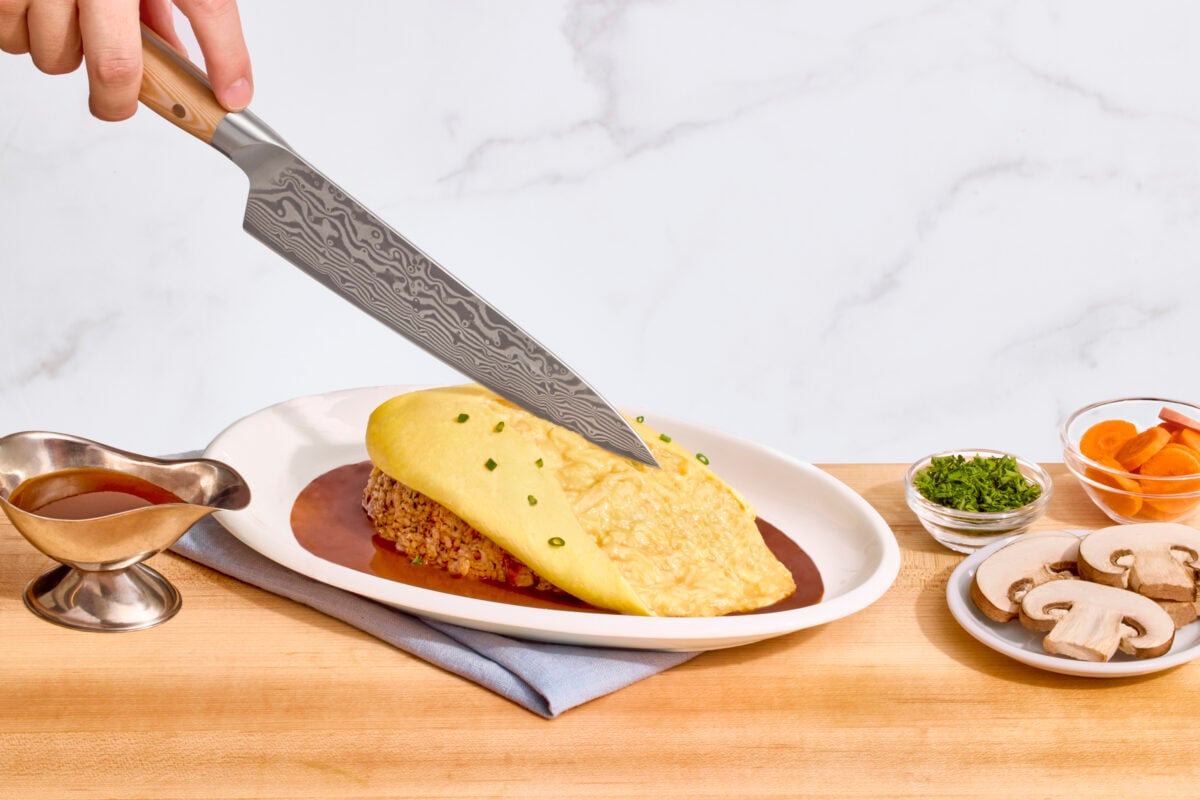
I’ve tested just about every way to make an egg, including soft scrambled eggs, hard-boiled eggs, and even egg fried rice. However, omurice might be my favorite (and most difficult) version yet. There are a few moving parts. However, once you break the recipe into the rice, sauce, and omelet, it becomes much more approachable, making for a fun weeknight comfort food loved by both kids and adults.
What Is Omurice?
Omurice, sometimes called omu rice, is a Japanese dish consisting of an omelet served over or around seasoned fried rice. Its name is a combination of the words “omelet” and “rice.”
There are several ways to prepare it. Some versions wrap the rice completely in a thin layer of egg and are finished with ketchup. However, for this version, I’m making the restaurant-style omurice you may have seen sliced open tableside.
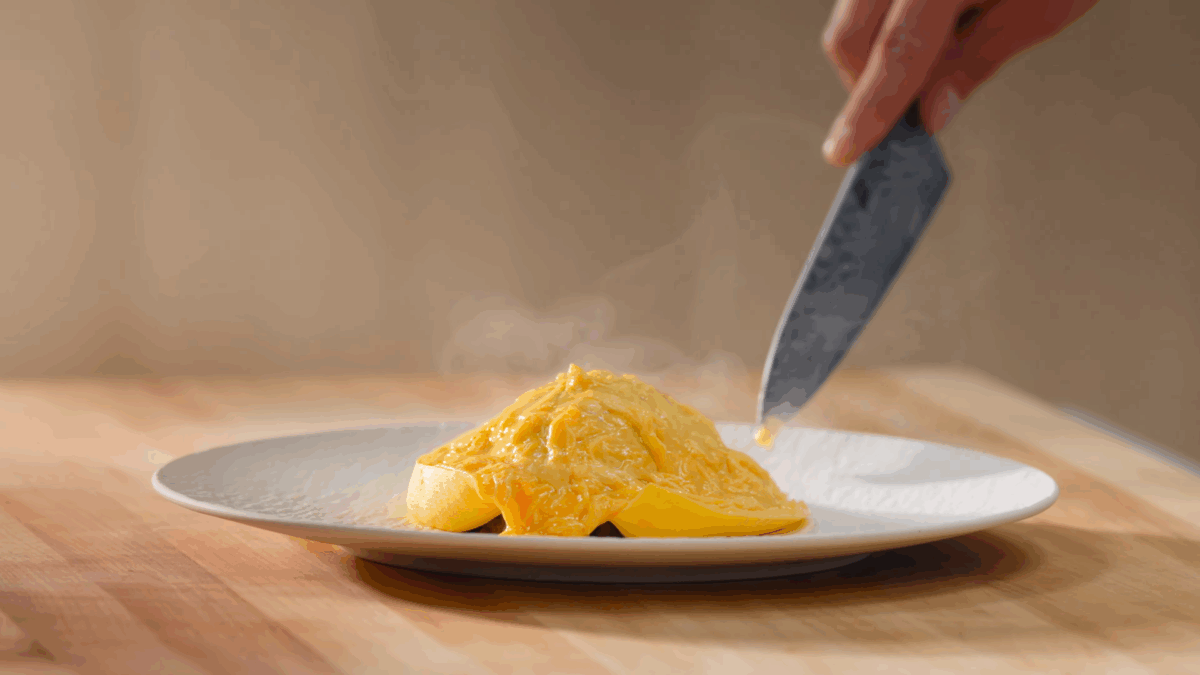
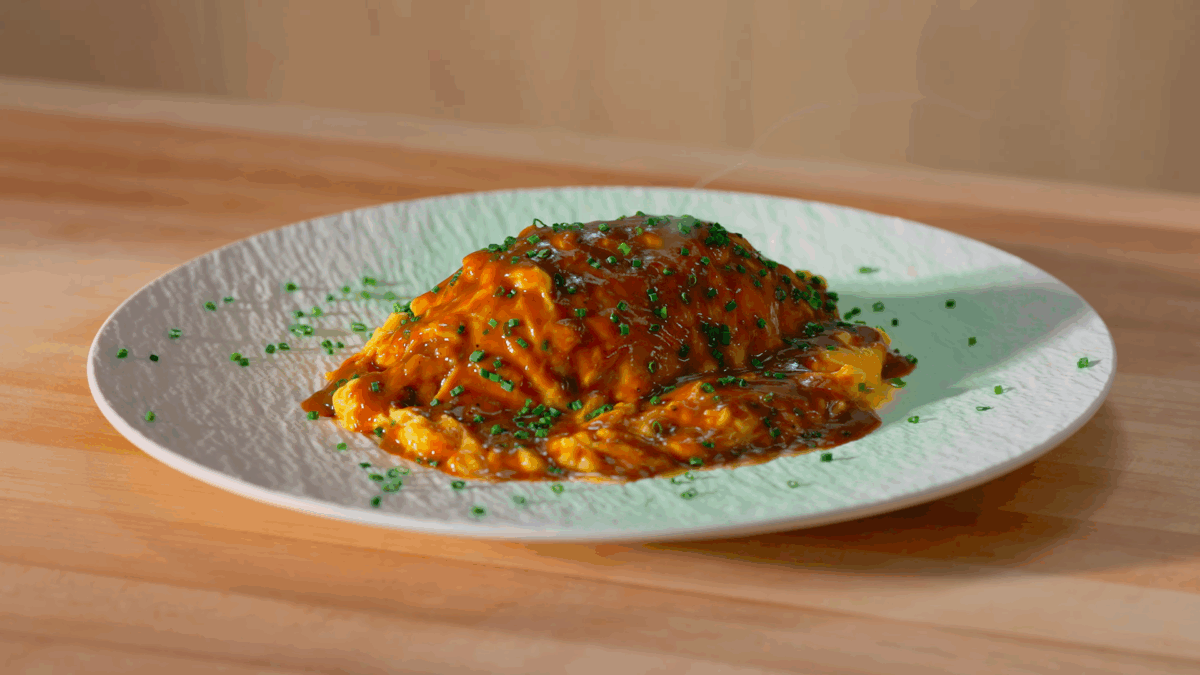
The omelet is cooked until set on the outside but still soft and custardy in the center, placed over a mound of chicken fried rice, and sliced lengthwise so it falls open over the rice. Instead of finishing it with ketchup, I serve it with a rich demi-glace. The sauce takes a little extra time, but it’s important because I don’t season the eggs themselves. This allows the flavor of the eggs to stay simple while the savory rice and concentrated sauce provide most of the seasoning.
Ingredients and Notes
See the recipe card below for the complete ingredient list and instructions.
Omurice
- Large Eggs – I use three to four eggs per person, making the omelets one at a time. For the best taste and texture and an omelet that doesn’t crack, I beat the eggs a day in advance.
Chicken Fried Rice
- Japanese Short-Grain Rice – Day-old cooked rice is essential. It has had time to dry out, which makes it easier to separate in the pan and helps prevent the fried rice from becoming mushy.
- Chicken Thighs – I prefer thighs because they stay juicy and add more flavor than chicken breast. Dice the chicken finely so you get a little in every bite. Some versions use ham instead, which is also tasty.
- Mixed Vegetables – I use onion and mushrooms, finely dicing both so they blend evenly throughout the rice and add a bit of texture and savory, umami flavor. Some variations include peas as well.
- Japanese Ketchup – This forms the base of the classic ketchup-seasoned rice. I like to caramelize it briefly in the pan before mixing it into the rice to concentrate its flavor.
- Worcestershire Sauce – This adds another layer of savory, tangy flavor to balance the sweetness of the ketchup.
- Butter – Stirred in toward the end, this adds richness and creates a glossy finish.
- Parsley – Fresh parsley adds color and freshness to the finished rice.
Demi-Glace
- Beef Broth – Use a good-quality beef broth because we’re reducing it considerably, which means its flavor becomes much more concentrated.
- Red Wine – Pinot Noir or a good Burgundy works well. The wine is reduced by half to cook off the harsh alcohol taste and concentrate its flavor.
- Aromatics – Shallots, green onions, celery, carrot, and garlic create the flavor base for the sauce.
- Tomato Paste – Cook this briefly with the vegetables before adding the wine to remove the raw tomato flavor and give the sauce depth.
- Butter and Flour – These are cooked together to make a golden roux, which both thickens the demi-glace and adds a subtle toasted flavor.
- Black Pepper – This is optional. Taste the finished sauce first, then add pepper as needed.
How to Make Japanese Omurice
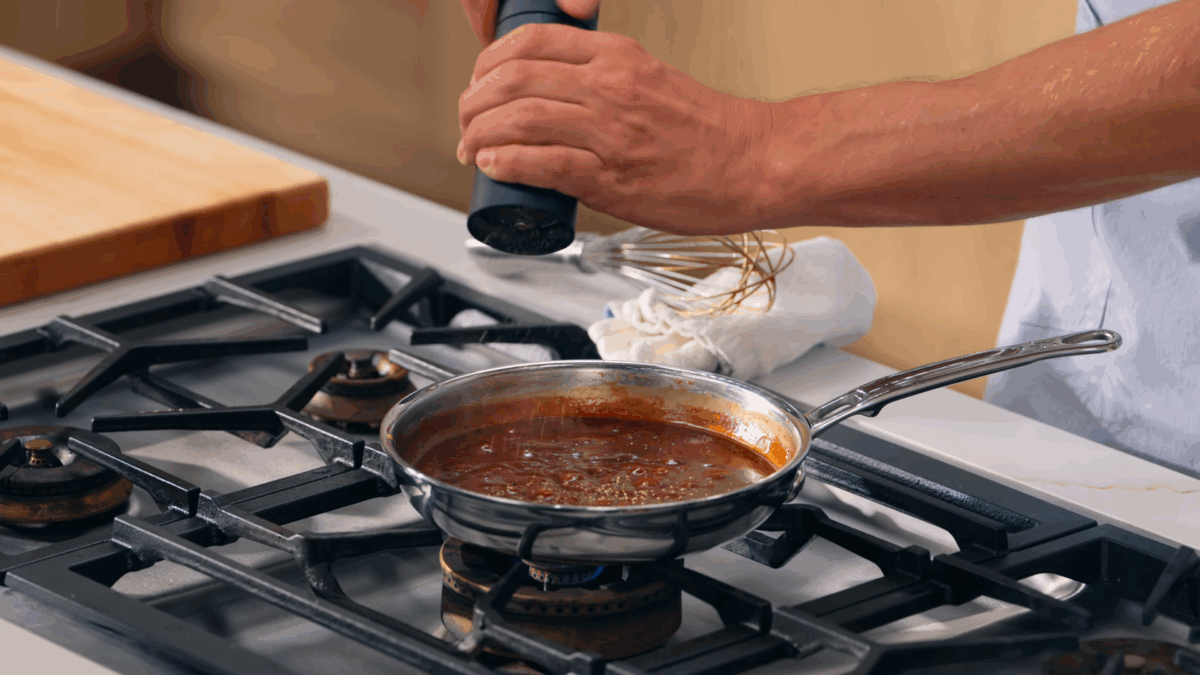
1. Prepare the Demi Glace
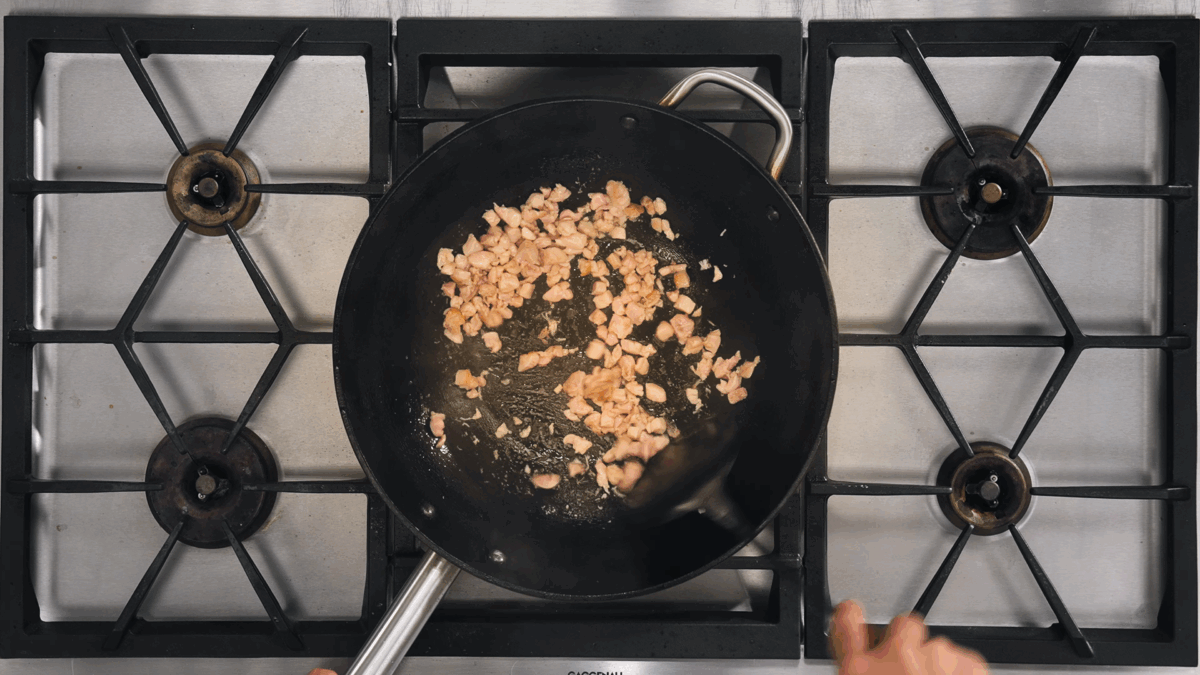
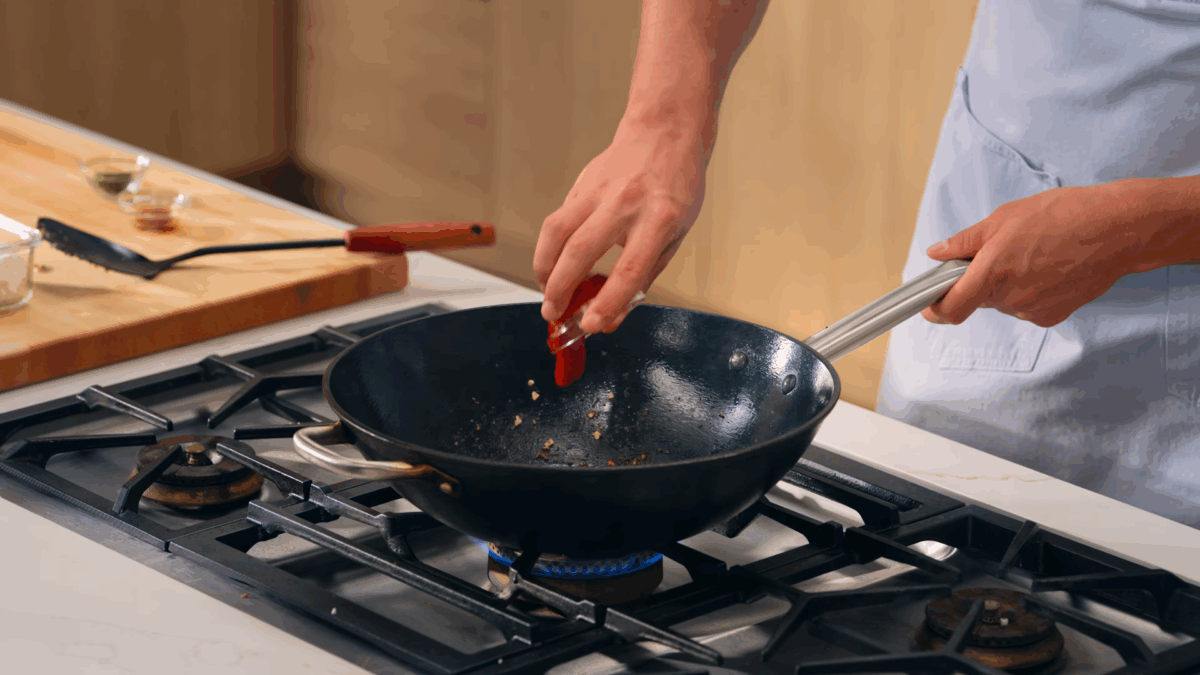
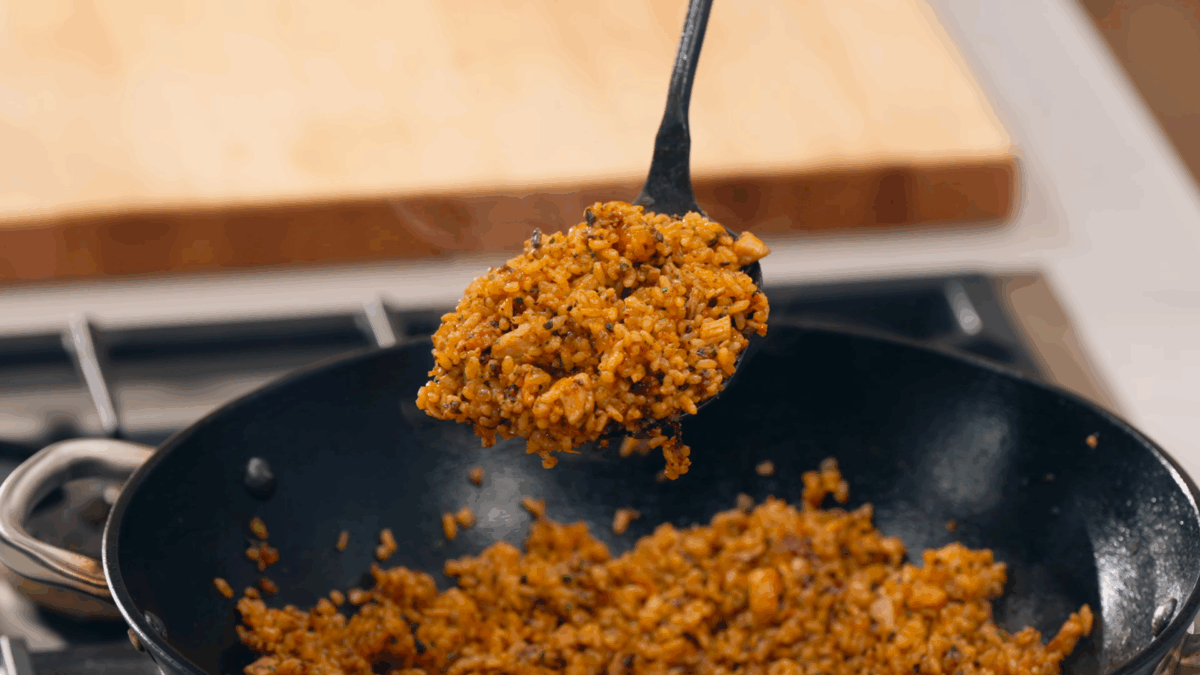
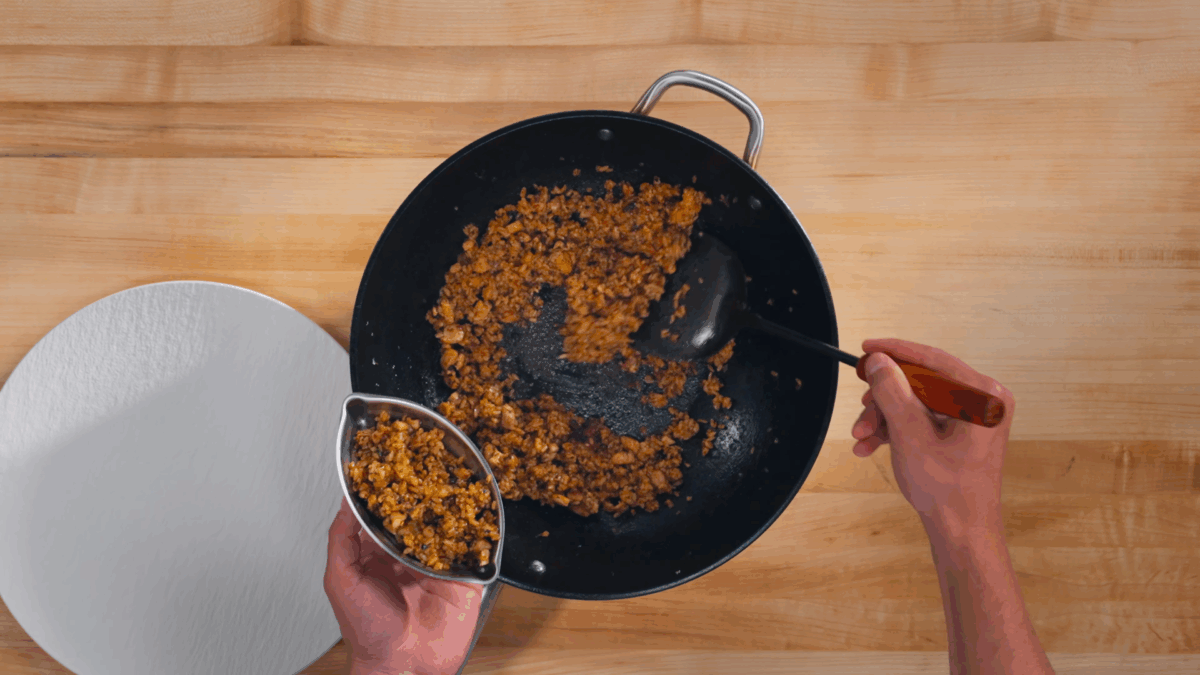
2. Make the Fried Rice
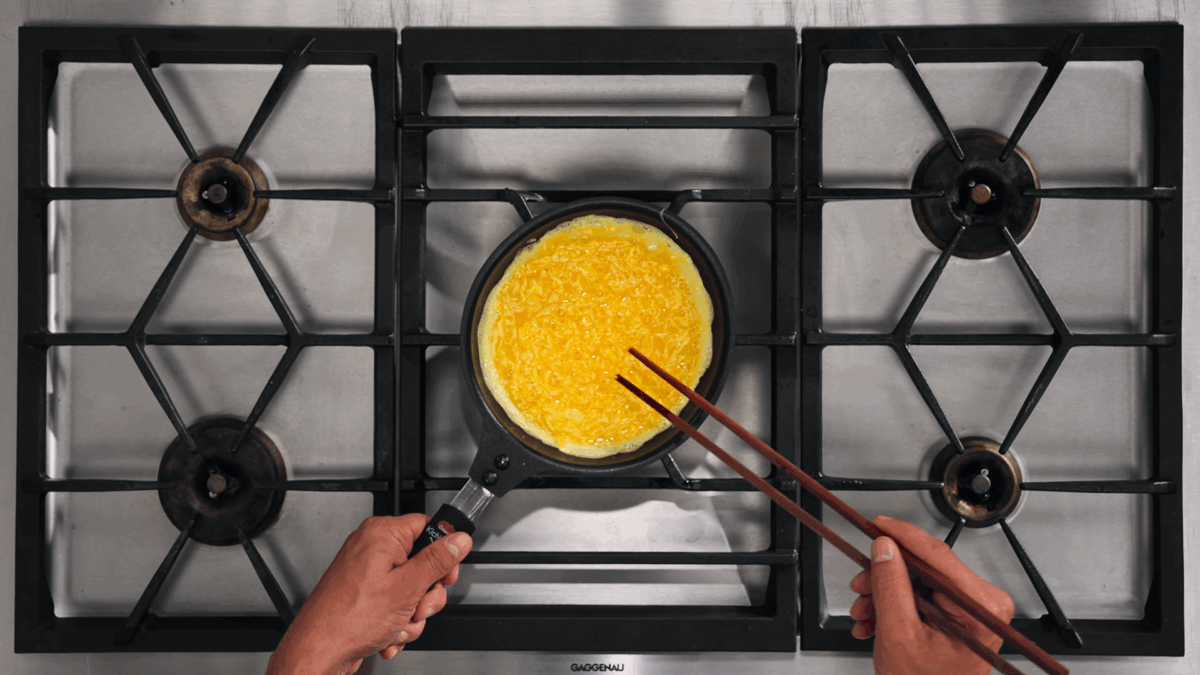
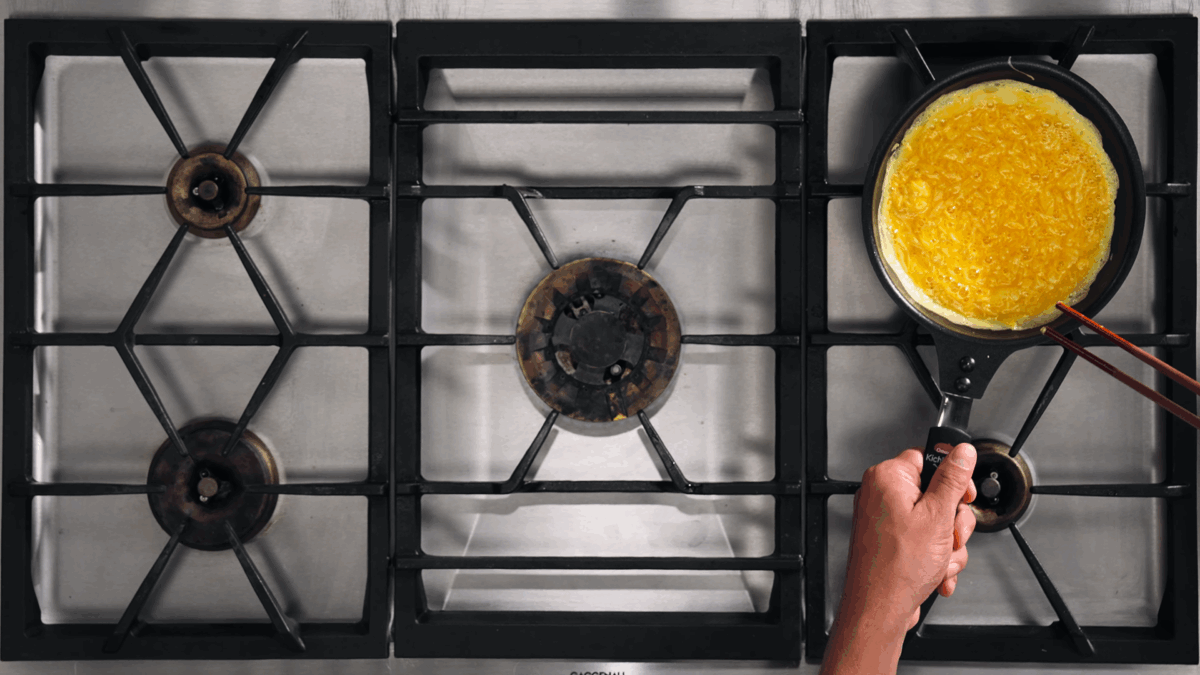
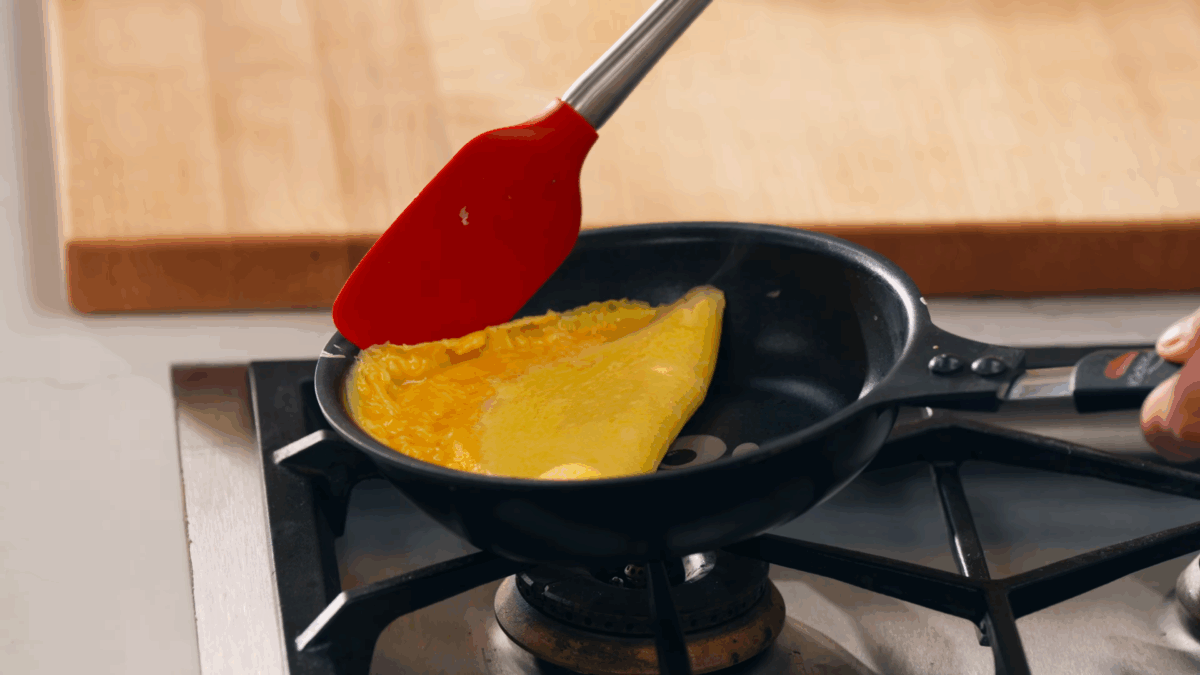
3. Cook the Egg
4. Plate and Serve the Omurice
Nick’s Tips for Success
- Use day-old rice. Freshly cooked rice contains too much moisture and can turn soft or mushy when fried. Refrigerating the rice overnight dries the surface slightly, making it much easier to separate and fry.
- Beat the eggs completely. Any streaks of unmixed white can create weak spots in the omelet and increase the chances of it tearing. The mixture should be completely uniform before it hits the pan.
- Control the heat. Managing the skillet’s temperature is crucial when making omurice. If the skillet is too hot, the eggs will scramble and brown before you can shape them. If it’s too cold, they’ll stick and won’t set quickly enough.
- Don’t overcook the omelet. Stop stirring when the eggs are about 70% set. You need enough cooked egg to create a stable exterior while leaving the center soft and custardy so it falls open when sliced.
- Have everything ready before cooking the eggs. Omurice moves fast once the eggs hit the skillet. Have your rice molded, plate ready, knife nearby, and demi-glace warm so you can serve the omelet immediately.
Japanese Omurice Recipe
Equipment
- 1 Medium Saucepan
- 1 Wooden Spoon
- 1 Small Saucepan
- 1 Strainer
- 1 Wok
- 1 Spatula
- 1 Rice Mould or Small Bowl
- 1 (8-inch) Non-Stick Frying Pan
- Chopsticks or Silicone Spatula
- 1 Whisk
Ingredients
Demi-Glace
- 1 tablespoon (15 milliliter) neutral oil
- 2 shallot, sliced
- 2 green onion, sliced
- ½ celery stalk, diced
- ½ whole carrot, diced
- 1 whole garlic clove
- 2 teaspoon (10 milliliter) tomato paste
- ½ cup (120 milliliter) Pinot Noir or good Burgundy wine
- 4 cup (1 Liter) good-quality beef broth
- 1¾ tablespoon (25 gram) butter
- 1½ tablespoon (25 gram) all-purpose flour
- optional black pepper, freshly ground
Chicken Fried Rice
- 2 tablespoon (30 milliliter) neutral oil
- ⅔ cup (150 gram) chicken thigh, finely diced
- ½ white onion, finely diced
- 4-5 button mushroom, finely diced
- 2 tablespoon (30 milliliter) Japanese ketchup
- 1 teaspoon (5 milliliter) Worcestershire sauce
- 2 cup (350 gram) cooked day-old Japanese short-grain rice
- 3 tablespoon (43 gram) butter
- salt , to taste
- black pepper, freshly ground, to taste
- 2 tablespoon (8 gram) fresh parsley, finely chopped
Omurice
- 3-4 large egg per person, cracked and beaten the day before
Instructions
Make the Demi-Glace
- Heat one tablespoon of neutral oil in a medium saucepan over medium heat. Add the shallot and cook until caramelized.1 tablespoon neutral oil, 2 shallot
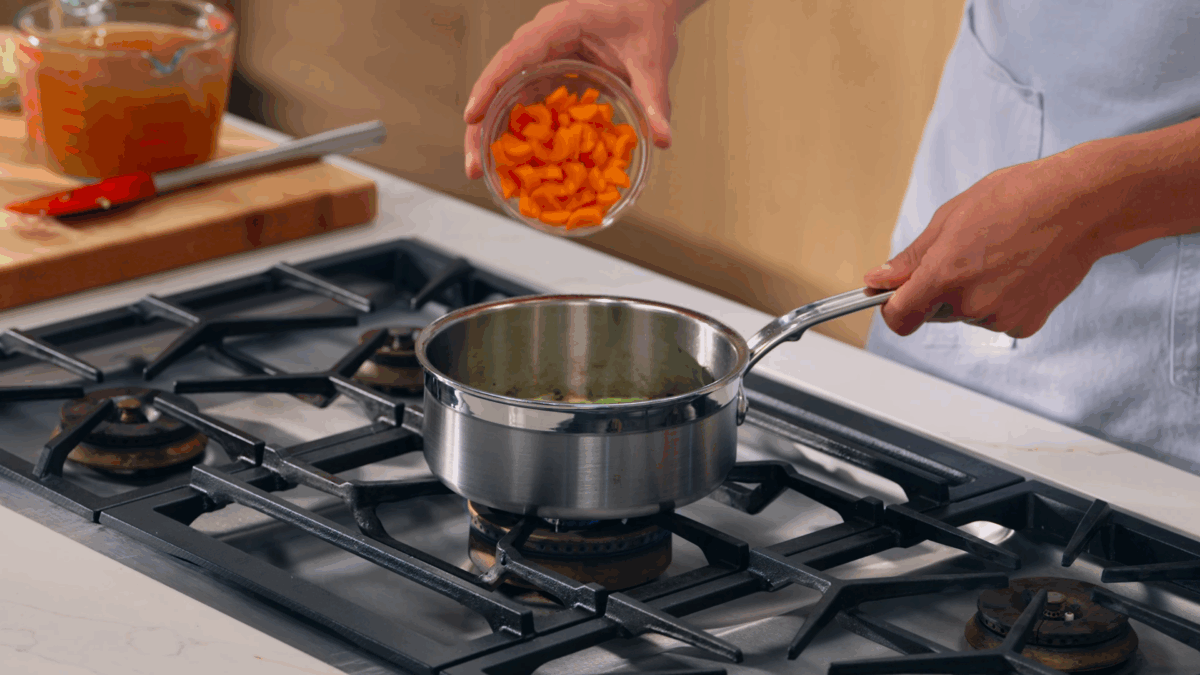
- Add the remaining vegetables and sauté for one to one and a half minutes. Add the tomato paste and cook for 30 seconds, stirring constantly.2 green onion, ½ celery stalk, ½ whole carrot, 1 whole garlic clove, 2 teaspoon tomato paste
- Deglaze the pan with the red wine and cook until reduced by half.½ cup Pinot Noir or good Burgundy wine
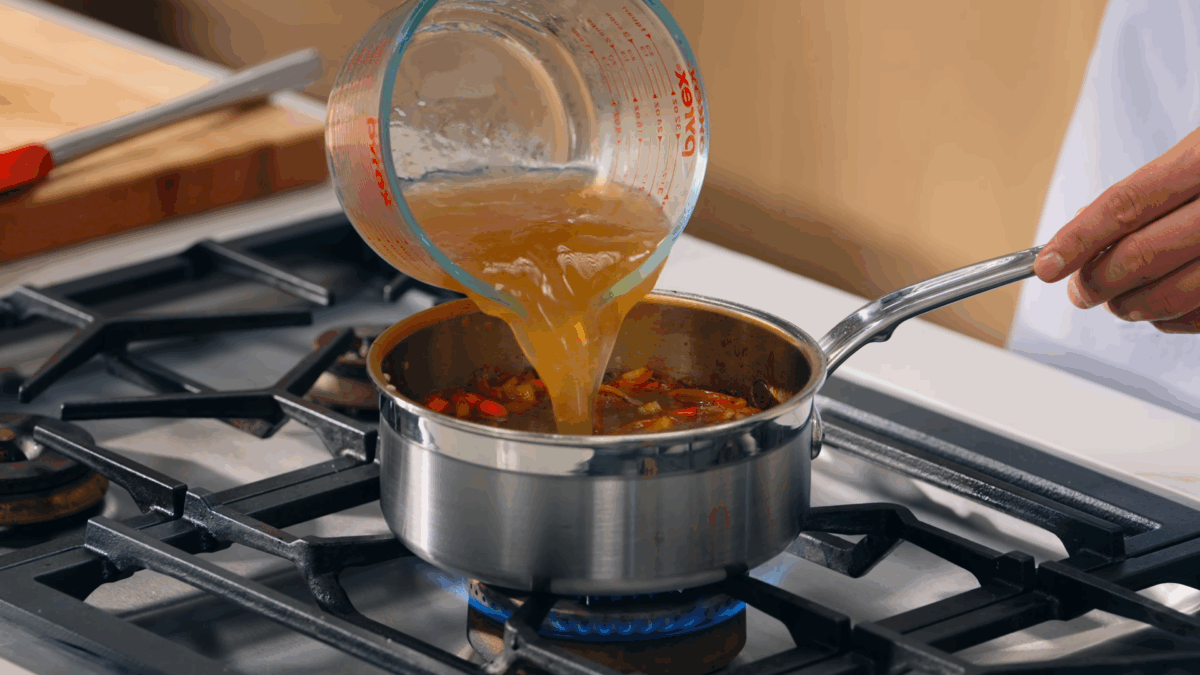
- Add the beef broth, reduce the heat to a simmer, and cook for 20-30 minutes, or until reduced by about two-thirds.4 cup good-quality beef broth
- Meanwhile, melt the butter in a clean small saucepan. Add the flour and stir with a spatula until golden to create a roux. Remove from the heat and let cool slightly.1¾ tablespoon butter, 1½ tablespoon all-purpose flour
- Place a fine-mesh strainer over the pan with the roux. Strain the reduced broth directly into the roux, pressing the vegetables with the back of a spoon to extract as much liquid as possible. Discard the solids.
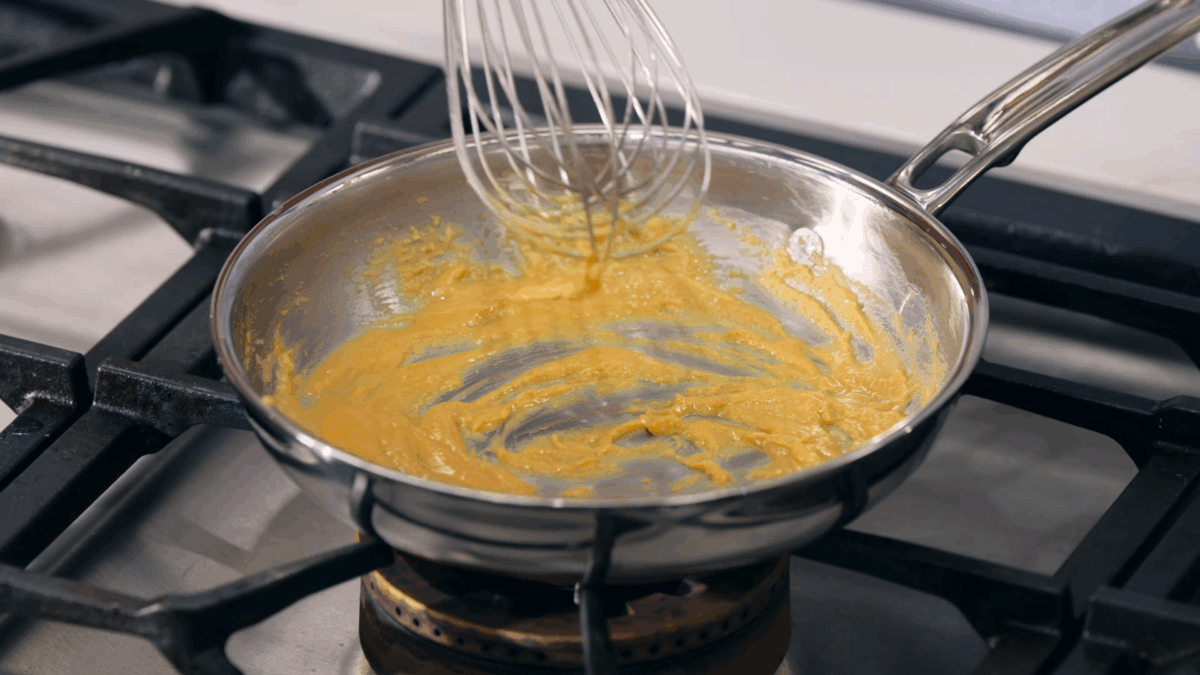
- Return the pan to the heat and gently whisk until the sauce is thickened, glossy, and coats the back of a spoon. Taste and season with freshly ground black pepper as needed. Set aside and keep warm.optional black pepper
Make the Chicken Fried Rice
- Heat two tablespoons of neutral oil in a deep-sided frying pan or wok over medium-high heat.2 tablespoon neutral oil
- Add the diced chicken and cook, tossing occasionally, until lightly browned and cooked through.⅔ cup chicken thigh
- Add the onion and mushrooms and cook until the onion is translucent.½ white onion, 4-5 button mushroom
- Push the chicken and vegetables to one side of the pan. Add the ketchup to the empty side and cook briefly to caramelize.2 tablespoon Japanese ketchup
- Stir in the Worcestershire sauce, then add the rice. Use a spatula to break apart the rice as it cooks, stirring until the grains are evenly coated.1 teaspoon Worcestershire sauce, 2 cup cooked day-old Japanese short-grain rice
- Add the butter and season with salt and freshly ground black pepper to taste.3 tablespoon butter, salt, black pepper
- Stir in the chopped parsley and set aside.2 tablespoon fresh parsley
Make the Omelet
- Heat an eight-inch nonstick frying pan over medium heat. The pan should be hot but not smoking.
- Pour in the beaten eggs. Working quickly, use chopsticks or a spatula to stir the eggs, continuously moving the cooked portions toward the center.3-4 large egg per person
- When the eggs are about 70% set but still wet on top, stop stirring and let them cook for about five seconds to set the base.
- Tilt the pan and use chopsticks or a spatula to roll the omelet into an oval, bringing the top and bottom edges together in the center.
- Gently flip the omelet so the seam is facing down. Cook for a few seconds to seal the seam.
Assemble and Serve
- Pack the fried rice into an omurice mold or small bowl. Invert it onto a serving plate and remove the mold.
- Using chopsticks or a spatula as a guide, gently slide the omelet on top of the rice.
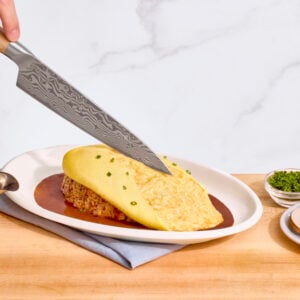
- Using a sharp knife, slice the omelet lengthwise down the center, allowing the soft interior to open and fall over the rice.
- Ladle a generous amount of warm demi-glace over the omelet.
- Garnish with additional chopped parsley and serve immediately.
Video

Notes
– Refrigerator: Store the chicken fried rice and demi-glace separately in airtight containers in the refrigerator for up to four days. For the best texture, I recommend making the omelet fresh just before serving.
– Freezer: Freeze the chicken fried rice and demi-glace separately in freezer-safe containers for up to three months. I don’t recommend freezing the omelet, as the eggs can become watery and rubbery once thawed.
– Reheating: Reheat the fried rice in a skillet over medium heat until warmed through, and gently reheat the demi-glace in a saucepan over low heat. Make a fresh omelet just before assembling and serving.
Nutrition
Nutrition information is automatically calculated, so should only be used as an approximation.
 Like this recipe? Rate & comment below!


amazing
This was a really fun one to attempt! Thanks for all the tips, Nick.