
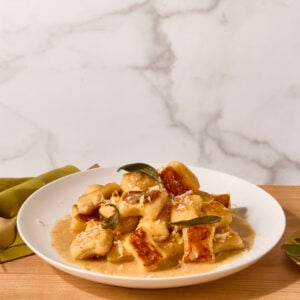
This homemade gnocchi recipe is one of my favorite comfort food meals ever. Maybe it’s because I’m Italian, but I find that there’s something incredibly satisfying about making pillowy potato gnocchi from scratch. I could eat it on its own, but for this recipe, I toss it in nutty butter with crispy sage, bright lemon, and plenty of freshly grated Parmesan. It’s a simple yet elegant dish that’s always delicious and perfect for any occasion.
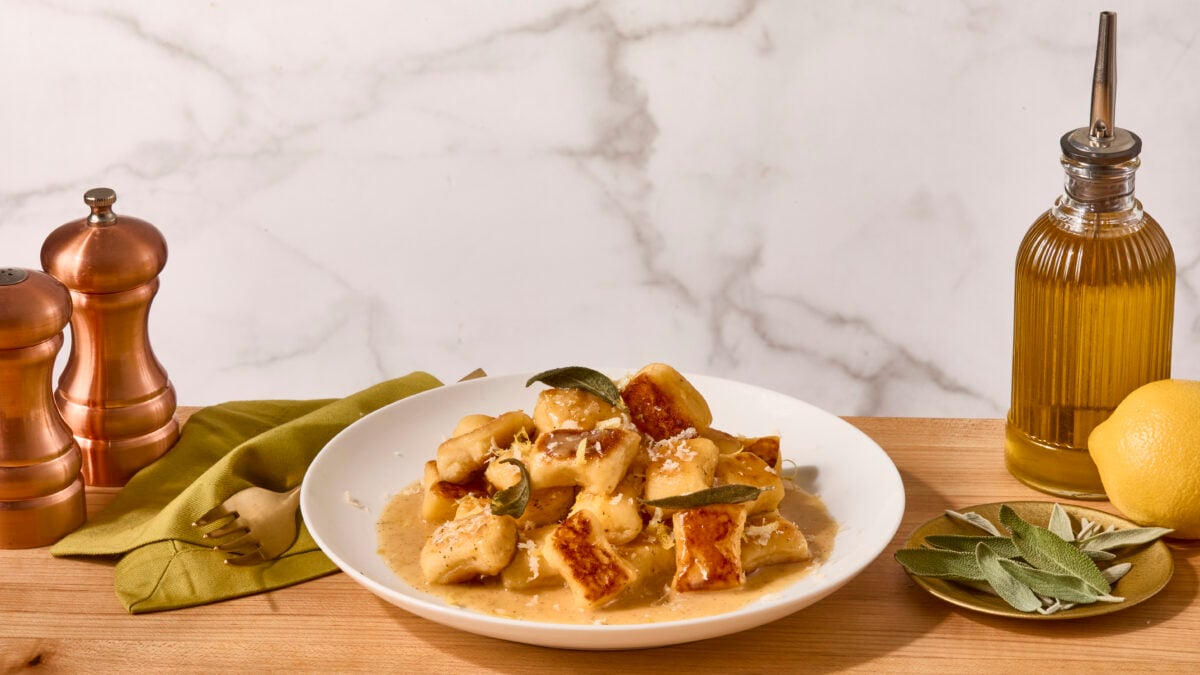
I love homemade pasta of all kinds, like my pesto pasta and spaghetti carbonara. However, I also like to switch it up and make potato gnocchi instead. While not technically pasta, gnocchi is often served similarly, offering a unique shape and texture while still being incredibly satisfying. I love gnocchi so much that making gnocchi was one of the first videos I put on YouTube.
Now, several years and a cookbook later, I’d like to think I’ve perfected my techniques. The best part is that homemade gnocchi doesn’t require a long list of ingredients or fancy equipment. I’ll walk you through the process. Once you get the feel for it, I’m confident this gnocchi recipe will be a favorite for you, too.
What is Gnocchi?
Gnocchi (pronounced NYOH-kee) is a traditional Italian dumpling made primarily from potatoes, flour, and egg. Unlike pasta, which is made from a wheat-based dough, potato gnocchi has a soft, pillowy texture that practically melts in your mouth when prepared correctly.
While potato gnocchi is the most common variety, you’ll also find versions made with ricotta, semolina, or even vegetables like squash. In this recipe, I use baked russet potatoes because their starchy texture creates the lightest, fluffiest gnocchi. After boiling, the dumplings are finished in browned butter with crispy sage, giving them a golden, lightly crisp exterior while keeping the centers incredibly tender.
Ingredients and Notes
See the recipe card below for the complete ingredient list and instructions.
Homemade Gnocchi
- Russet Potatoes – Russet potatoes are the best potatoes for gnocchi because they’re high in starch and low in moisture, which helps create a light, fluffy dough.
- All-Purpose Flour – Just a little bit of flour helps bind the dough. Avoid adding too much flour, or the gnocchi can become dense and chewy.
- Egg Yolks – The yolks add richness and help hold the dough together without making it tough.
- Salt – A little bit goes a long way to season the dough.
Sauce & Assembly
- Unsalted Butter – I brown the butter to give the sauce a rich, nutty taste.
- Extra-Virgin Olive Oil – This combines with the butter to help prevent it from burning while creating a smooth, rich sauce.
- Fresh Sage Leaves – Fried until crisp, sage adds an earthy, aromatic flavor that pairs well with the potato gnocchi.
- Salt – This helps enhance the rest of the ingredients.
- Lemon – Lemon juice and lemon zest brighten the rich butter sauce and balance the flavors with a touch of acidity.
- Parmesan – Freshly grated Parmesan adds a salty, nutty finish that ties everything together.
How to Make Gnocchi
1. Prepare the Gnocchi
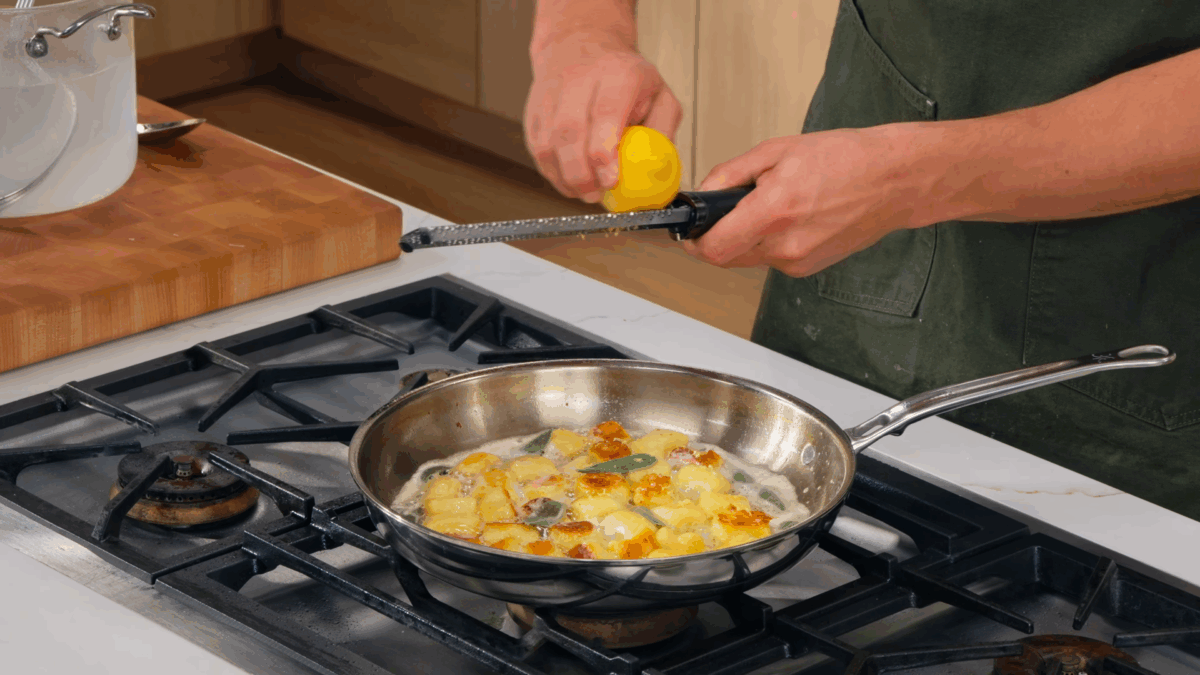
2. Make the Sauce and Cook the Gnocchi
Nick’s Tips for Success
- Rice the potatoes while they’re still hot. Warm potatoes pass through the ricer much more easily and create a smooth, lump-free dough.
- Use as little flour as possible. The less flour you add, the lighter and more tender your gnocchi will be. Add it gradually until the dough just comes together.
- Don’t overwork the dough. Mix and knead only until the ingredients are combined. Overworking develops gluten, which makes gnocchi dense instead of pillowy.
- Test one piece of gnocchi, known as a gnocco, first. Before cooking the whole batch, test a single piece of gnocchi in the boiling water. If it falls apart, knead in a little more flour. If it’s too firm, use less flour next time.
- Salt your pasta water generously. Since the gnocchi cooks so quickly, the water is your best opportunity to season it.
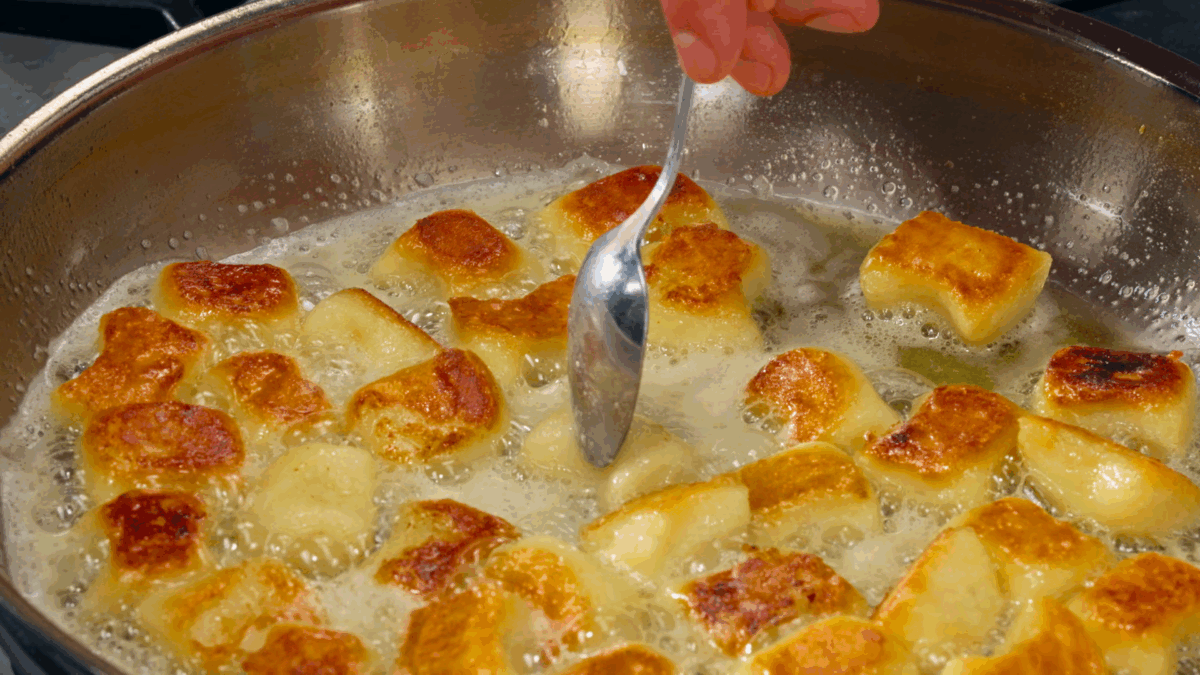
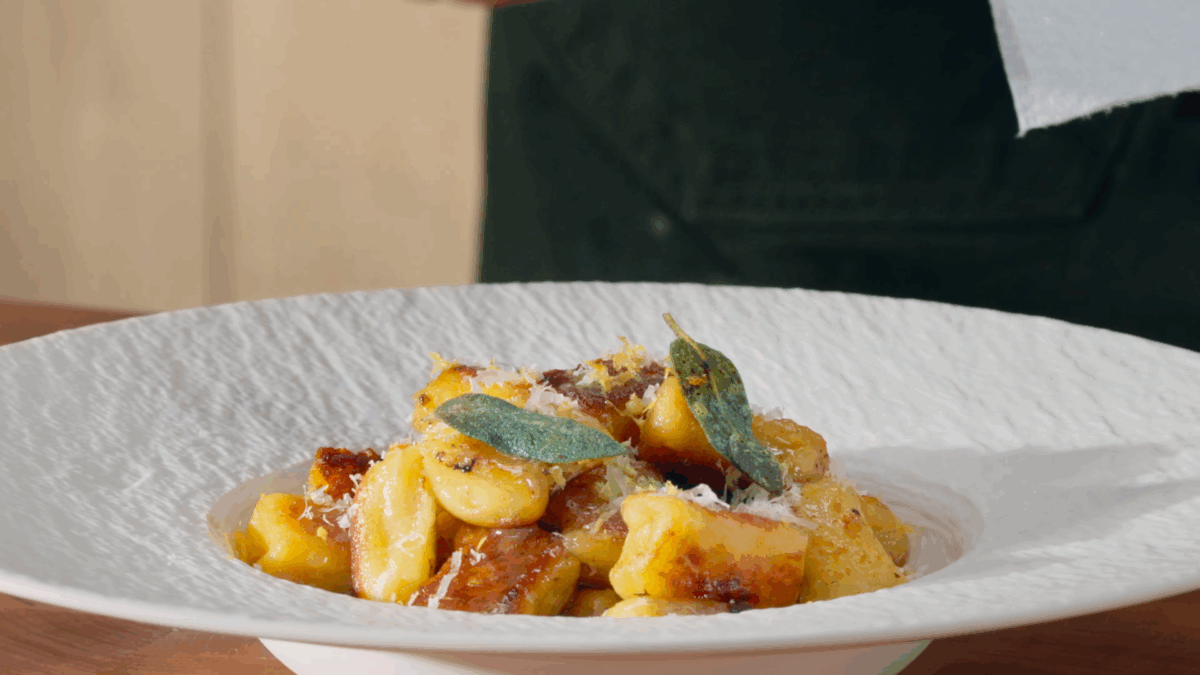
- Let the gnocchi crisp before moving it. Once you transfer the boiled gnocchi to the butter sauce, give it a few minutes to develop a golden crust before tossing. The contrast between crispy edges and a soft center is part of what makes this dish so good.
Homemade Gnocchi Recipe
Equipment
- 1 Baking Sheet
- 1 Fork or Paring Knife
- 1 Potato Ricer
- 1 Bench Scraper
- 1 Large Pot
- 1 Large Sauté Pan or Skillet
- 1 Slotted Spoon or Spider Strainer
- 1 Microplane or Zester
- 1 Cheese Grater
Ingredients
For the Gnocchi
- 4 russet potato
- 2-4 large egg yolk
- 1 teaspoon (6 gram) kosher salt
- 1 cup (120 gram) all-purpose flour
For the Sauce & Assembly
- 4 tablespoon (57 gram) unsalted butter
- 2 tablespoon (30 milliliter) extra-virgin olive oil
- ½ cup (12-15 gram) fresh sage leaves
- kosher salt, to taste
- 1 tablespoon (15 milliliter) lemon juice
- zest of 1 lemon, plus more for serving if desired
- Parmesan cheese, freshly grated, for serving
Instructions
For the Gnocchi
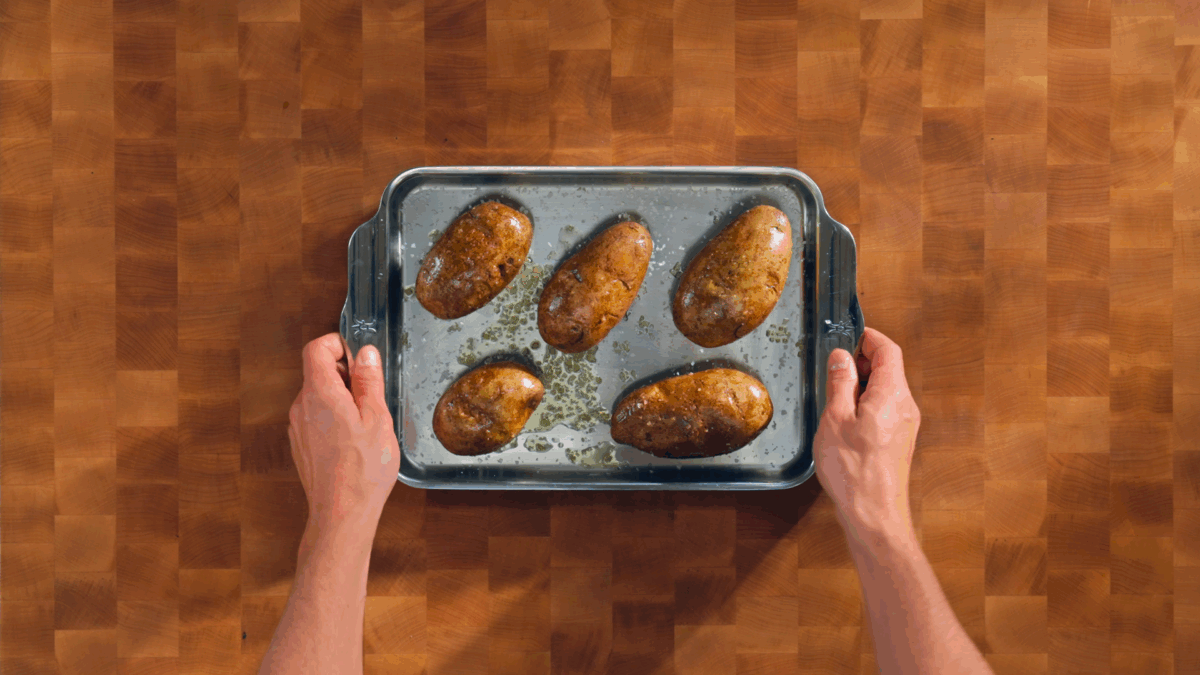
- Preheat the oven to 400°F (200°C). Wash the potatoes, then use a fork or small knife to poke holes all over each one. Coat lightly with oil and salt, and roast directly on a baking sheet or oven rack for one and a half to two hours, or until fork-tender.4 russet potato
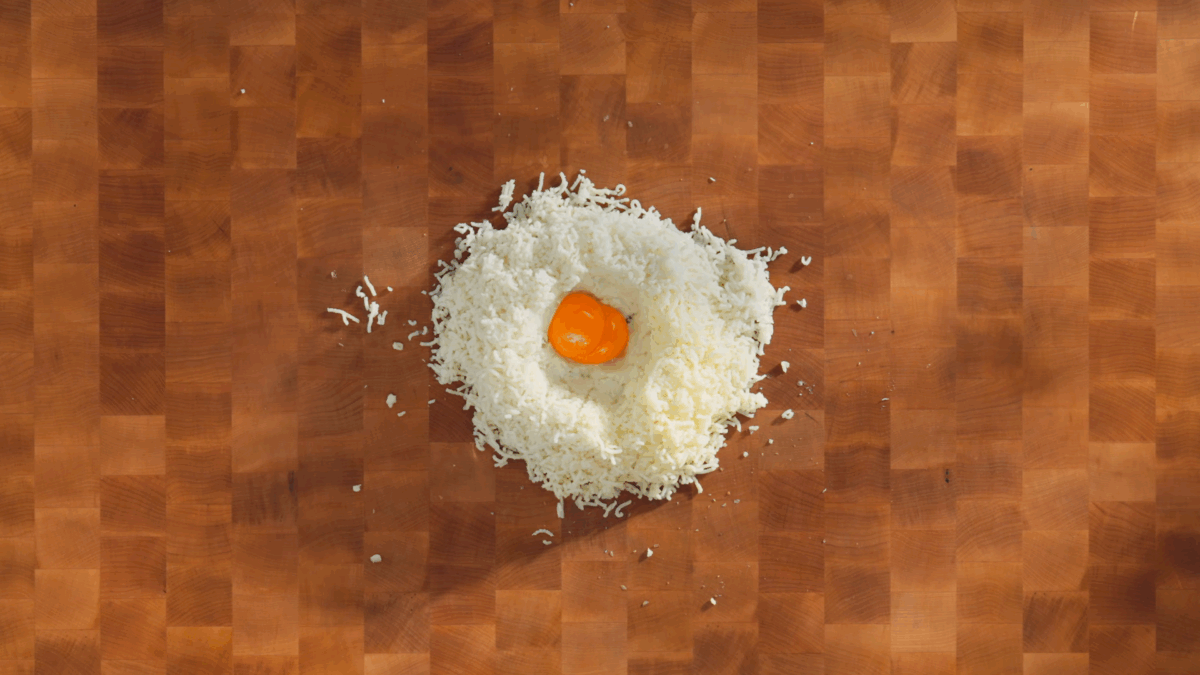
- While the potatoes are still warm, scoop the flesh from the skins and pass it through a potato ricer onto a clean work surface, forming a mound.
- Add two egg yolks, salt, and one-fourth cup of the flour to the riced potatoes. Using your hands or a bench scraper, gently mix until the dough begins to come together. If it seems too dry or won't hold together, add additional egg yolks as needed.2-4 large egg yolk, 1 cup all-purpose flour, 1 teaspoon kosher salt
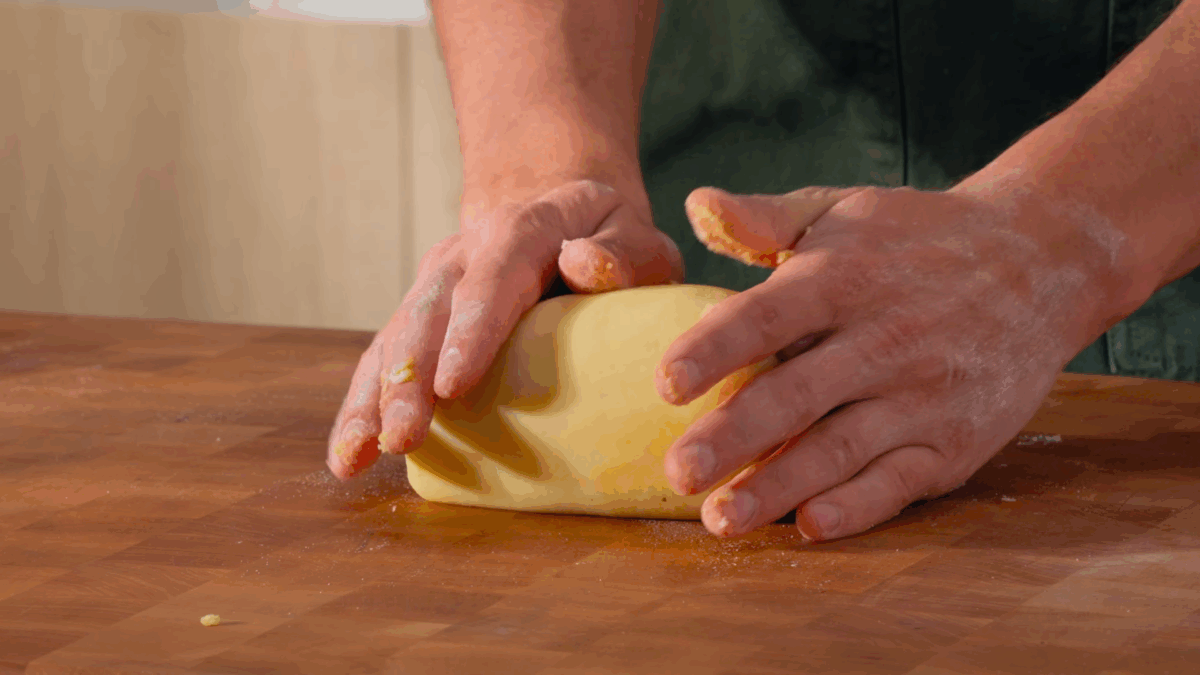
- Using a bench scraper, cut the mixture together, then gently knead it, adding one tablespoon of flour at a time until a smooth, pasta-like dough forms. Use as little flour as possible to keep the gnocchi light and tender.
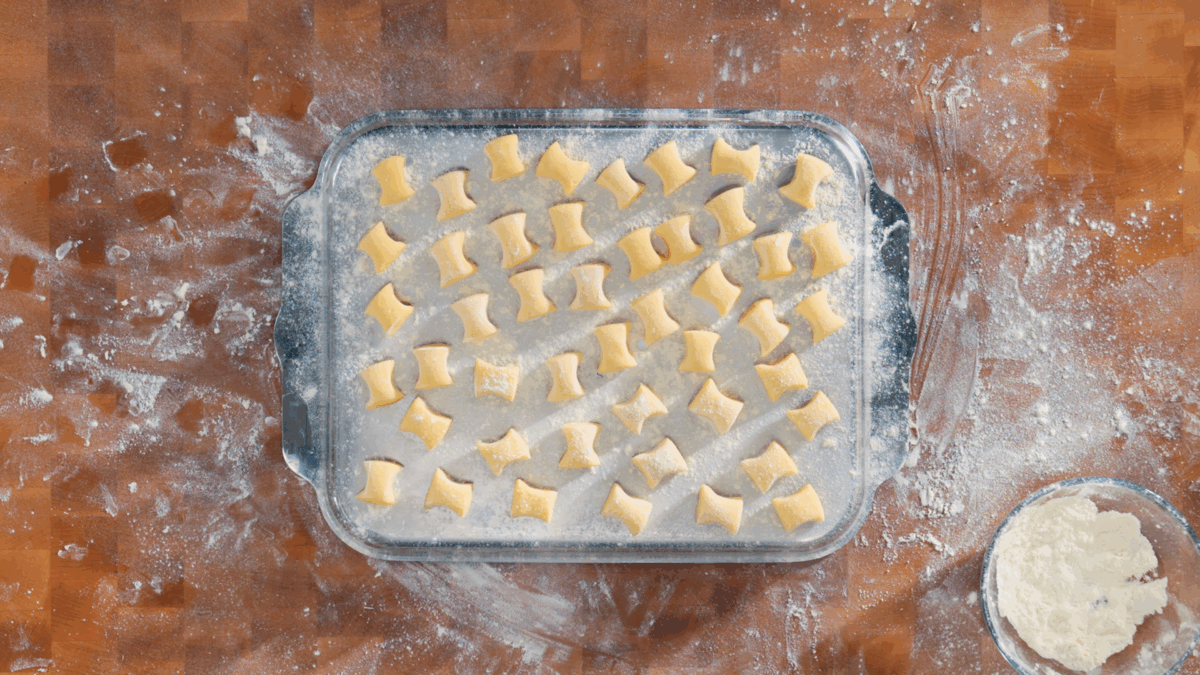
- Divide the dough into four equal pieces. Roll each piece into a one-inch (two and a half centimeter)thick rope, then cut into one-inch (two and a half centimeter) pieces to create pillow-shaped gnocchi.
- Arrange the gnocchi on a floured, upside-down baking sheet and let them rest for 15 minutes.
For the Sauce & Cooking the Gnocchi
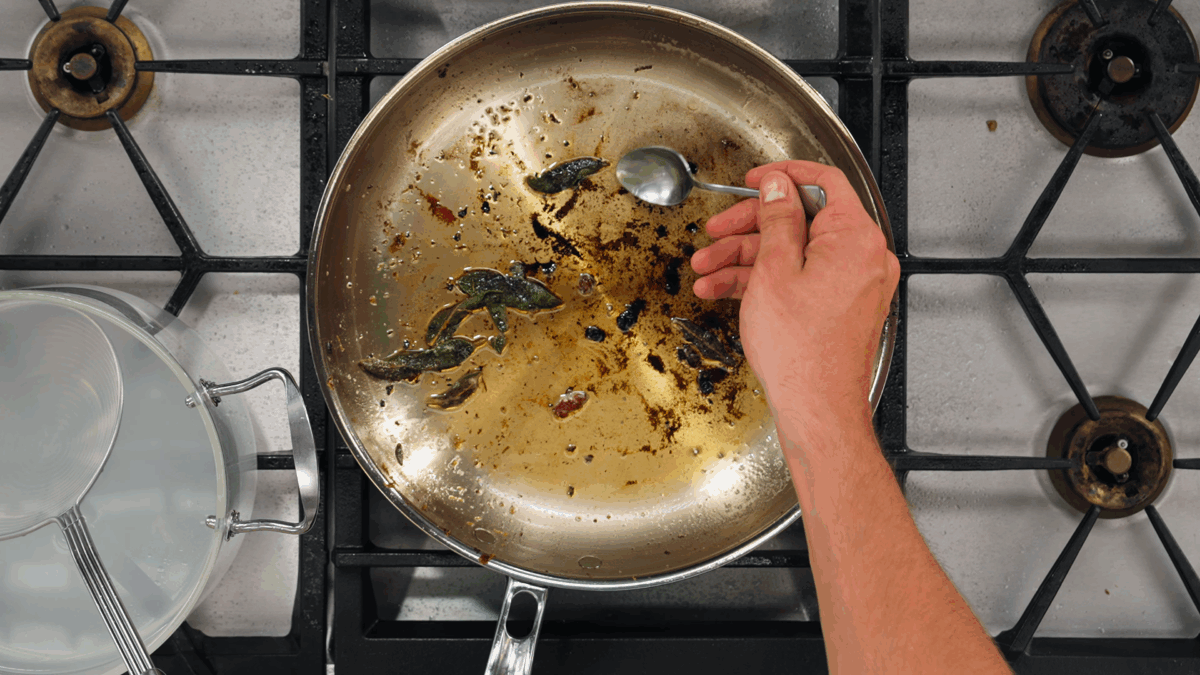
- Heat the butter and olive oil in a large sauté pan over medium heat until fragrant. Add the sage leaves and a large pinch of kosher salt, cooking until the sage is crisp. Transfer the sage to a paper towel-lined plate.4 tablespoon unsalted butter, 2 tablespoon extra-virgin olive oil, ½ cup fresh sage leaves, kosher salt
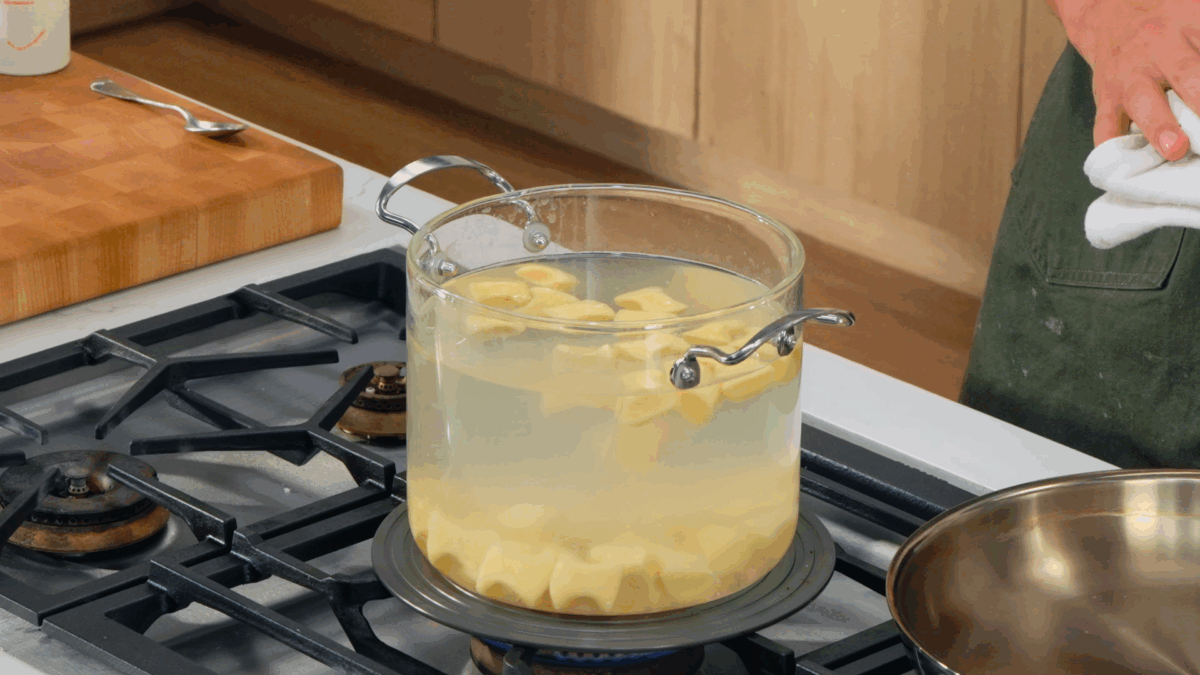
- Bring a large pot of generously salted water to a boil. Add the gnocchi and cook until they float to the surface. Transfer them directly to the pan with the sage butter.
- Add the lemon juice and increase the heat to medium-high. Cook, turning occasionally, until the gnocchi are golden brown and lightly crisp, about three to four minutes.1 tablespoon lemon juice
- Add reserved pasta water one tablespoon at a time until a glossy, emulsified sauce forms. Stir in the lemon zest and toss to coat.zest of 1 lemon
To Serve
- Divide the gnocchi among serving plates.
- Top with the crispy sage, extra lemon zest if desired, and plenty of freshly grated Parmesan. Serve immediately.Parmesan cheese
Video

Notes
– Refrigerator: Store leftover cooked gnocchi in an airtight container in the refrigerator for up to four days.
– Freezer: Freeze uncooked gnocchi on a parchment-lined baking sheet until solid, then transfer them to a freezer-safe bag or container for up to three months. Cook them straight from frozen, adding an extra minute or two to the boiling time.
– Reheating: For the best texture, reheat cooked gnocchi in a skillet over medium heat with a little butter until warmed through and lightly crisp. I don’t recommend microwaving if you can avoid it, as the gnocchi can become soft and lose their crispy exterior.
Nutrition
Nutrition information is automatically calculated, so should only be used as an approximation.
 Like this recipe? Rate & comment below!



THAT. WAS. INCREDIBLE.
It was our first time making gnocchi and it turned out great. We had to use a lot of flour though. But overall, it was fabulous!
Looks amazing, just curious that if I don’t have a potato ricer, will a potator masher work instead?
Thank you, Nick! I’m 19 and have been cooking regularly and falling in love with it because of you. Currently making this for my dad on his bday.
We’re so happy to hear this, Ivan! Thanks for following along, and happy belated birthday to your dad!
My new favorite way to eat gnocchi!