
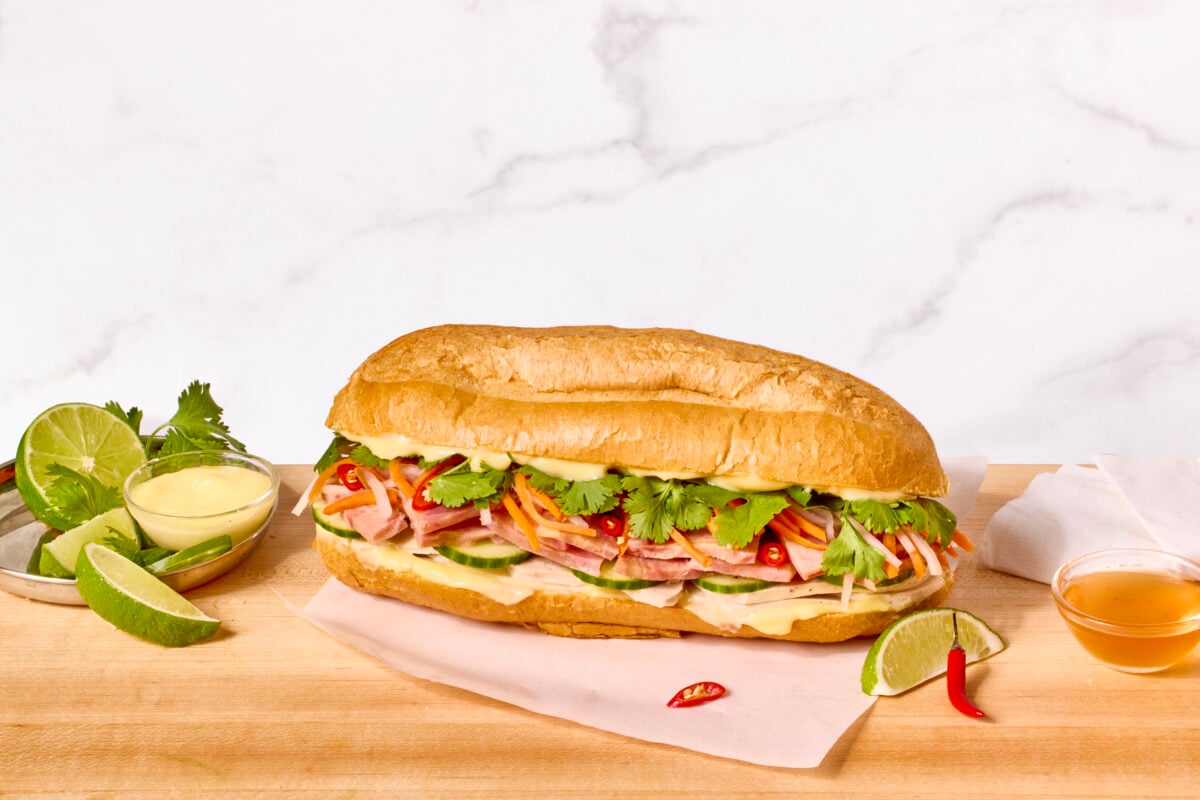
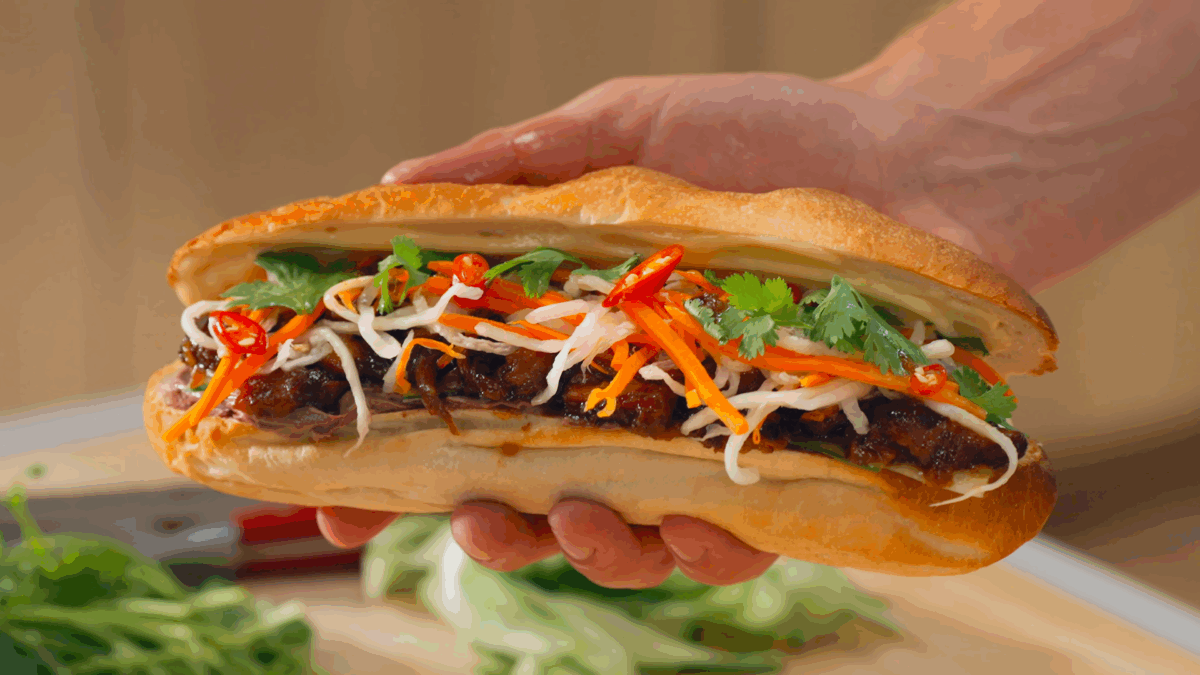
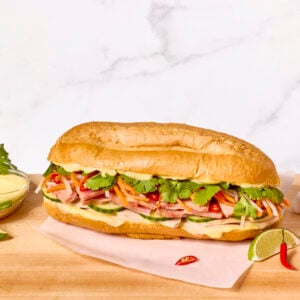
My banh mi recipe layers homemade baguettes with chicken liver pâté, caramelized pork belly, pickled veggies, and Vietnamese mayonnaise. Sweet, savory, tangy, crispy, creamy, and everything in between, it has everything you want in a sandwich. There’s a reason banh mi sandwiches are such a classic, and you can make this version right at home. No plane trip required!
What is Banh Mi?
Banh mi is a Vietnamese sandwich that originated as a street food in Saigon, in southern Vietnam. The term bánh mì actually refers to bread, which indicates the importance of the baguettes used to create the sandwich. A hybrid of French and Vietnamese cuisine, banh mi recipes typically come together with French breads, pickled carrots, julienned daikon, chiles, cucumber strips, cilantro, mayo, and a protein, such as pork, chicken, pâté, cold cuts, or Vietnamese pork sausage.
The sandwich has its roots in the French occupation of Vietnam, beginning in the mid-nineteenth century. French colonists introduced baguettes and other French ingredients, and over time, Vietnamese cooks adapted these foods to suit the Vietnamese climate, available ingredients, and personal taste. As a result, foods that began as French imports were eventually developed into distinctly Vietnamese versions of their French counterparts. For instance, a baguette purchased from a bakery in France will be very different from a baguette used in Vietnam.
Today, bánh mì is one of the most recognizable Vietnamese dishes, and there are tons of different versions. Depending on where you go, the menu of fillings might include pâté, grilled pork, Chinese BBQ pork, headcheese, Vietnamese sausage, chicken, or other meats, along with pickled vegetables and fresh herbs.
For this recipe, I’m going all out with homemade baguettes, Vietnamese pâté made with chicken liver, caramelized pork belly, quick-pickled carrot and daikon, cucumber, cilantro, chili, and mayonnaise.
The crux of making all these components work is achieving balance in both the tastes and textures. The pork and pâté are rich and savory, the pickles bring acidity and crunch, the herbs and cucumber keep everything fresh, and the chili adds just enough heat. Get a little bit of everything in each bite, and you’ve got the perfect sandwich!
Ingredients and Notes
See the recipe card below for the complete ingredient list and instructions.
Baguettes
- Bread Flour – I use a very strong, high-protein bread flour to develop plenty of gluten, which gives the dough structure while still creating the light texture we want inside. Unlike traditional French breads, these baguettes are designed to have a slightly softer interior that works perfectly for banh mi.
- Instant Yeast – This helps the baguettes rise and creates a light, airy crumb.
- Sugar – A little caster sugar adds subtle sweetness and helps with browning.
- Oil – This keeps the bread softer than a traditional crusty French baguette, which is particularly useful in a humid climate.
- Lime Juice – The acidity helps strengthen the dough and contributes to the texture of the finished baguettes.
Chicken Liver Pâté
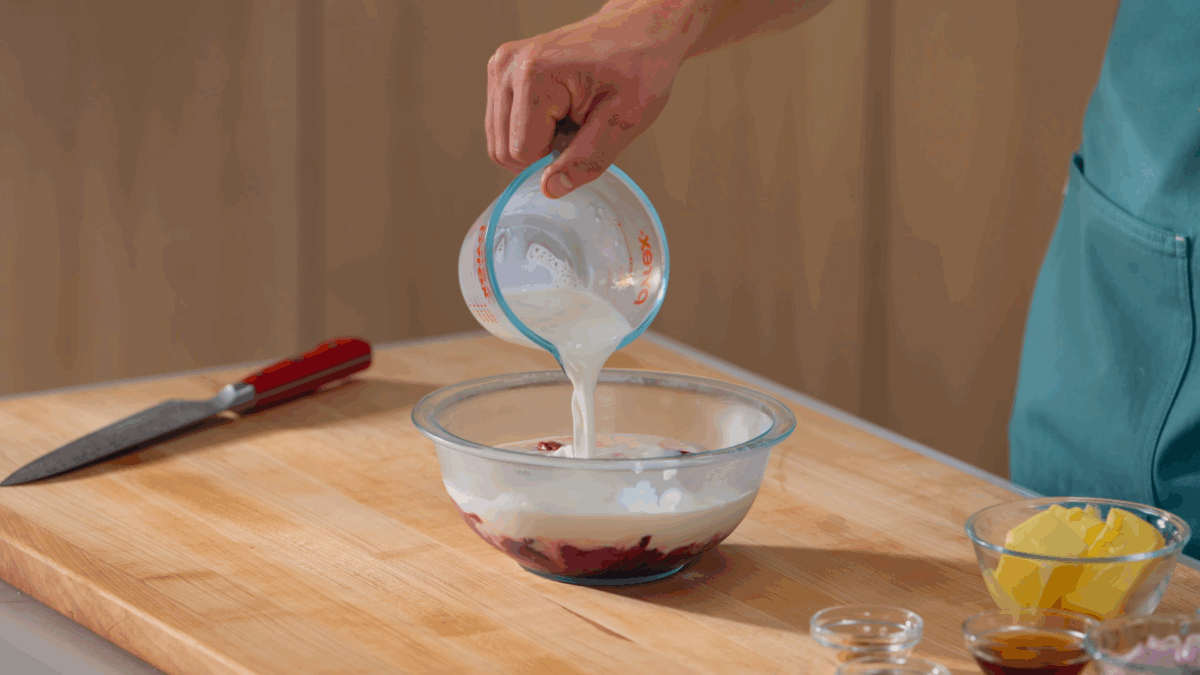
- Chicken Livers – Chicken liver is one of the traditional ingredients used to make pâté for banh mi. Soaking the livers in milk before cooking helps remove excess blood and mellows their flavor.
- Butter – I recommend using unsalted butter so you have better control over the flavor. This adds richness and gives the pâté its smooth, creamy consistency.
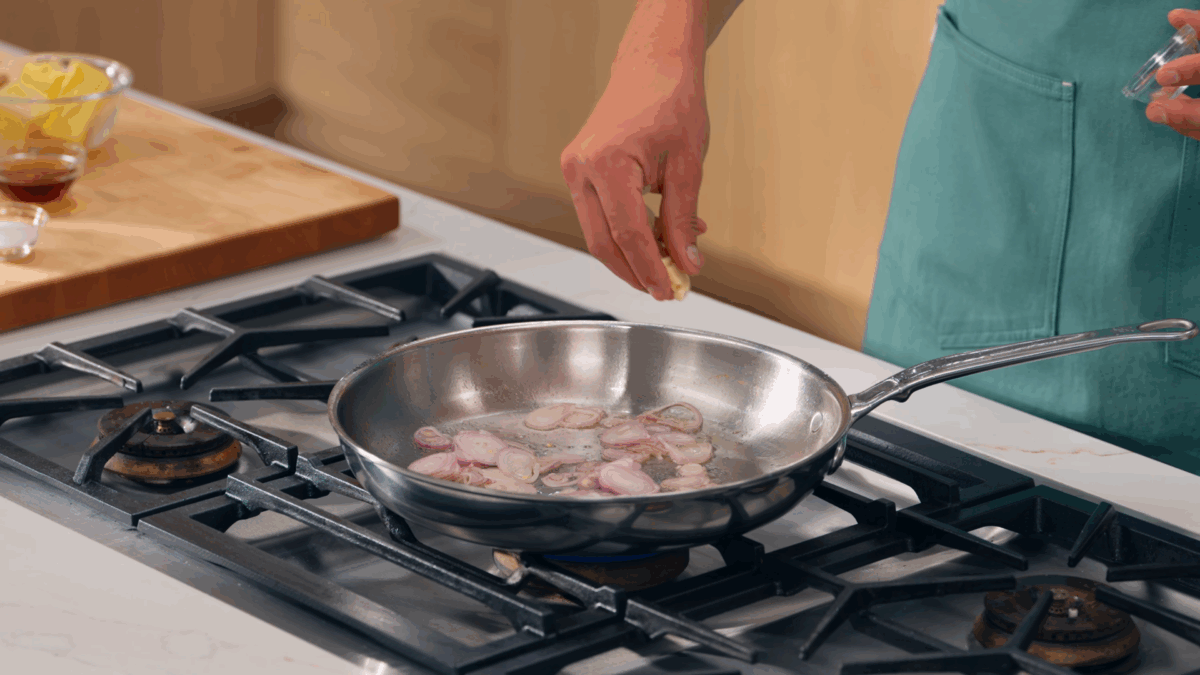
- Shallots and Garlic – These create an aromatic base.
- Fish Sauce – This adds saltiness and a savory, umami flavor.
- Shaoxing Wine – Used to deglaze the pan, this brings another layer of flavor to the pâté. Cognac is another spirit traditionally used in some styles of pâté.
- Chinese Five-Spice – A little goes a long way here, adding warmth and complexity without overpowering the liver. The blend typically contains spices such as cloves and may vary depending on the brand.
- White Pepper – This adds a subtle peppery warmth without overpowering the other flavors.
Caramelized Pork Belly
- Pork Belly – I use skin-on pork belly cut into large cubes. These hunks of pork slowly braise until the fat and connective tissue break down and the meat becomes incredibly tender.
- Sugar – I caramelize the sugar before adding the pork, which creates the deep sweet-savory base of the braising liquid.
- Coconut Water – This adds subtle sweetness while providing the liquid needed to slowly braise the pork.
- Fish Sauce and Dark Soy Sauce – These balance the sweetness with plenty of salty, savory flavor. If you want even more umami flavor, a small splash of Maggi seasoning can also be added to taste.
- Star Anise – This adds a warm aromatic note to the braising liquid.
- Black Pepper – Freshly cracked black pepper gives the pork another layer of warmth.
- Bird’s Eye Chili – I use this to bring some heat to the meat. You can always adjust the amount depending on how spicy you like your banh mi. A jalapeño can also work if bird’s eye chiles aren’t available.
Pickled Vegetables
- Carrot and Daikon – These stay nice and crunchy while soaking up the sweet and tangy pickling liquid. Cutting them into thin strips creates the classic julienned daikon and carrot mixture.
- Rice Vinegar – This provides the acidity necessary for pickling without being overly harsh. White vinegar can also work for a sharper-tasting quick pickle.
- Sugar and Salt – These season the vegetables and balance the acidity of the vinegar.
For Assembling
- Mayonnaise – I use Vietnamese mayonnaise, but Kewpie mayo works perfectly well, too.
- Cucumber – Thin ribbons or cucumber strips add another layer of fresh crunch.
- Cilantro – A handful of fresh cilantro cuts through the richness of the pork and pâté.
- Fresh Chili – Add as much or as little as you like. Thinly sliced jalapeño is another great option if you want a milder heat.
How to Make a Banh Mi Sandwich
1. Make the Baguettes
2. Prepare the Pâté
3. Make the Caramelized Pork
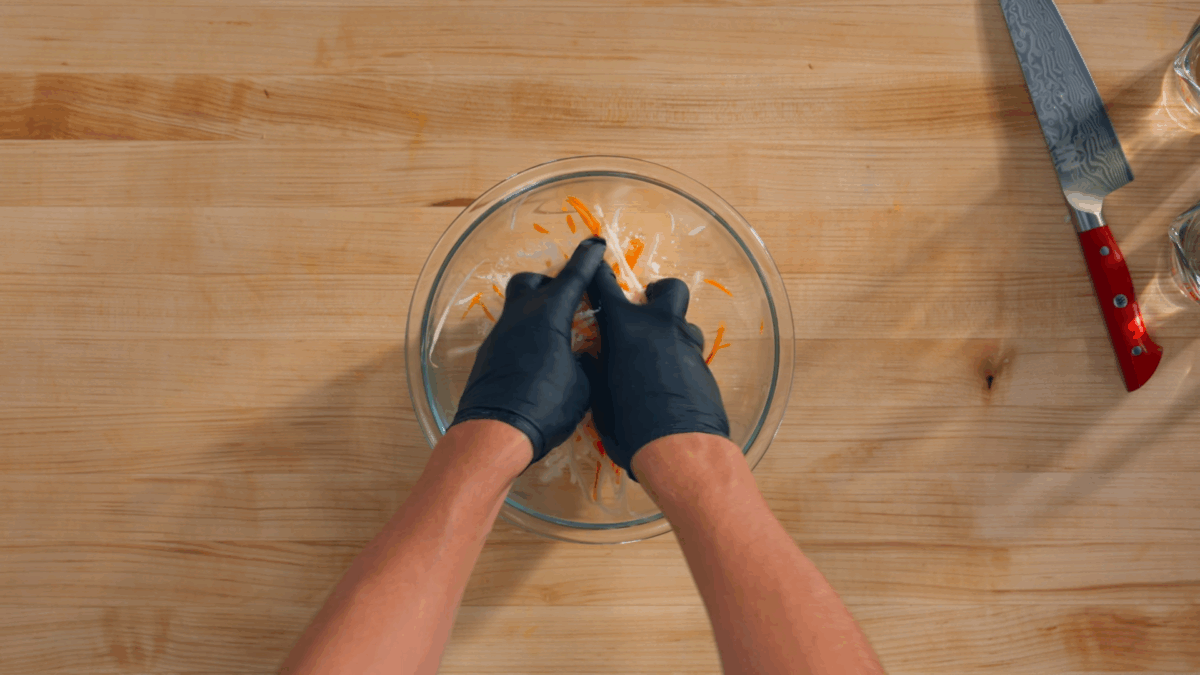
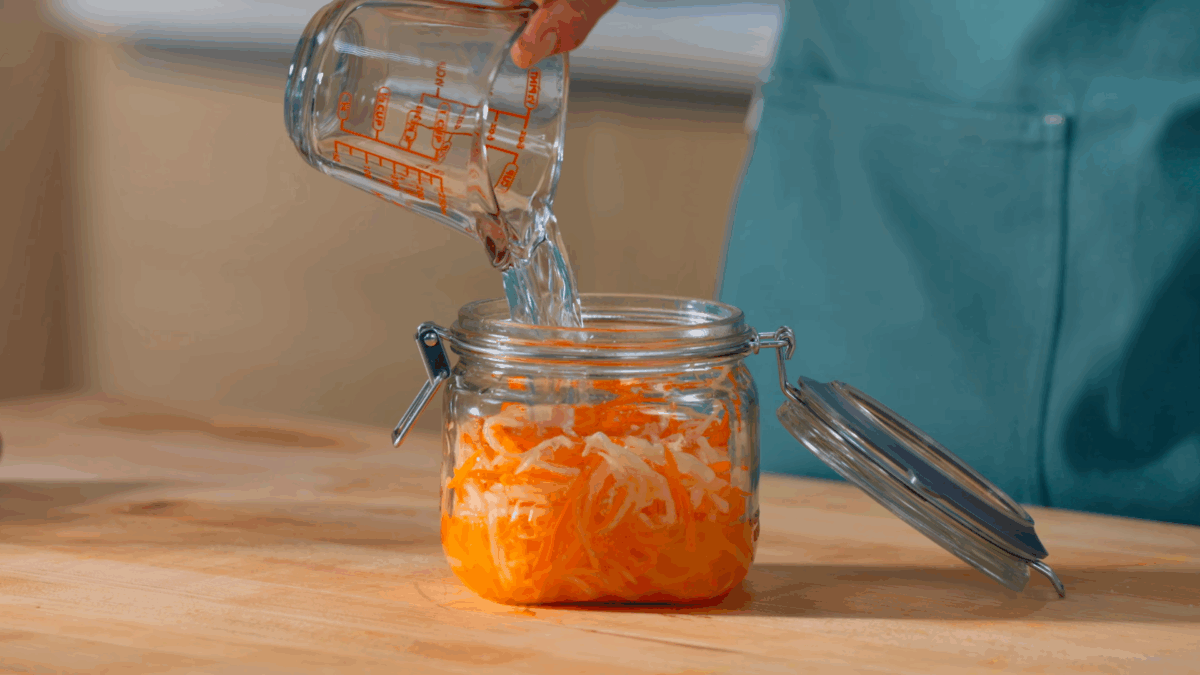
4. Make the Pickled Veggies
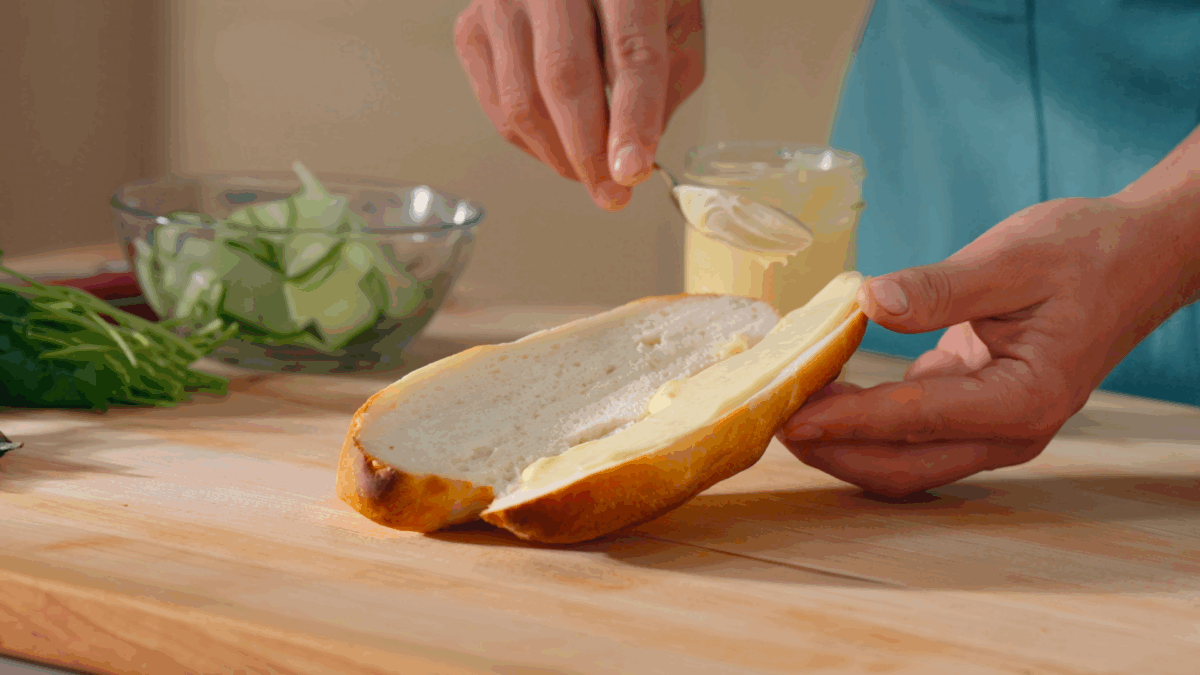
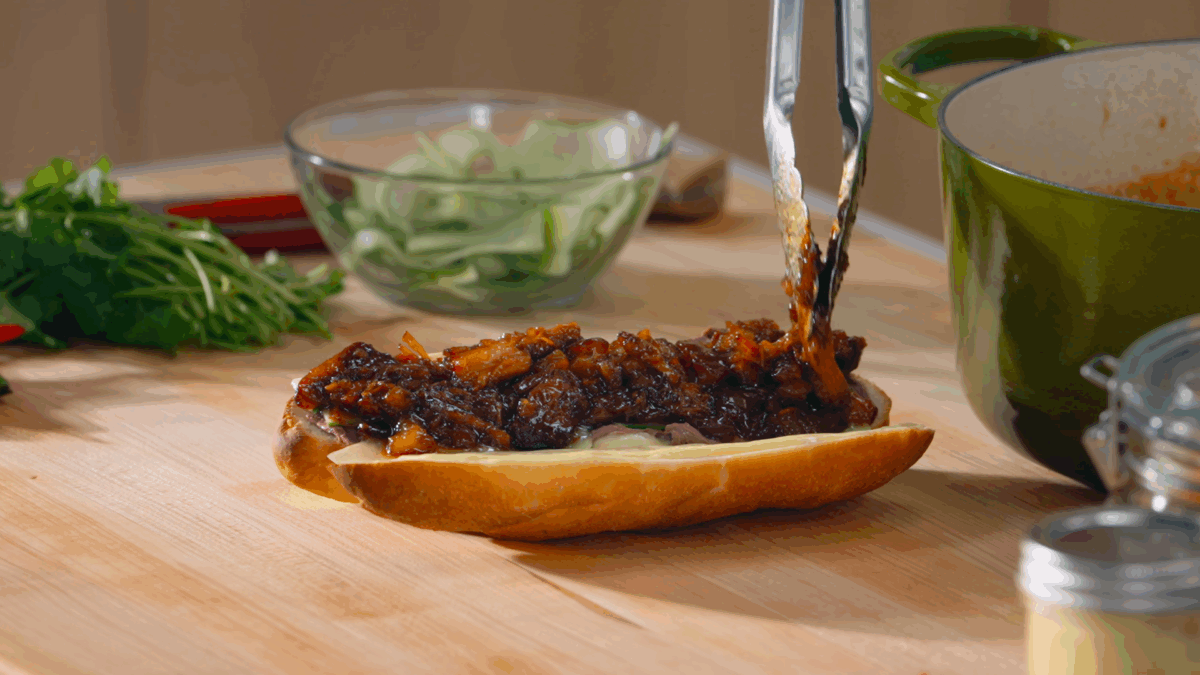
5. Assemble Banh Mi Sandwiches
Nick’s Tips for Success
- Don’t rush the proofing. Go by the size of the dough rather than strictly watching the clock. You want it to roughly double during both proofs. If your kitchen is cool, this can take a little longer.
- Use steam for the bread. The blast of steam at the beginning of baking is important for developing the baguettes’ crust. Just be careful when pouring boiling water into the hot pan because it will produce steam immediately.
- Don’t overcook the chicken livers. You want them cooked safely but not dried out. Use a thermometer and aim for 160°F (71°C) in the thickest part before blending.
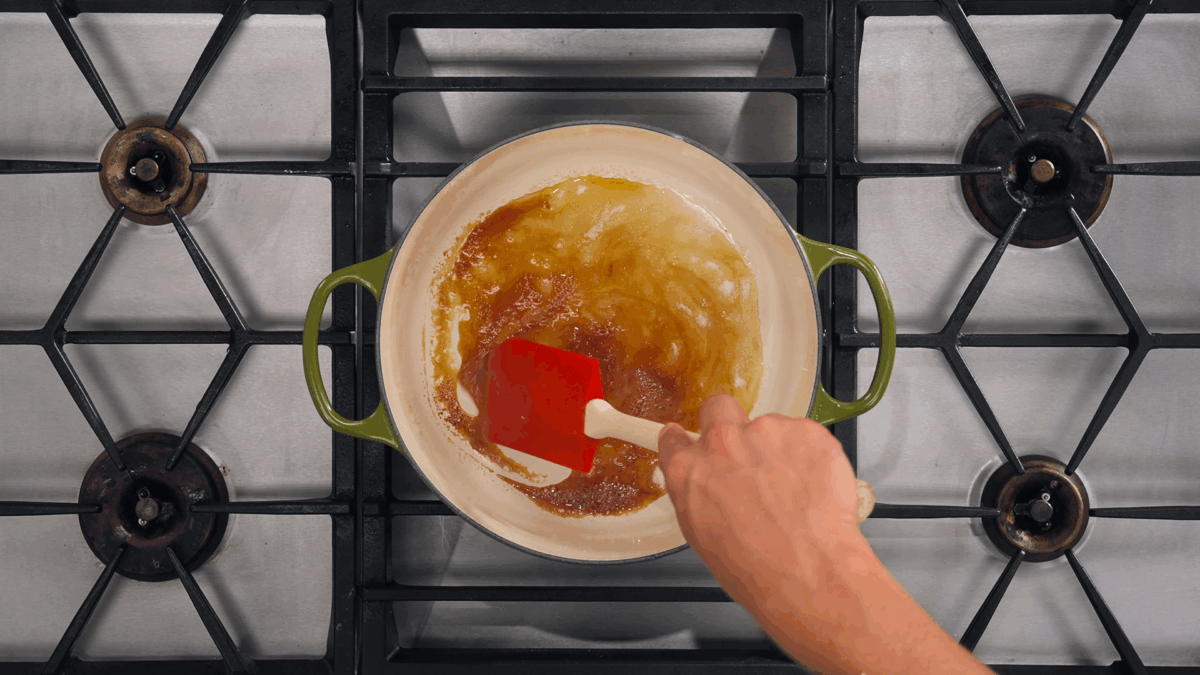
- Watch the caramel closely. Sugar can go from perfectly golden to burnt very quickly. Once it reaches a deep golden color, move on to adding the pork.
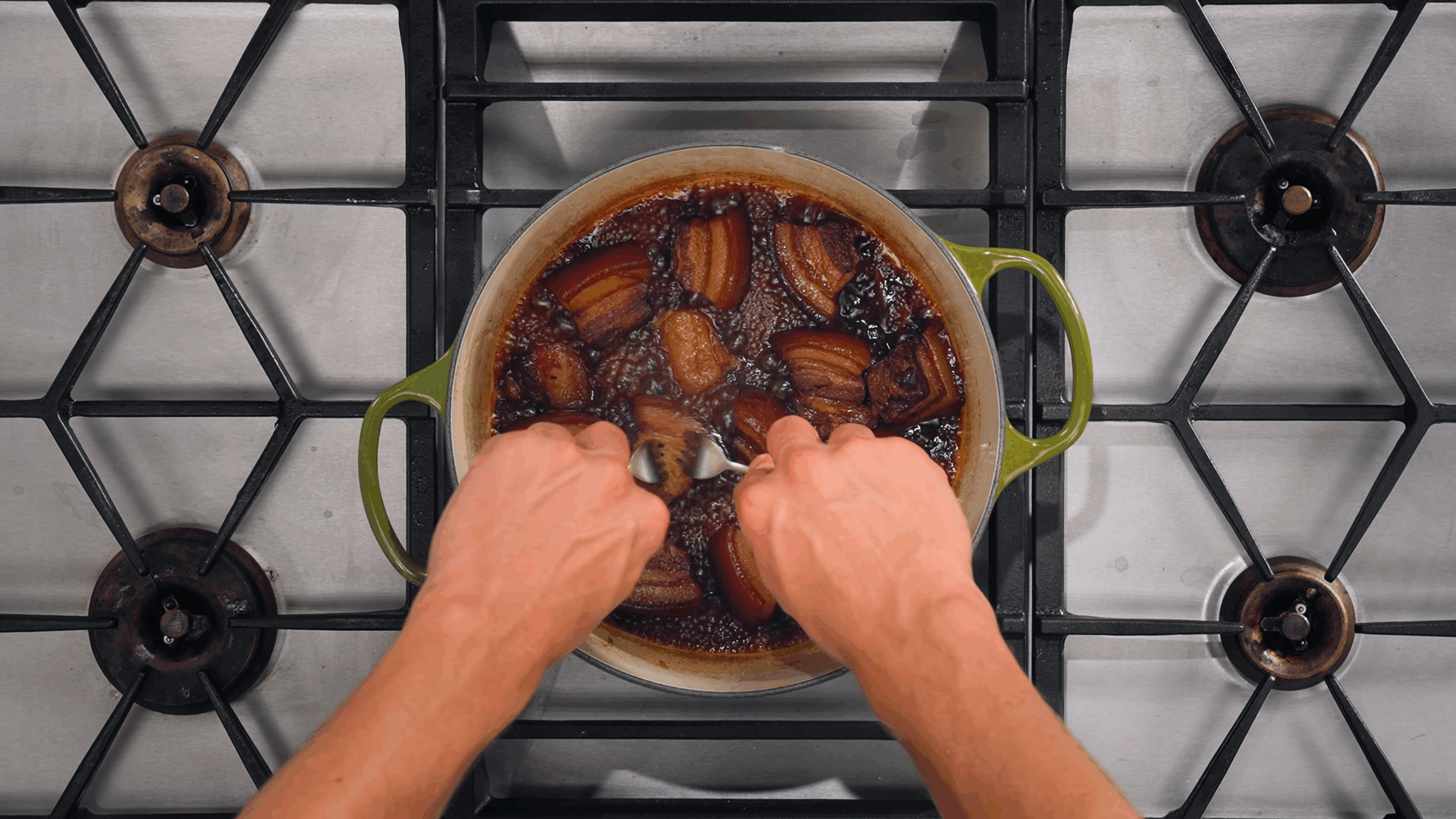
- Give the pork time. The pork belly is ready when it easily pulls apart with tongs. If it still feels tough, keep braising.
- Drain the pickles well. Excess pickling liquid and moisture can quickly turn your freshly baked baguette soggy.
- Balance the pork at the end. Before assembling, taste the reduced sauce. If it’s overly sweet, add a little lime juice or rice vinegar. If it needs more salt and umami, add a small splash of fish sauce.
Banh Mi Recipe
Equipment
- 1 Stand Mixer Fitted with a Dough Hook
- 1 Dough Scraper
- 2 Baguette Trays or Large Baking Sheets
- Parchment Paper
- Nonstick Cooking Spray
- 1 Bread Lame or Sharp Knife
- 1 Cast-Iron Pan
- 1 Large Frying Pan
- 1 Blender
- 1 Instant-Read Thermometer
- 1 Wire Cooling Rack
- 3 (8-ounce/240-mililleter) Jars or Airtight Containers
- 1 Dutch Oven
- 1 Pair of Tongs
- 1 Vegetable Peeler
- 1 Julienne Peeler or Mandoline
- 1 Spray Bottle, Optional
Ingredients
Soft Baguettes:
- 4 ½ teaspoon (14 gram) instant yeast
- 2 cup (480 milliliter) tepid water
- 7 cup (900 gram) very strong high-protein bread flour
- ¼ cup (50 gram) caster sugar
- 2 ¼ teaspoon (14 gram) fine salt
- 3 tablespoon + 1 teaspoon (50 milliliter) neutral oil
- 2 tablespoon (30 milliliter) fresh lime juice, about 1 lime
Chicken Liver Pâté:
- 17 ounce (500 gram) chicken liver
- 1 cup (240 milliliter) whole milk, for soaking
- ⅔ cup (150 gram) unsalted butter, softened and divided
- 2 shallot, peeled and sliced
- 2 garlic clove, peeled and crushed
- 3 tablespoon + 1 teaspoon (50 milliliter) Shaoxing wine
- 1 teaspoon (5 gram) fine salt
- ½ teaspoon (1½ gram) ground white pepper
- 2 ¼ teaspoon (10 gram) granulated sugar
- 2 teaspoon (10 milliliter) fish sauce
- ½ teaspoon (1½ gram) Chinese five-spice powder
Caramelized Vietnamese Pork:
- ½ cup (100 gram) granulated sugar
- 2.2 pound (1 kilogram) skin-on pork belly, cut into 2-inch (5-centimeter) cubes
- 1 shallot, thinly sliced
- 3 cup (700 milliliter) coconut water
- 2 tablespoon (30 milliliter) fish sauce
- 1 tablespoon (15 milliliter) dark soy sauce
- 1 whole star anise
- ½ teaspoon (1 gram) black pepper, freshly cracked, plus more to taste
- 1 red bird’s eye chili, thinly sliced
- fresh lime juice or rice vinegar, as needed for balancing the flavor
Pickled Daikon and Carrot:
- 1 medium carrot, peeled
- ½ medium daikon radish, peeled
- ¼ cup (50 gram) caster sugar
- 1 tablespoon (15 gram) kosher salt
- ½ cup (120 milliliter) rice vinegar
- 1 cup (240 milliliter) water
For Assembly:
- 8 soft baguette
- ½ cup (120 milliliter) Vietnamese mayonnaise or Kewpie mayonnaise
- chicken liver pâté
- 1 large cucumber, peeled into ribbons
- caramelized Vietnamese pork
- pickled daikon and carrot, drained
- 1 cup (20 gram) fresh cilantro leaves, loosely packed
- 1 red bird’s eye chili, thinly sliced
Instructions
Make the Soft Baguettes:
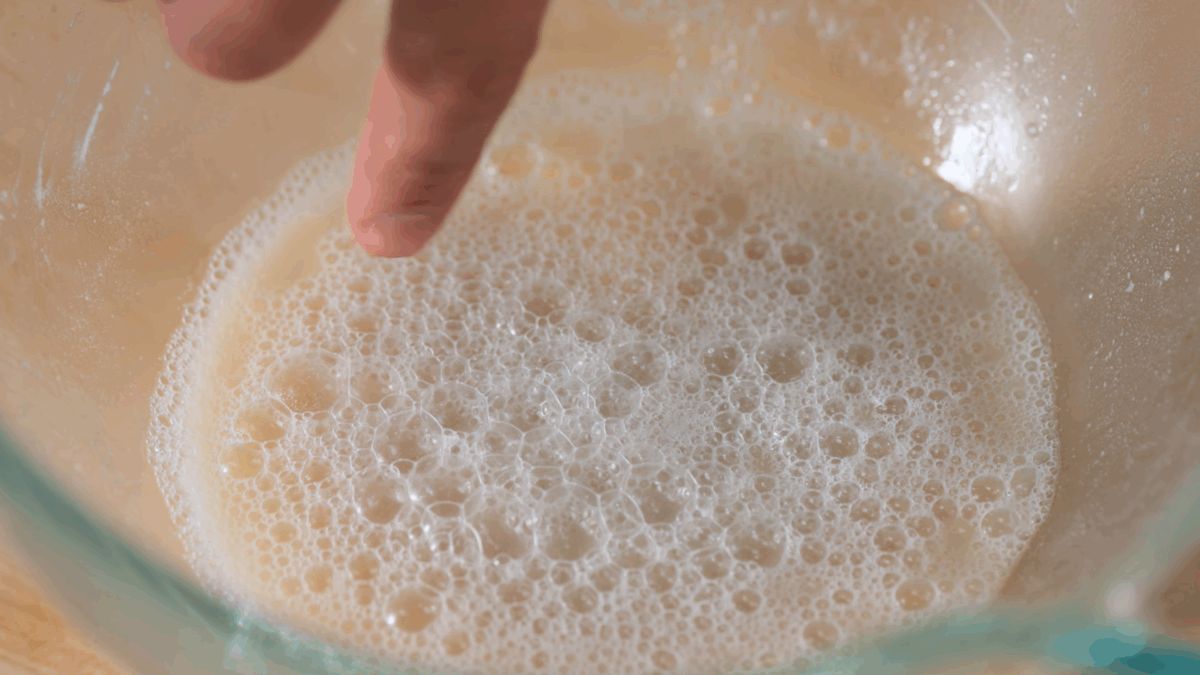
- Add the instant yeast to the tepid water and stir to combine. Let stand for five minutes.4 ½ teaspoon instant yeast, 2 cup tepid water
- Add the flour, sugar, salt, and oil to the bowl of a stand mixer fitted with the dough hook.7 cup very strong high-protein bread flour, ¼ cup caster sugar, 2 ¼ teaspoon fine salt, 3 tablespoon + 1 teaspoon neutral oil
- Pour in the yeast mixture and lime juice, scraping the container to make sure all of the yeast is added.2 tablespoon fresh lime juice
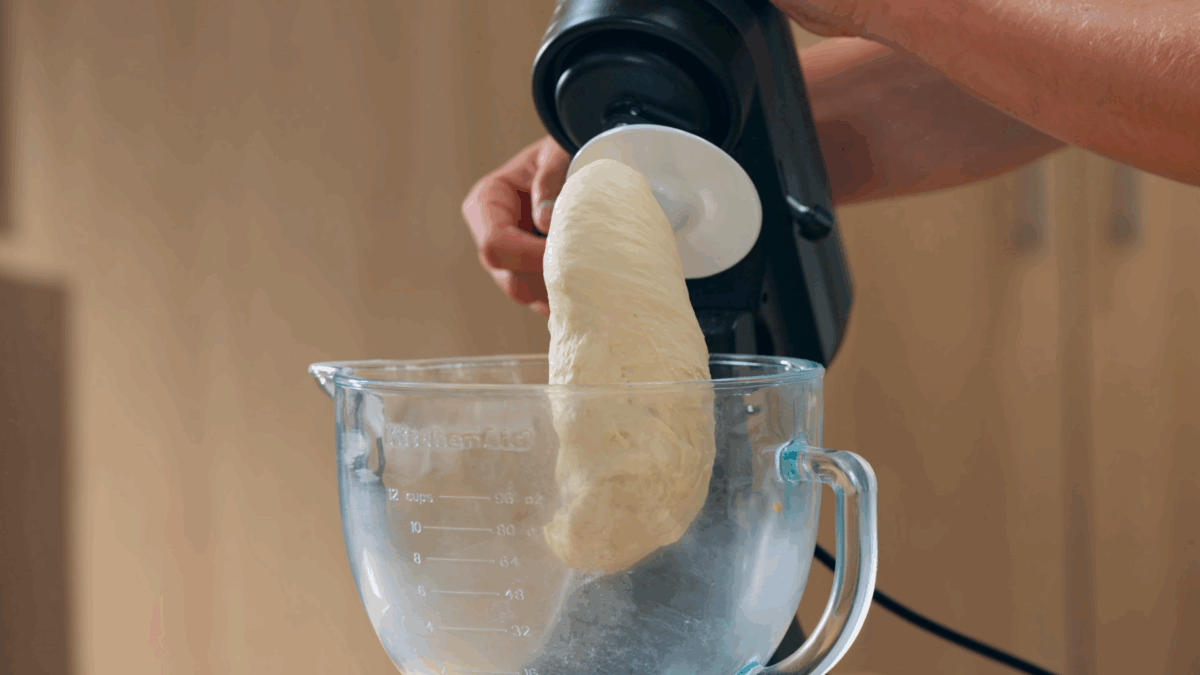
- Mix on medium speed until the ingredients come together into a dough.
- Continue kneading on medium speed for about ten minutes, or until the dough is smooth and elastic.
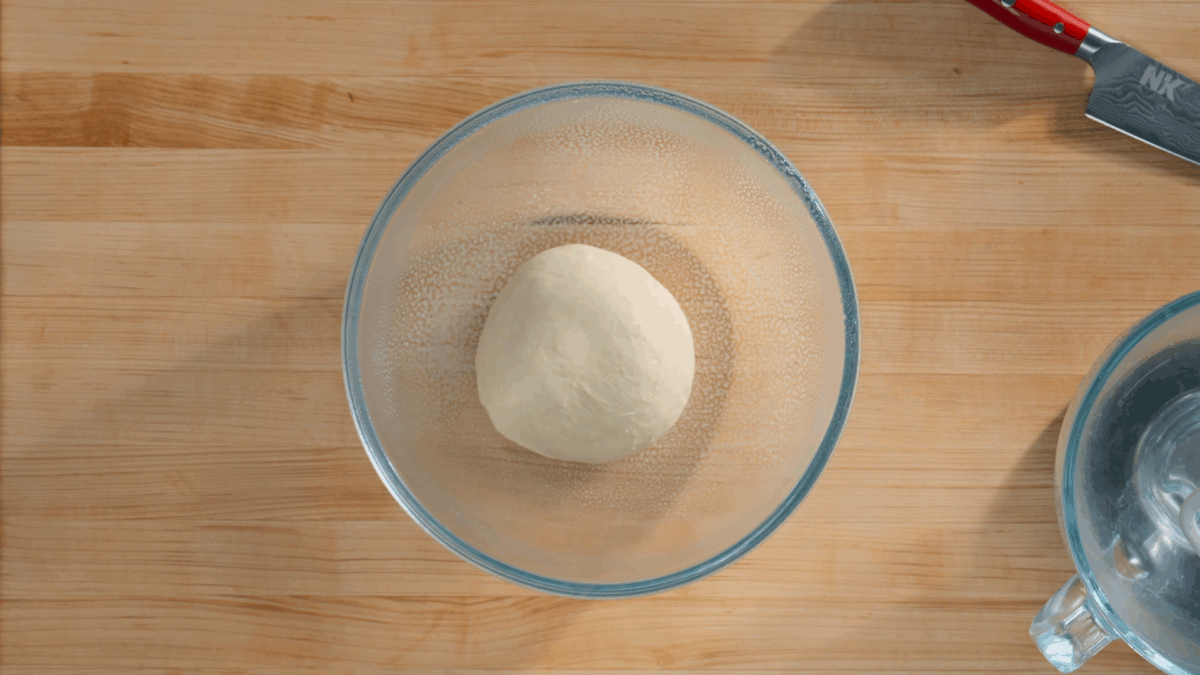
- Remove the dough hook. Cover the bowl with plastic wrap or a clean kitchen towel and place it in a warm spot. Let the dough proof for about two hours, or until doubled in size.
- Turn the dough out onto a lightly floured work surface.
- Using a dough scraper, divide the dough into eight equal portions, about six and a half ounces (185 gram) each. Shape each portion into a smooth ball.
- Line two baguette trays with parchment paper and lightly coat them with nonstick cooking spray or oil. Alternatively, use parchment-lined baking sheets, leaving plenty of space between each baguette.
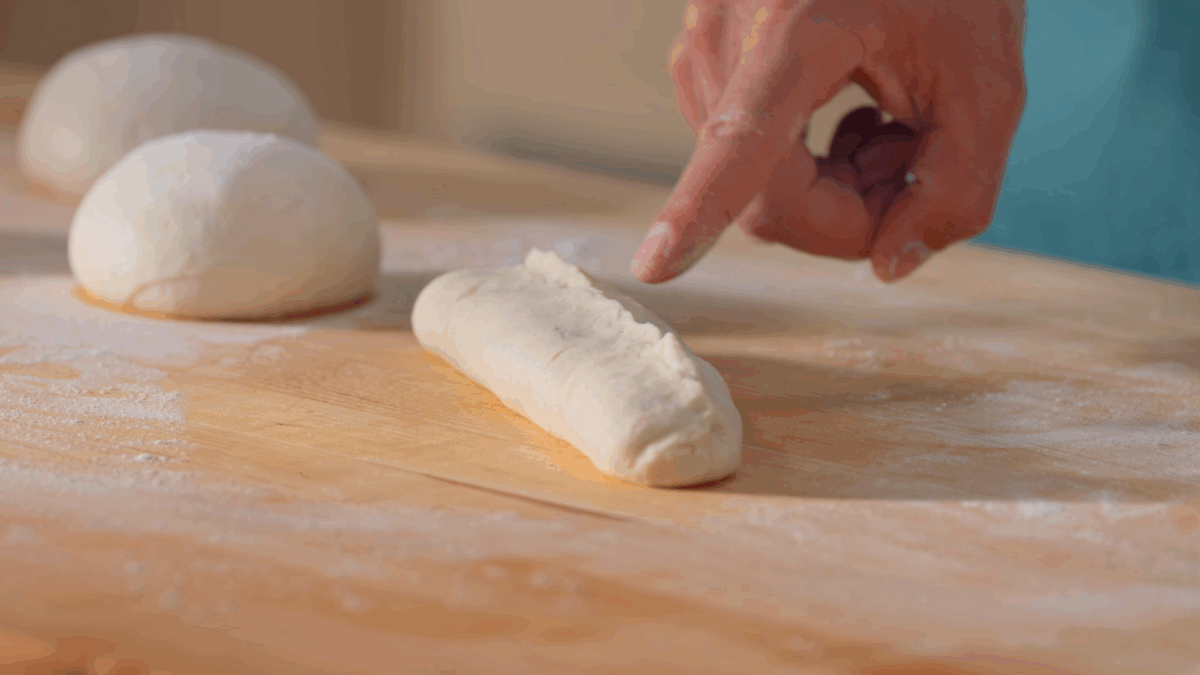
- Flatten each dough ball into an approximately six-inch (15-centimeter) oval.
- Fold one long side into the center. Fold the opposite side into the center, then pinch the seam together to create a baguette shape.
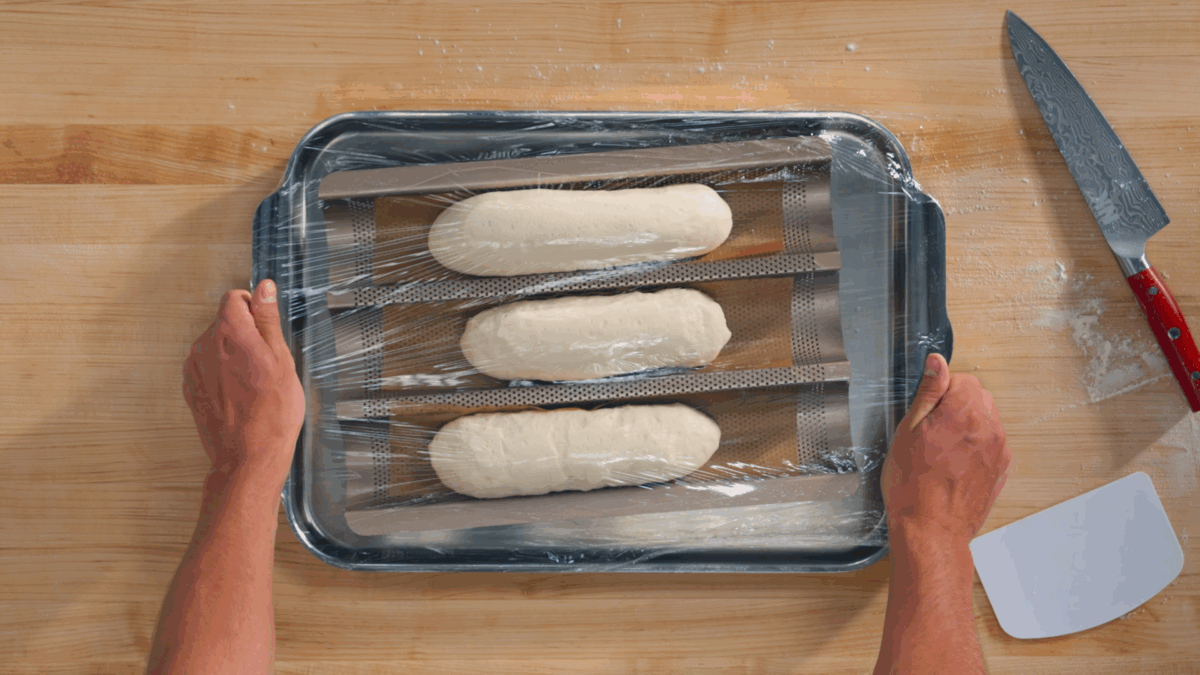
- Transfer the shaped dough to the prepared trays and repeat with the remaining dough.
- Lightly spray the tops with nonstick cooking spray to prevent sticking. Cover loosely with plastic wrap and place in a warm spot.
- Let proof for about one hour, or until doubled in size.
- Toward the end of the proofing time, preheat the oven to 440°F (230°C). Place a cast-iron pan on the bottom rack of the oven while it preheats.
- Bring about two cups (480 milliliters) of water to a boil for creating steam in the oven.
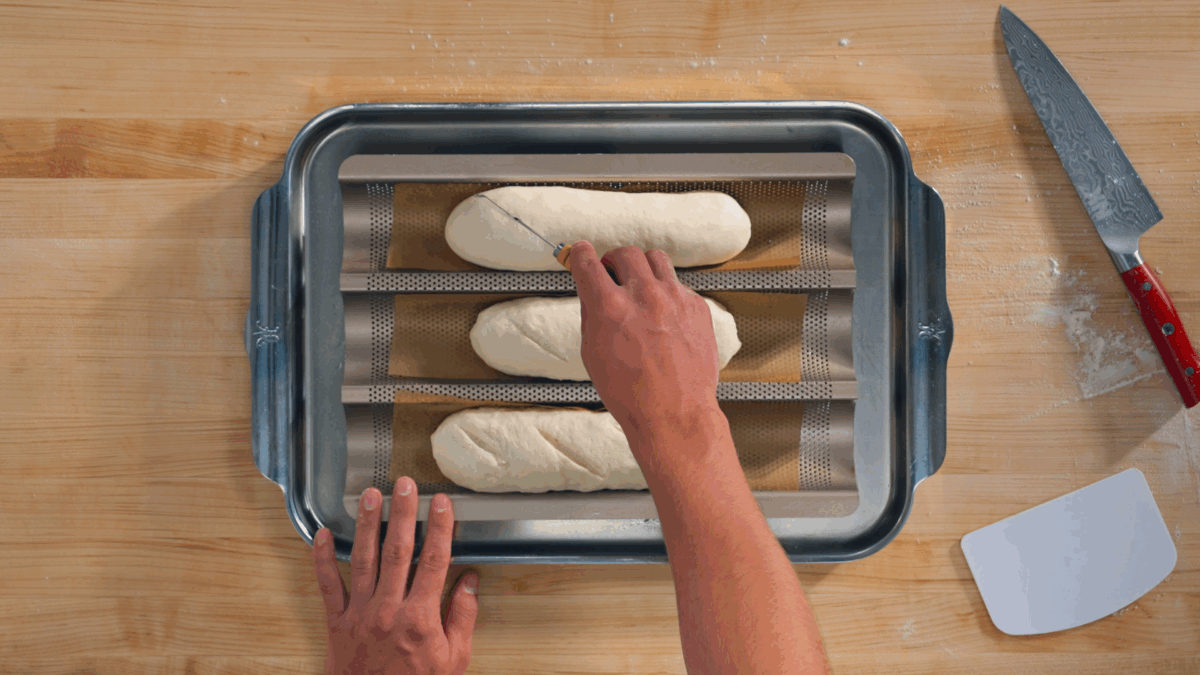
- Remove the plastic wrap from the baguettes. Using a bread lame or sharp knife, make three diagonal scores across the top of each baguette.
- Generously mist the baguettes with water using a spray bottle. Alternatively, lightly flick water over the dough with a pastry brush.
- Carefully pour the boiling water into the preheated cast-iron pan to create a steam-rich environment.
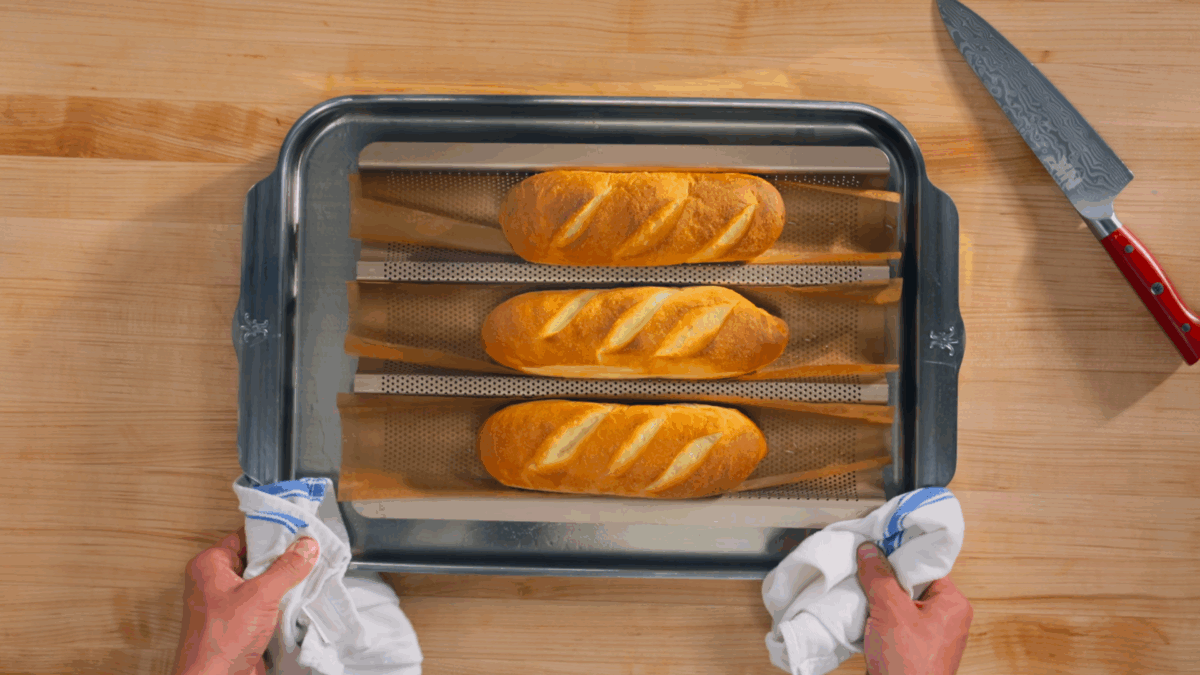
- Place the baguettes on the top oven rack and bake for eight minutes.
- Rotate the trays if necessary to ensure even browning.
- Carefully remove the pan of water. Continue baking the baguettes for another five minutes, or until golden and crisp.
- Transfer the baguettes to a wire rack and let cool completely.
Make the Chicken Liver Pâté:
- Place the chicken livers in a bowl and cover with the milk. Refrigerate and soak for one hour.17 ounce chicken liver, 1 cup whole milk
- Melt about one tablespoon (14 grams) of the butter in a large frying pan over medium heat. Add the shallots and garlic and sauté until softened and fragrant.⅔ cup unsalted butter, 2 shallot, 2 garlic clove
- Drain the chicken livers and discard the milk.
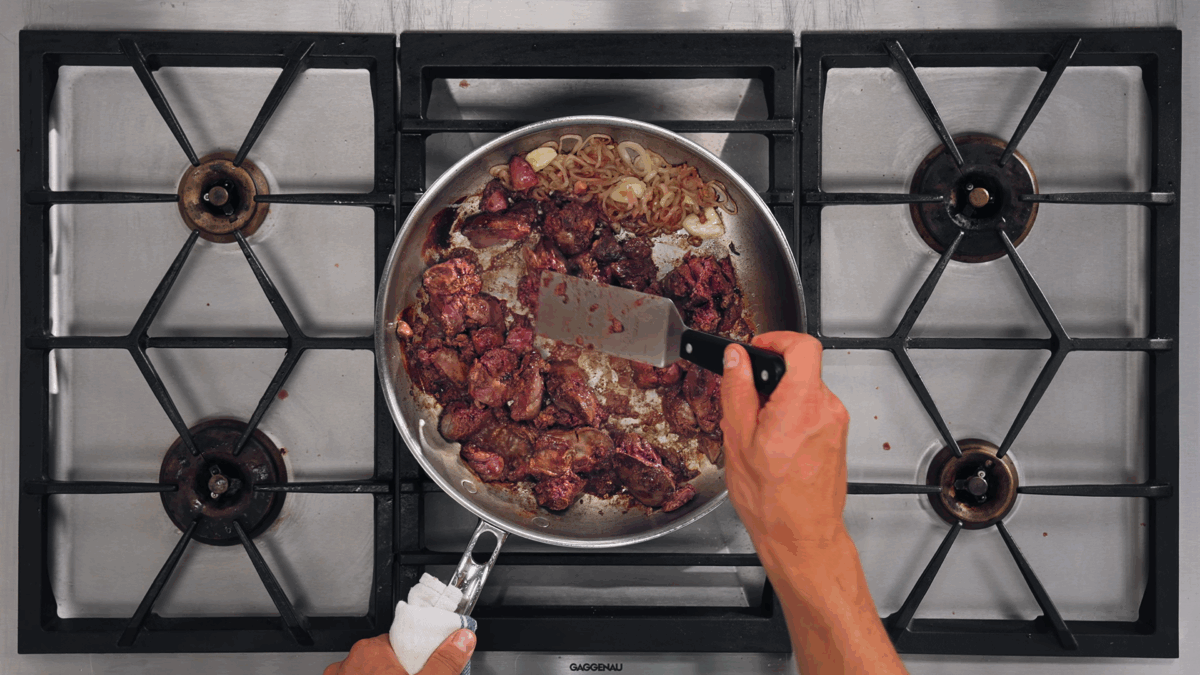
- Add another one tablespoon (14 grams) butter to the pan, followed by the drained chicken livers. Cook until nicely caramelized on the outside while remaining slightly pink in the center.
- Check the thickest liver with an instant-read thermometer. It should reach an internal temperature of 160°F (71°C).
- Add the Shaoxing wine to the pan and deglaze, scraping up any browned bits from the bottom.3 tablespoon + 1 teaspoon Shaoxing wine
- Transfer the liver mixture to a blender. Add the remaining butter, salt, white pepper, sugar, fish sauce, and five-spice powder.1 teaspoon fine salt, ½ teaspoon ground white pepper, 2 ¼ teaspoon granulated sugar, 2 teaspoon fish sauce, ½ teaspoon Chinese five-spice powder
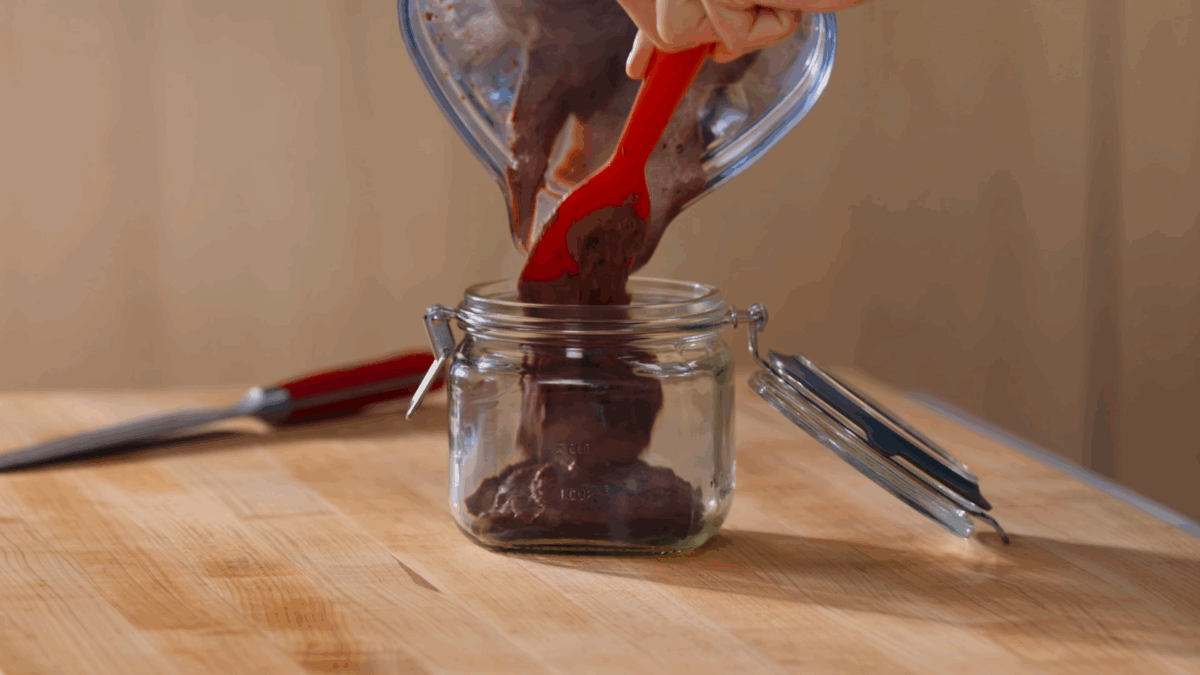
- Blend until completely smooth.
- Transfer the pâté to clean jars or airtight containers. Let cool, then refrigerate until chilled and set.
Make the Caramelized Vietnamese Pork:
- Place a Dutch oven over medium heat. Add the sugar and cook until it melts and develops a golden-brown caramel. Watch carefully to prevent the caramel from burning.½ cup granulated sugar
- Add the pork belly and sliced shallot. Stir carefully to coat the pork in the caramel.2.2 pound skin-on pork belly, 1 shallot
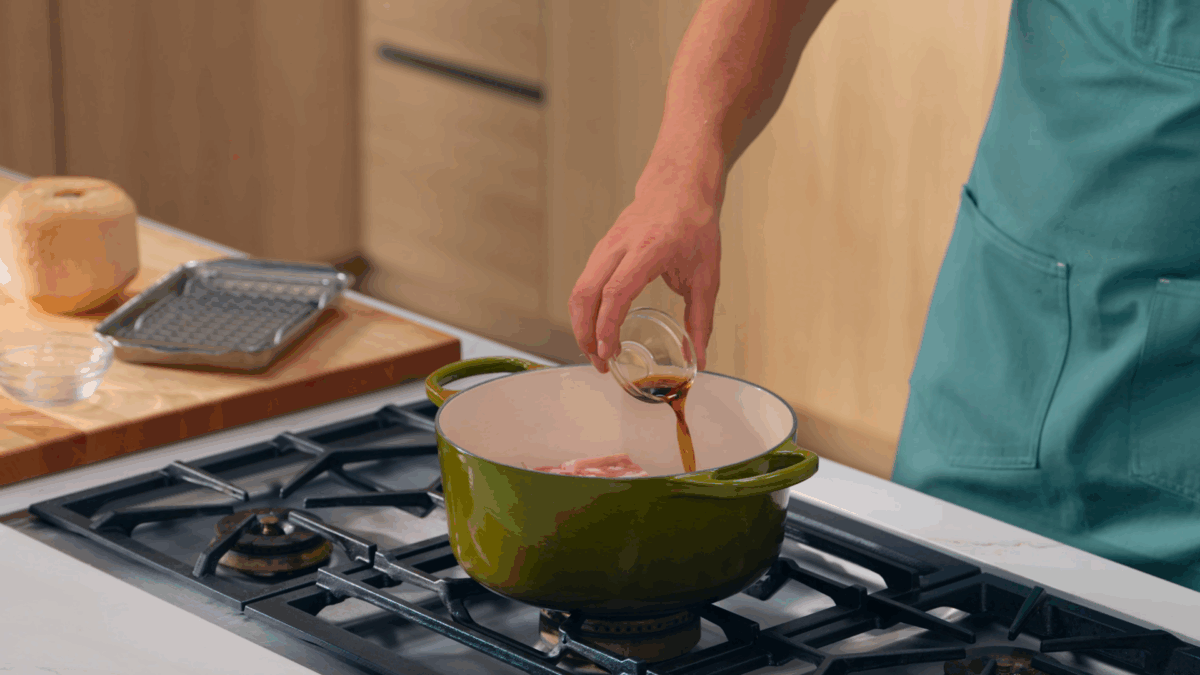
- Add the coconut water, fish sauce, dark soy sauce, star anise, black pepper, and sliced chili. Stir to combine.2 tablespoon fish sauce, 1 tablespoon dark soy sauce, 3 cup coconut water, 1 whole star anise, ½ teaspoon black pepper, 1 red bird’s eye chili
- Reduce the heat to low.
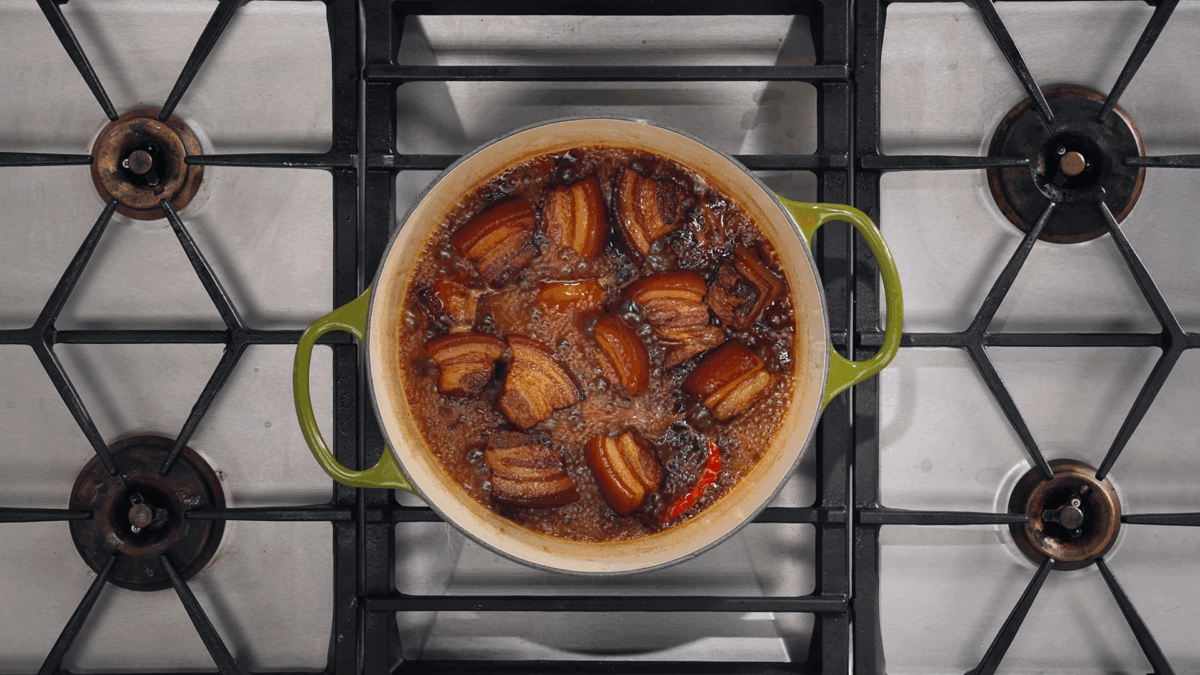
- Cover and gently braise for about one and a half hours, or until the pork is very tender and easily pulls apart when pressed with tongs.
- Remove the lid and simmer until the remaining braising liquid has reduced by about half.
- Use tongs to shred the pork, then fold it through the reduced cooking liquid.
- Taste and adjust the seasoning as needed. The pork should have a balance of sweet, salty, and mildly spicy flavors. If it tastes too sweet, add a squeeze of fresh lime juice or a splash of rice vinegar.fresh lime juice or rice vinegar
Make the Pickled Daikon and Carrot:
- Julienne the peeled carrot and daikon radish using a julienne peeler or mandoline.1 medium carrot, ½ medium daikon radish
- Transfer the vegetables to a bowl. Add the sugar and salt and gently massage them into the vegetables with your fingers.¼ cup caster sugar, 1 tablespoon kosher salt
- Add the rice vinegar and water and stir to combine.½ cup rice vinegar, 1 cup water
- Transfer the vegetables and pickling liquid to a jar or airtight container.
- Refrigerate for at least one hour. For the best flavor, refrigerate overnight.
- Drain well before assembling the sandwiches.
Assemble the Bánh Mì:
- Slice each baguette lengthwise without cutting all the way through.8 soft baguette
- Open the baguette and spread about one tablespoon (15 milliliters) of mayonnaise over the top half.½ cup Vietnamese mayonnaise or Kewpie mayonnaise
- Spread a generous layer of chicken liver pâté over the bottom half.chicken liver pâté
- Add several cucumber ribbons.1 large cucumber
- Add a generous portion of the caramelized shredded pork.caramelized Vietnamese pork
- Top with the drained pickled daikon and carrot.pickled daikon and carrot
- Finish with fresh cilantro and sliced bird’s eye chili to taste.1 cup fresh cilantro leaves, 1 red bird’s eye chili
- Serve immediately.
Video

Notes
Nutrition
Nutrition information is automatically calculated, so should only be used as an approximation.
 Like this recipe? Rate & comment below!


I used to eat bahn mi sandwiches while serving in college. So excited to have a recipe that’s just as good as I remember!