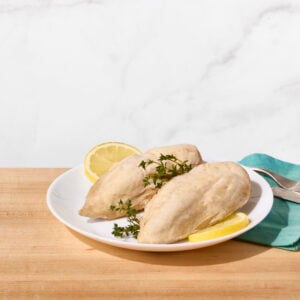
My poached chicken breast recipe results in tender, juicy, flavorful chicken every single time. Simple to prepare and incredibly versatile, poached chicken is perfect for adding to salads, pastas, wraps, or any recipe that calls for cooked chicken breast.
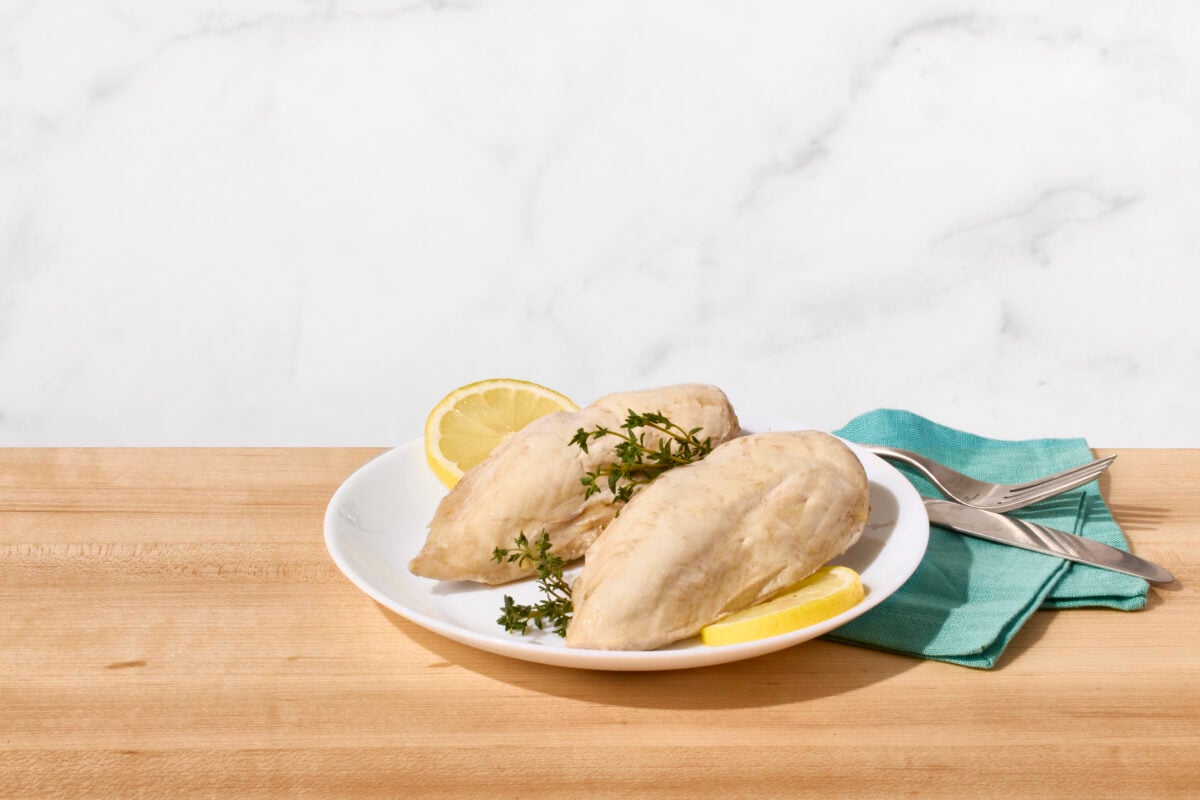
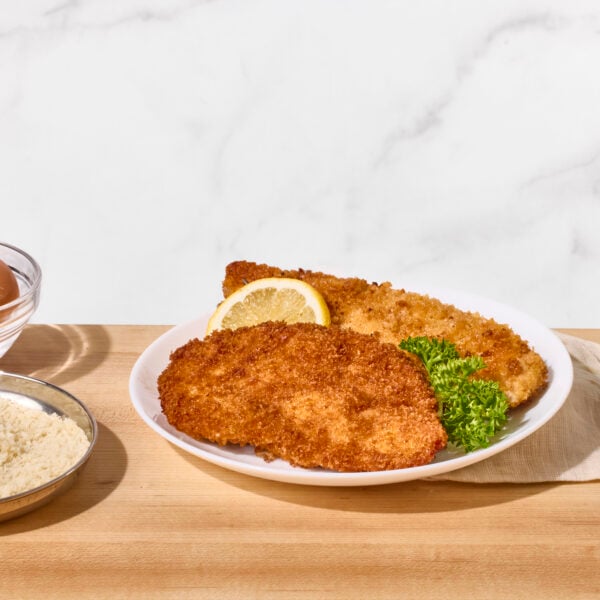
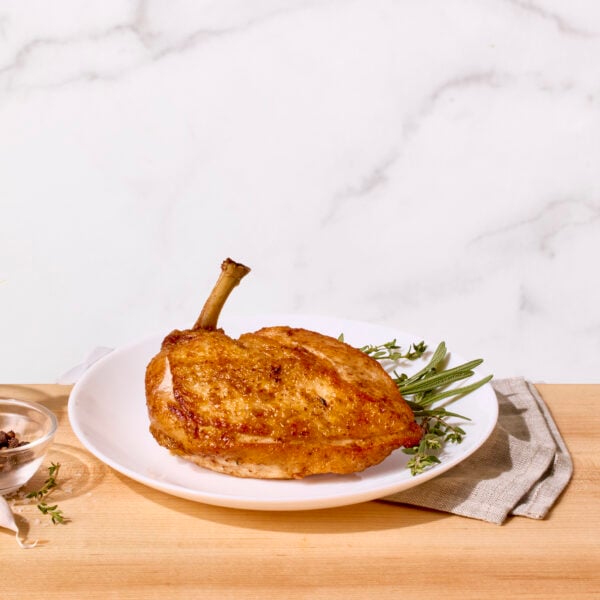
I make chicken pretty much every week, rotating through options like my baked chicken breast, fried chicken cutlets, and brined and pan-roasted chicken. Rotisserie-style chicken is always my favorite. However, when it comes to versatility, you can’t go wrong with a simple poached chicken breast recipe.
When cooked properly, poached chicken is never dry, bland, or rubbery. Instead, it turns out incredibly tender and juicy with a subtle savory flavor that makes it great for pairing with different sauces, dressings, and seasonings. I’ll walk you through my exact cooking method to help you achieve the best results!
Ingredients and Notes
See the recipe card below for the complete ingredient list and instructions.
- Chicken Breasts – I use boneless, skinless chicken breasts for this recipe. Bone-in chicken breasts will also work, but will take longer to cook. Try to choose pieces that are fairly similar in size so they cook at roughly the same rate.
- Chicken Broth – I prefer poaching chicken in broth or chicken stock instead of plain water because it adds extra savory flavor without overpowering the meat.
- Vegetables – Carrot, celery, and white onion add flavor to the poaching liquid and, in turn, the chicken.
- Aromatics – Fresh thyme, garlic, a bay leaf, black peppercorns, and lemon infuse the chicken with subtle flavor as it cooks. Feel free to experiment with other aromatics, such as ginger, dill, scallions, or chives as desired.
How to Make Poached Chicken Breast
Nick’s Tips for Success
- Start with cold broth. Add the chicken and other ingredients to the broth before heating it. This allows everything to come up to temperature gradually for more even cooking.
- Add a splash of wine. For more depth and brightness, add up to a half cup of dry white wine, such as Sauvignon Blanc, Pinot Grigio, or Chardonnay, to the poaching liquid.
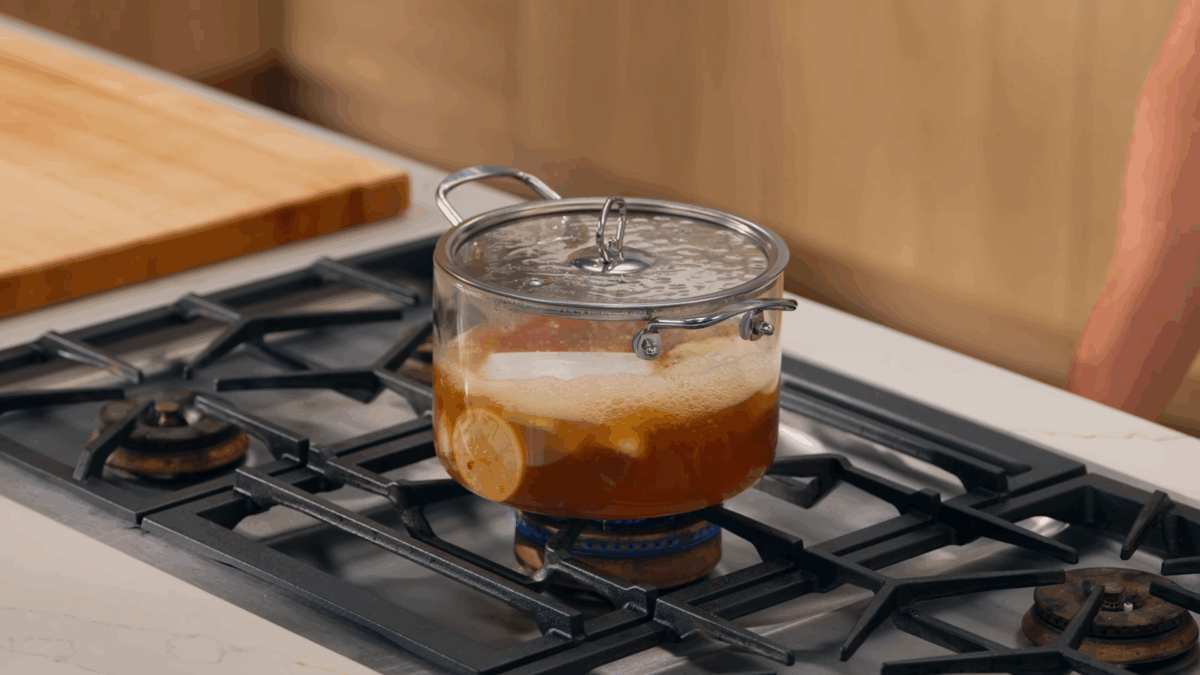
- Keep the heat low. Poaching is all about gentle cooking. You want the liquid at a very light simmer, not a rolling boil. Boiling can cause the chicken to become tough.
- Use a meat thermometer. The exact cooking time will depend on the size and thickness of your chicken breasts, so an instant-read thermometer is much more reliable than cooking by time alone.
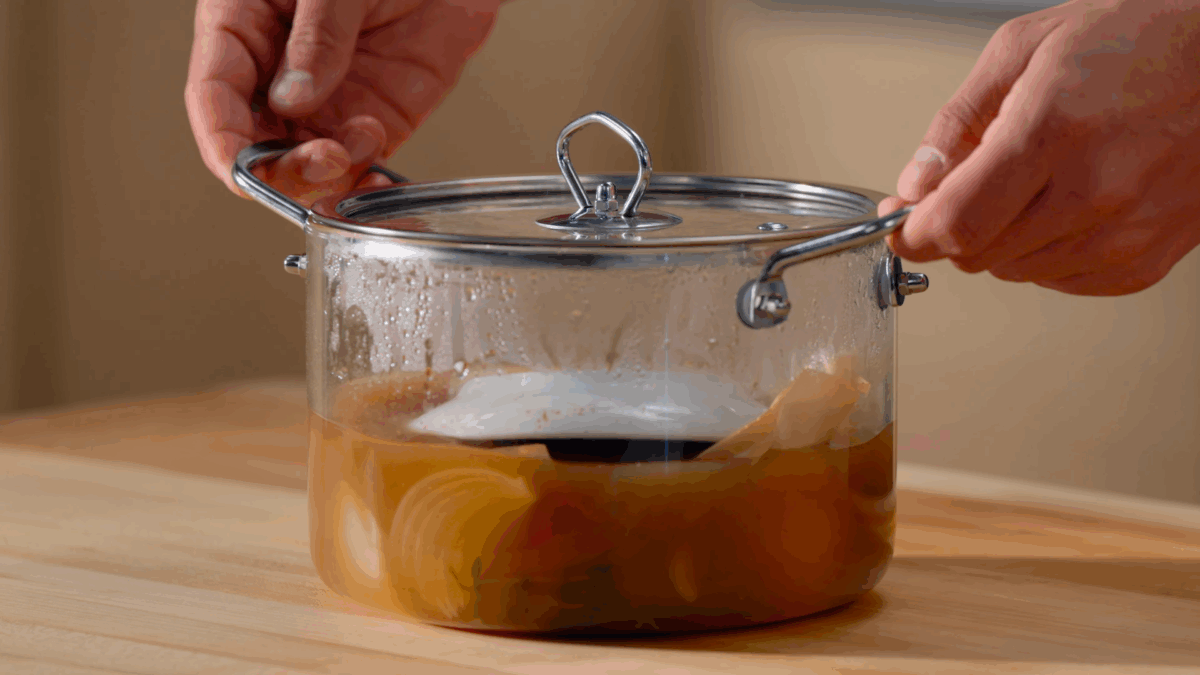
- Let the chicken cool in the broth. Don’t immediately transfer the chicken to a cutting board or plate. Letting it cool naturally in the poaching liquid helps prevent moisture loss and keeps the meat tender and juicy.
- Slice against the grain. If you’re slicing the chicken before serving, cut across the direction of the muscle fibers for the most tender texture.
Ways to Use Poached Chicken
One of the reasons I like to make poached chicken is because it works with just about anything. The chicken itself has a mild, savory flavor, so you can easily change it up depending on what you’re making.
Slice it and serve it with rice and vegetables for an easy meal, chop it for salads, wraps, chicken burritos, and chicken quesadillas, or shred it for sandwiches, soups, pasta dishes, and meal prep. It’s also a great option anytime a recipe calls for already-cooked chicken.
Poached Chicken Breast Recipe
Equipment
- 1 Medium Saucepan
- Parchment Paper
- 1 Small Heat-Safe Plate
- 1 Instant-Read Thermometer
Ingredients
- 4 cup (1 Liter) chicken broth
- 4 black peppercorns
- 1 lemon
- 1 carrot, peeled
- 1 celery stalk
- 1 small white onion, peeled and quartered
- 1 bay leaf
- 2 sprig fresh thyme
- 2 clove garlic, peeled
- 2 boneless, skinless chicken breast
Instructions
- Add the cold chicken broth, peppercorns, lemon, carrot, celery, onion, bay leaf, thyme, garlic, and chicken breasts to a medium saucepan.4 cup chicken broth, 4 black peppercorns, 1 lemon, 1 carrot, 1 celery stalk, 1 small white onion, 1 bay leaf, 2 sprig fresh thyme, 2 clove garlic, 2 boneless
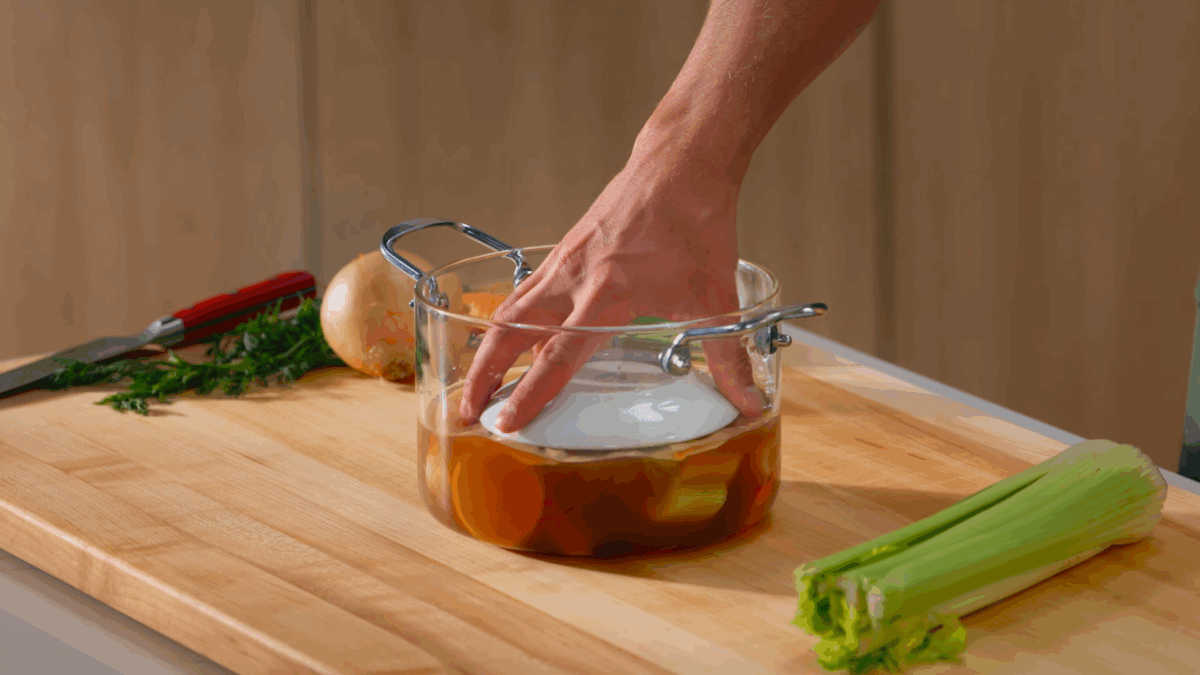
- Cover with a disc of parchment paper and place a small heat-safe plate on top to keep the chicken submerged. Place over low heat and bring the liquid to a very gentle simmer.
- Simmer until the thickest part of the chicken reaches an internal temperature of 150°F (65°C).
- Remove the pan from the heat and allow the chicken to cool naturally in the broth. This helps prevent moisture loss and keeps the meat juicy.
- Once cooled, remove the chicken from the broth and serve as desired.
Video

Notes
Nutrition
Nutrition information is automatically calculated, so should only be used as an approximation.
 Like this recipe? Rate & comment below!