Learn how to cook chicken breast five different ways, each with its own texture and flavor. Whether you need juicy chicken for meal prep or a flavorful main dish, these simple techniques make it easy to achieve tender, perfectly cooked chicken every time. In this guide, I’m breaking down how to cook juicy poached chicken, crispy fried cutlets, herb-butter baked chicken, pan-roasted chicken, and a stuffed chicken breast. Serve them on their own or use them in your favorite recipes!

Save this recipe!
Get this sent to your inbox, plus new recipes from us every week!
Five plates of chicken breast prepared five different ways.

When I’m home, I cook chicken at least once a week. Rotisserie-style oven-roasted chicken is my favorite. However, it makes a lot and requires quite a bit of effort. So, day-to-day, I typically stick with simple chicken breasts, using different cooking methods to keep things interesting. 

I’ve learned that the cooking method can completely change the final result, even when you’re starting with the exact same cut of meat. So, I’m walking you through five of my favorite techniques step by step. With my tips and tricks, you’ll end up with juicy, flavorful chicken and an easy starting point for everything from salads and sandwiches to pasta dishes and weeknight dinners with sides like five cheese mac and cheese

Ingredients and Notes

See the recipe card below for the complete ingredient list and instructions.

The exact ingredients vary depending on which cooking method you choose, but here are a few of the most important ones to know:

  • Chicken Breast – Some of these methods use boneless, skinless chicken breasts, while others use skin-on chicken suprêmes. Choose breasts that are fairly similar in size so they cook at roughly the same rate.
  • Chicken Broth – For poaching, I prefer chicken broth instead of plain water because it gives the chicken more flavor. 
  • Aromatics – I use garlic, onion, carrot, celery, lemon, bay leaves, thyme, rosemary, and peppercorns throughout the different methods to build flavor without overpowering the chicken.
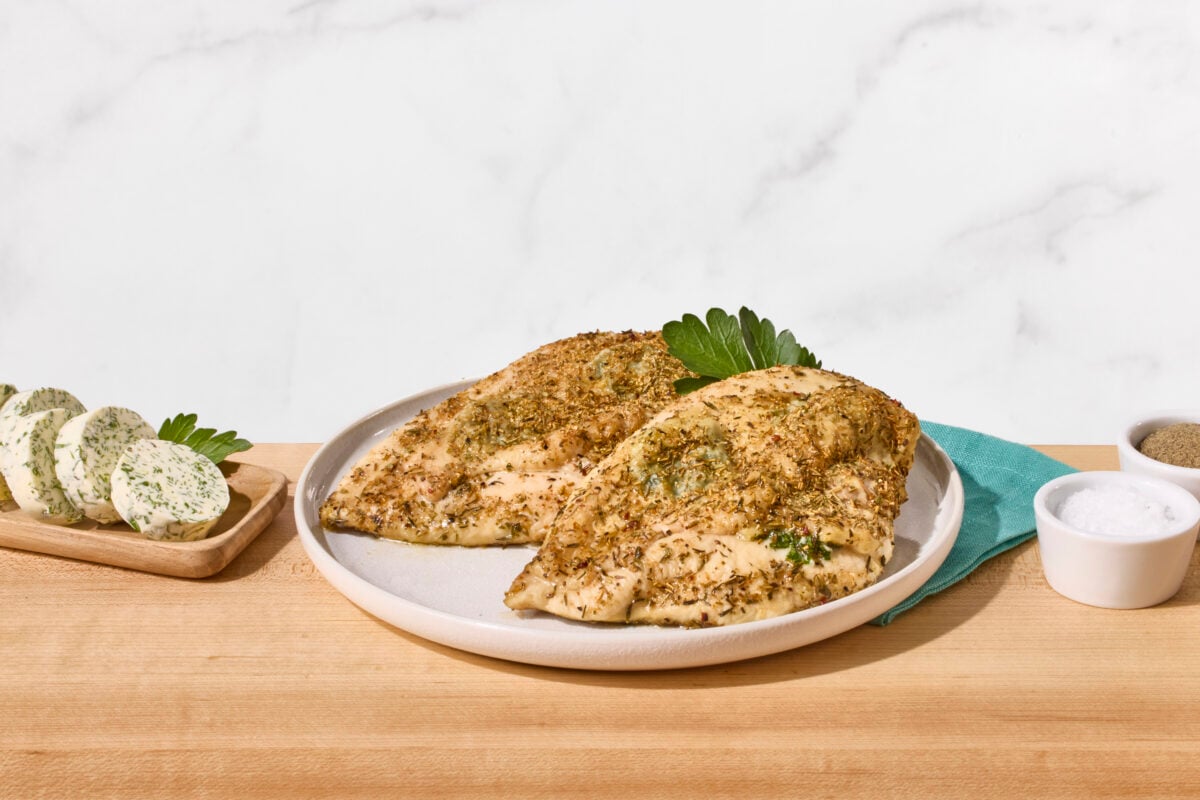
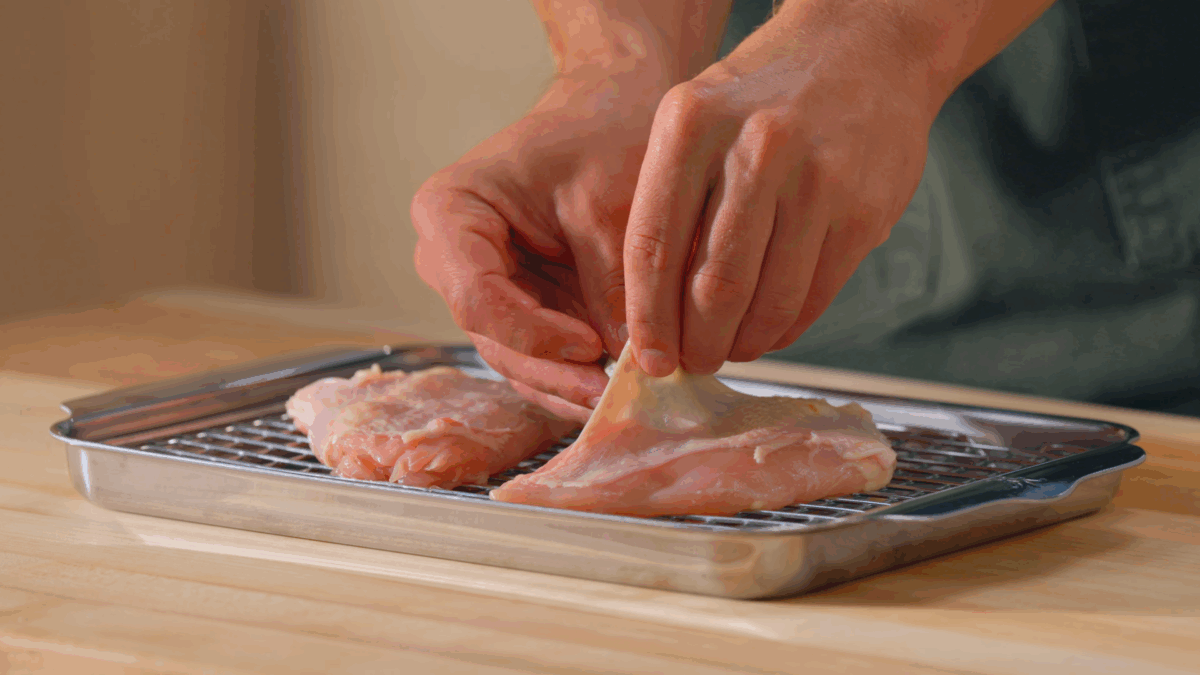
  • Butter – This adds richness and helps with browning. For the baked chicken, I turn it into a compound butter with garlic and fresh herbs and tuck it directly underneath the skin, similar to how I prepare my Thanksgiving turkey.
  • Neutral Oil – I use an oil with a relatively high smoke point for frying and pan-roasting.
  • Panko Breadcrumbs – Panko creates a light, extra-crispy coating for the fried and stuffed chicken breasts.
  • Flour and Eggs – These create the dredging station that helps the panko stick evenly to the chicken.
  • Kosher Salt and Sugar – These form the base of the wet brine for the pan-roasted chicken. The brine seasons the meat throughout and helps it stay juicy as it cooks.
  • Ham and Swiss Cheese – This is my filling for the stuffed chicken breast. Wrapping the cheese in ham also helps contain the melted cheese inside the chicken as it cooks.
  • Seasoning – Salt and pepper work perfectly, or use your favorite all-purpose chicken seasoning. Osmo Golden Gourmet seasoning is my favorite.

How to Cook Chicken(5 Methods) 

Nick DiGiovanni placing a plate over chicken in a pot of broth.
1. Combine ingredients. Add the cold stock, vegetables, aromatics, and chicken breasts to a medium saucepan. Cover the ingredients with parchment paper and a small plate to keep the chicken submerged. 
Chicken poaching in a pot on a stovetop.
2. Cook. Turn the heat to low, bringing the liquid to a light simmer, and cook until the chicken reaches an internal temperature of 150°F (65°C). 
Nick DiGiovanni holding a pot of poached chicken.
3. Rest. Remove the pan from the heat, and let the chicken cool in the stock. This allows it to finish cooking and prevents it from drying out. 
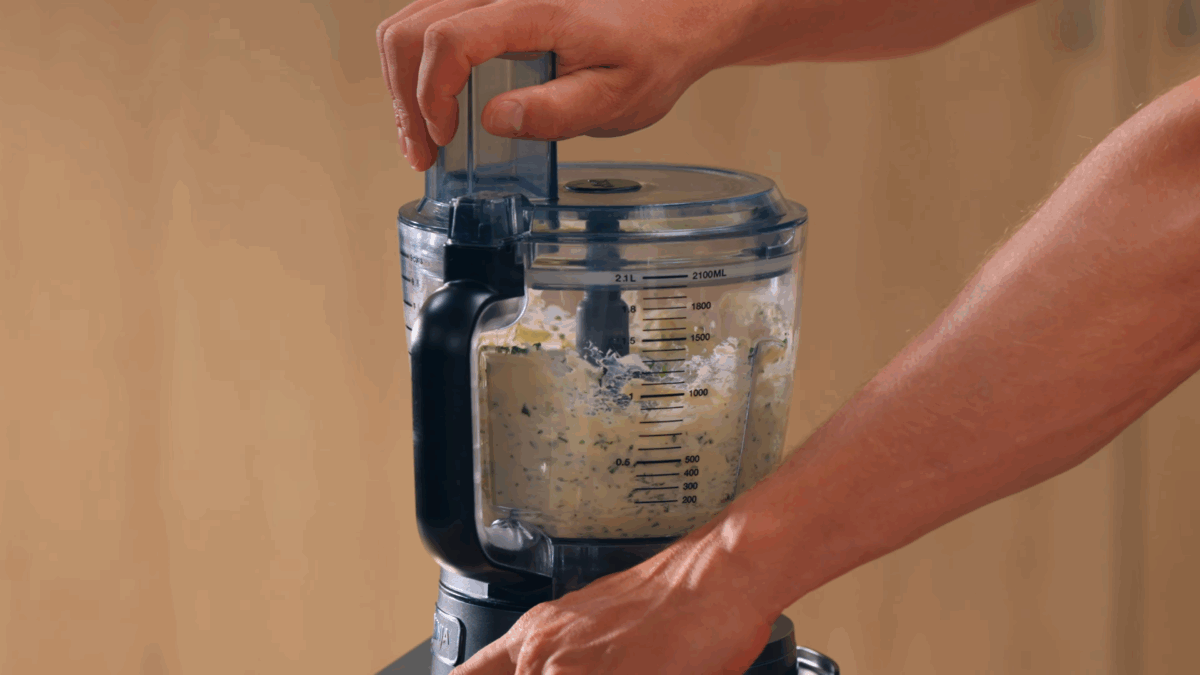
Nick DiGiovanni combining compound butter ingredients in a food processor.
1. Prepare the compound butter. Combine softened butter in a bowl or food processor with herbs, garlic, salt, and pepper, mixing until the ingredients are well incorporated. Then, spoon the butter onto plastic wrap, roll it into a log, and chill the butter in the fridge. 
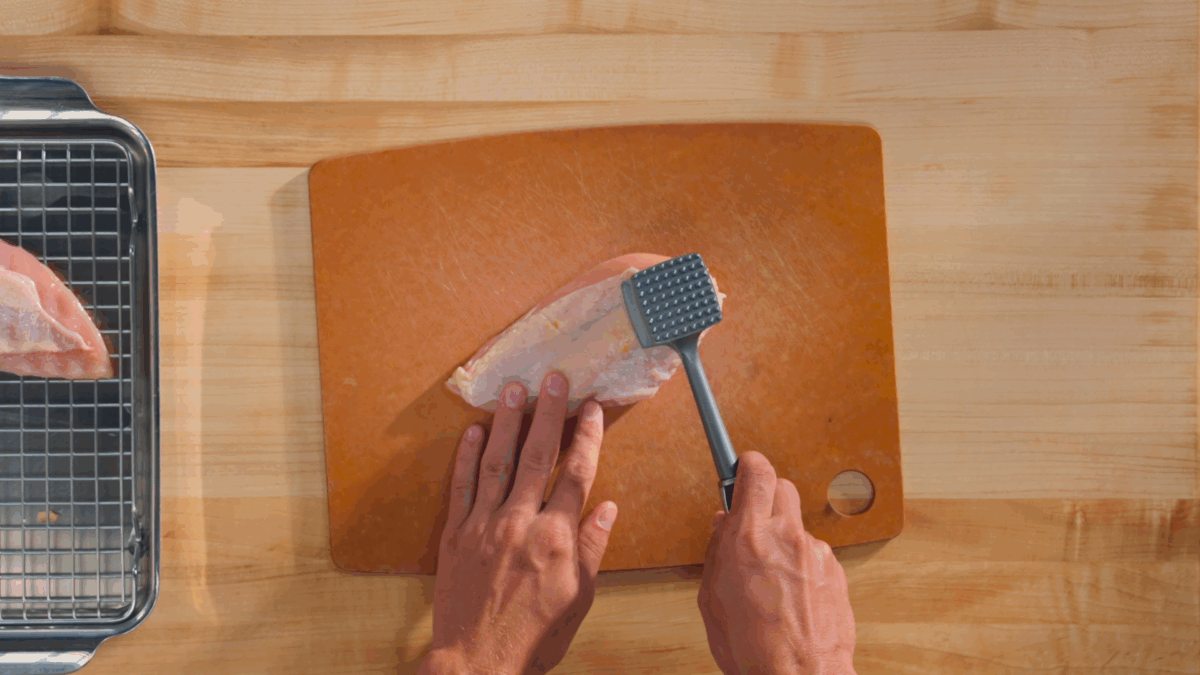
Nick DiGiovanni using a meat mallet to pound a chicken breast on a cutting board.
2. Pound the chicken. Use a meat hammer or rolling pin to pound the chicken breasts out to an even thickness. 
Nick DiGiovanni tucking compound butter under chicken skin.
3. Add butter and seasonings. Slice the butter into thin pieces, and tuck them under the skin of the chicken. Season the chicken generously.
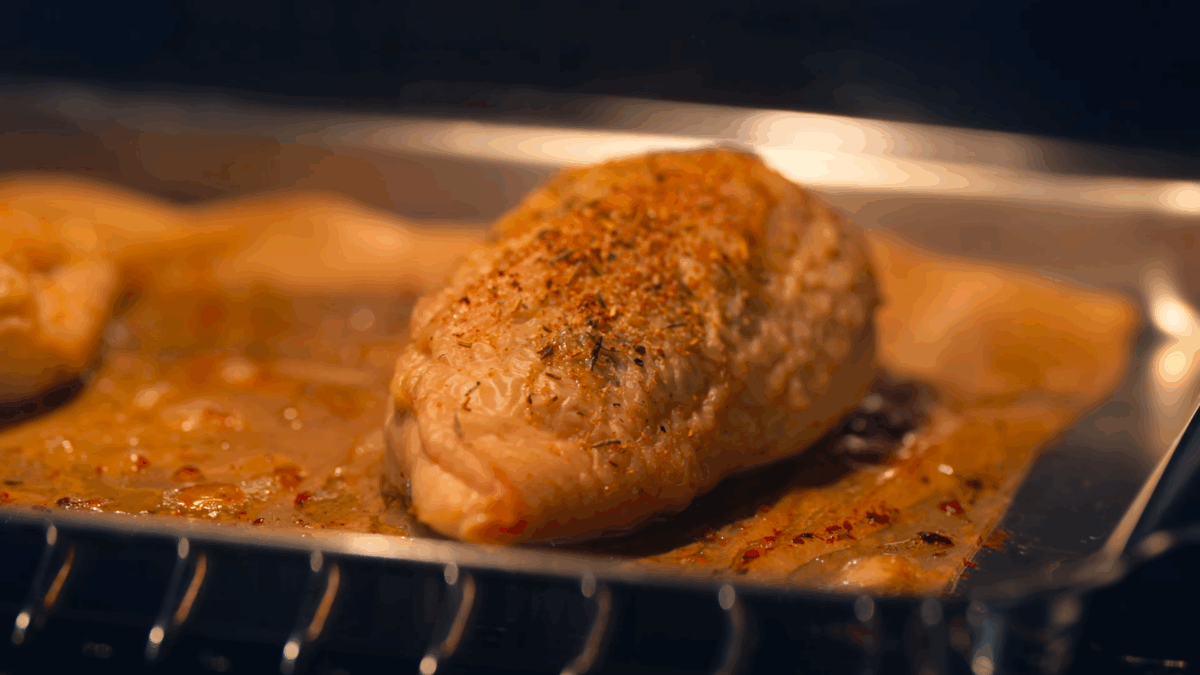
Chicken breasts baking in an oven.
4. Bake. Arrange the chicken breasts in an even layer on a parchment-lined baking sheet, placing them skin-side up, and bake until the chicken reaches an internal temperature of 150°F (65°C). 
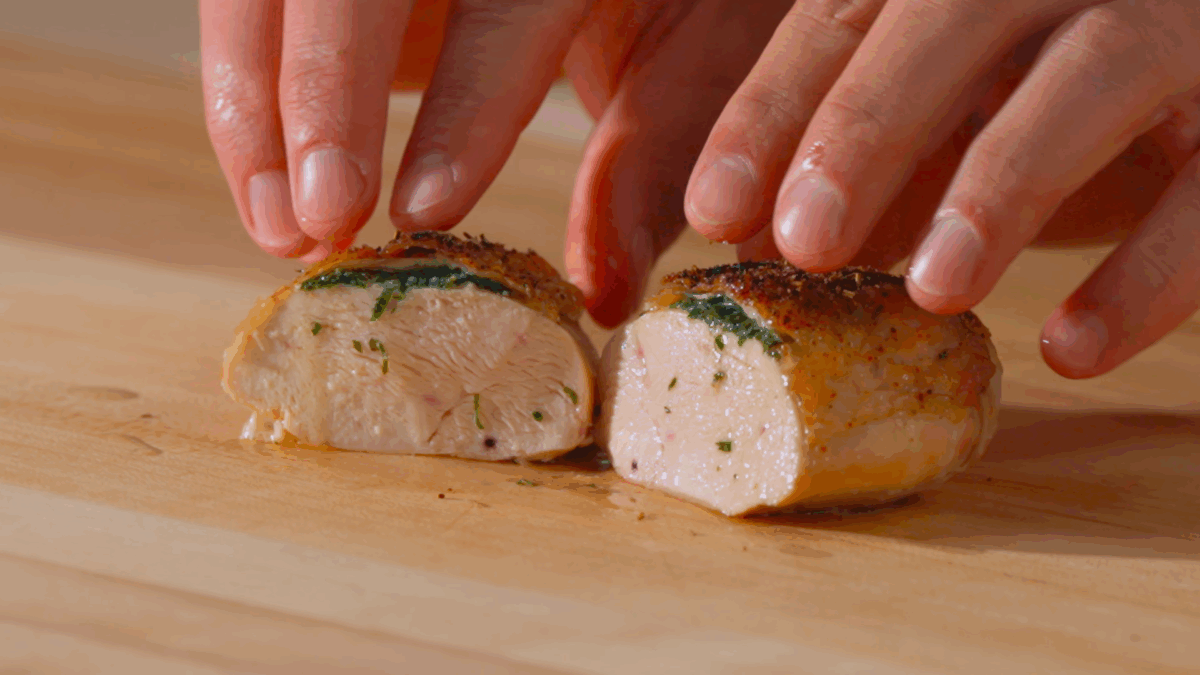
Nick DiGiovanni pulling two halves of a sliced, baked chicken breast apart.
5. Rest. Remove the chicken from the oven, and let it rest at room temperature before serving. 
Nick DiGiovanni slicing a chicken breast for cutlets.
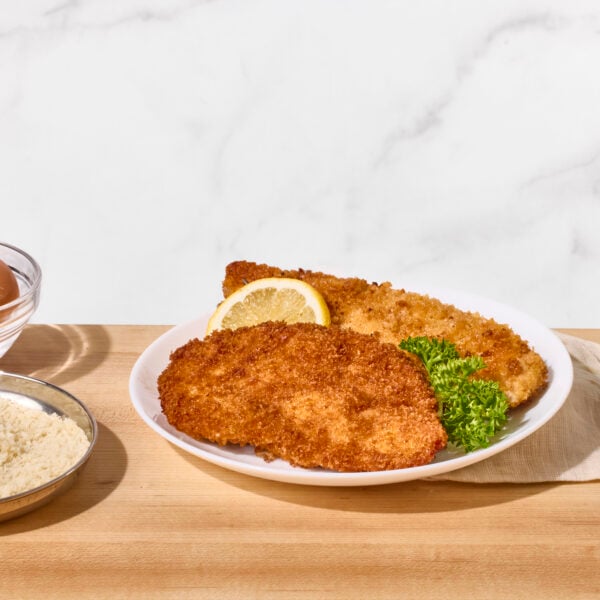
1. Slice and pound the chicken. Cut along the side of the chicken breast, stopping before slicing it completely in half. Then, pound the chicken to an even thickness. 
Nick DiGiovanni breading raw chicken cutlets.
2. Coat the chicken. Make a dredging station, arranging flour and your seasoning of choice in one bowl, eggs in a second bowl, and panko breadcrumbs in a third bowl. Coat the chicken in the flour, followed by the egg mixture, and then the panko. Repeat with the remaining chicken. I always rest my chicken before frying so the breading adheres properly. 
Nick DiGiovanni frying two breaded chicken cutlets in oil.
3. Fry. Heat oil in a frying pan, and add the chicken to the hot oil. Cook until a golden-brown crust forms, flip, add butter, and continue to baste until the chicken reaches an internal temperature of 150°F (65°C). 
Nick DiGiovanni transferring breaded chicken cutlets from a pan to a wire rack.
4. Rest. Drain the chicken cutlets on a paper towel or wire rack, and rest before serving. 
A bowl of brine to make chicken.
1. Prepare the brine. Heat water in a small pan. Then, add salt, sugar, and half of the aromatics. Let the salt and sugar dissolve, and add more water. Transfer the mixture to a deep container, and add ice cubes to cool the brine. 
Raw chicken submerged in a bowl of brine.
2. Add chicken. Place the chicken in the brine, cover, and chill in the fridge. 
Brined chicken cooking in a pan, weighted down.
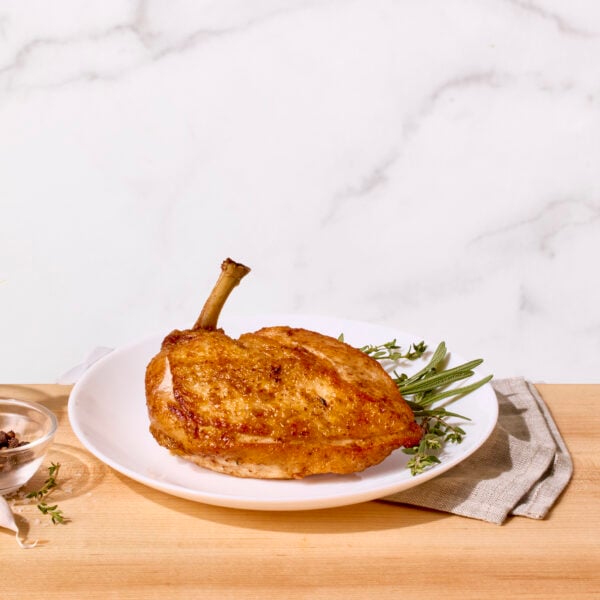
3. Dry and pan-fry. Drain the chicken, and pat it dry with paper towels. Then, place the chicken skin-side down in a pan with hot oil. 
Nick DiGiovanni basting chicken with butter in a pan.
4. Combine and cook. After about four minutes, add the butter and aromatics. Then, baste the chicken with the foaming butter. When the skin turns golden brown, flip the chicken, and continue to cook until it reaches an internal temperature of 150°F (65°C). 
Nick DiGiovanni pouring butter over pan-fried chicken on a wire rack.
5. Rest. Transfer the chicken to a wire rack, and pour the aromatics over the top. Rest at room temperature before serving. 
Nick DiGiovanni slicing a pocket into the side of a chicken breast.
1. Prepare the chicken. Use a small knife to make a cut along the side of the chicken breast, creating a pocket. 
Nick DiGiovanni stuffing a raw chicken breast with ham and cheese.
2. Stuff the chicken. Season the ham and wrap it around the cheese. Stuff the cheese into the opening in the chicken, and fold the edges of the chicken breast to create a seal. No filling should be exposed! 
Nick DiGiovanni using plastic wrap to wrap a stuffed chicken breast into a cylinder.
3. Chill. Wrap the chicken into a cylinder shape using plastic wrap, and chill it in the fridge. 
Nick DiGiovanni breading a raw stuffed chicken breast.
4. Bread. Prepare a dredging station with flour, eggs, and breadcrumbs in separate bowls. Coat the chicken in the flour, followed by the egg and then the breadcrumbs. Repeat the breading process once to create a thick coating. Then, rest the chicken at room temperature so the coating adheres. 
Nick DiGiovanni cooking a stuffed chicken breast in a pan on the stovetop.
5. Cook. Heat oil in a frying pan, and add the chicken. Add butter and continue to turn and cook until the chicken is golden brown all over. 
Nick DiGiovanni transferring a seared stuffed chicken breast to a wire rack.
6. Bake. Transfer the chicken to a baking tray lined with a wire rack, and bake until the chicken reaches an internal temperature of 160°F (71°C). 
Nick DiGiovanni pulling apart two halves of a sliced ham and cheese stuffed chicken breast.
7. Rest. Remove the chicken from the oven, and let it rest at room temperature until it reaches an internal temperature of 165°F (74°C).

Nick’s Tips for Success

  • Use a meat thermometer. Chicken breast can go from juicy to dry pretty quickly. A good instant-read thermometer takes the guesswork out of determining when it’s done. For food-safety guidance, chicken should reach an internal temperature of 165°F (74°C) before serving, which ensures it’s fully cooked and safe to eat. 
  • Even out the chicken. Chicken breasts naturally taper from a thick end to a thin end. Gently pounding the thickest section helps everything cook more evenly and prevents the thin end from drying out before the center is cooked.
  • Dry the skin before searing. Moisture on the chicken skin will prevent browning. After brining your chicken, pat the skin thoroughly dry before it goes anywhere near the hot pan to achieve a crisp exterior. 
  • Don’t rush poached chicken. You want to cook the chicken at a gentle simmer, not a rolling boil. High heat can tighten the proteins too quickly and leave you with tougher chicken.
  • Always rest your chicken. Give the chicken a few minutes to rest after cooking. This also allows carryover cooking to continue raising the internal temperature.
  • Cut against the grain. When slicing chicken breast for serving, cut across the direction of the muscle fibers to keep each bite tender. 
5 from 1 vote

How to Cook Chicken Breast (5 Methods)

Discover the ultimate guide for how to cook chicken breast using five different methods, including poached, baked, fried, pan-roasted, and stuffed. Each version turns out tender, juicy, and flavorful. Mix and match the methods for various dishes and occasions!
Servings: 2 servings per method
Five plates of chicken breasts prepared five different ways.
Prep Time: 15 minutes
Cook Time: 30 minutes
Total Time: 45 minutes
Save this recipe!
Get this sent to your inbox, plus new recipes from us every week!

Equipment

  • 1 Medium Saucepan
  • Parchment Paper
  • 1 Small Heat-Safe Plate
  • 1 Instant-Read Thermometer
  • 1 Medium Mixing Bowl
  • Plastic Wrap
  • 1 Meat Mallet or Rolling Pin
  • 1 Zip-Top Bag
  • 1 Parchment-Lined Baking Sheet
  • 1 Cutting Board
  • 1 Sharp Knife
  • 3 Shallow Bowls
  • 1 Medium Frying Pan
  • 1 Pair of Tongs
  • 1 Slotted Spoon
  • 1 Large Metal Spoon
  • 1 Wire Rack
  • 1 Deep Container
  • Paper Towels

Ingredients 

Poached Chicken

  • 4 cup (1 Liter) chicken broth
  • 4 black peppercorns
  • 1 lemon
  • 1 carrot, peeled
  • 1 celery stalk
  • 1 small white onion, peeled and quartered
  • 1 bay leaf
  • 2 sprig fresh thyme
  • 2 clove garlic, peeled
  • 2 boneless, skinless chicken breast

Baked Chicken

  • ½ cup (113 gram) unsalted butter, softened
  • 1 clove garlic, peeled and crushed
  • 2 teaspoon (10 milliliter) fresh chive, chopped
  • 2 teaspoon (10 milliliter) fresh parsley, chopped
  • 2 sprig fresh thyme leaves, chopped
  • kosher salt, to taste
  • black pepper, freshly ground, to taste
  • 2 skin-on chicken suprêmes
  • OSMO Golden Gourmet Seasoning, to taste

Fried Chicken Cutlets

  • 2 boneless, skinless chicken breast
  • ½ cup (60 gram) all-purpose flour
  • 2 teaspoon (10 milliliter) OSMO Golden Gourmet Seasoning
  • 2 large egg, beaten
  • 1 cup (150 gram) panko breadcrumb
  • ¼ cup (60 milliliter) neutral oil
  • 2 tablespoon (28 gram) unsalted butter

Brined and Pan-Roasted Chicken

  • 3 cup (720 milliliter) water, divided
  • ¼ cup (50 gram) kosher salt
  • ¼ cup (50 gram) caster sugar
  • 4 clove garlic, peeled and divided
  • 4 black peppercorns, divided
  • 1 bay leaf
  • 2 sprig fresh rosemary, divided
  • 4 sprig fresh thyme, divided
  • 2 cup (250 gram) ice cubes
  • 4 tablespoon (60 milliliter) water
  • 2 skin-on chicken suprêmes with wing tips
  • 2 tablespoon (30 milliliter) neutral oil
  • 3 ½ tablespoon (50 gram) unsalted butter
  • kosher salt, to taste
  • black pepper, freshly ground, to taste

Stuffed Chicken Breast

  • 2 boneless, skinless chicken breast
  • 2 slice deli ham
  • kosher salt, to taste
  • black pepper, freshly ground, to taste
  • 2 ounce (50 gram) Swiss cheese, cut into 2 rectangular pieces
  • ½ cup (60 gram) all-purpose flour
  • 2 large egg, beaten
  • 1 cup (160 gram) panko breadcrumbs
  • ¼ cup (60 milliliter) neutral oil
  • ¼ cup (56 gram) unsalted butter

Instructions 

Poached Chicken

  • Add the cold chicken broth, peppercorns, lemon, carrot, celery, onion, bay leaf, thyme, garlic, and chicken breasts to a medium saucepan.
    4 cup chicken broth, 4 black peppercorns, 1 lemon, 1 carrot, 1 celery stalk, 1 small white onion, 1 bay leaf, 2 sprig fresh thyme, 2 clove garlic, 2 boneless, skinless chicken breast
  • Cover with a disc of parchment paper and place a small heat-safe plate on top to keep the chicken submerged. Place over low heat and bring the liquid to a very gentle simmer.
  • Simmer until the thickest part of the chicken reaches an internal temperature of 150°F (65°C).
  • Remove the pan from the heat and allow the chicken to cool naturally in the broth. This helps prevent moisture loss and keeps the meat juicy.
  • Once cooled, remove the chicken from the broth and serve as desired.

Baked Chicken

  • Preheat the oven to 425°F (220°C). Combine the softened butter, garlic, chives, parsley, thyme, salt, and pepper in a medium bowl.
    ½ cup unsalted butter, 1 clove garlic, 2 teaspoon fresh chive, 2 teaspoon fresh parsley, 2 sprig fresh thyme leaves, kosher salt, black pepper
  • Spoon the butter onto a sheet of plastic wrap. Roll it into a tight log, twisting the ends of the plastic wrap to seal. Refrigerate until firm.
  • Place the chicken breasts on a cutting board. Using a meat mallet or rolling pin, gently pound the thickest portions until the breasts are a fairly even thickness, being careful not to damage the skin.
    2 skin-on chicken suprêmes
  • Unwrap the chilled butter and cut it into approximately ¼-inch (five-milimeter) slices. Tuck three slices underneath the skin of each chicken breast.
  • Season the chicken generously with OSMO Golden Gourmet Seasoning or your seasoning of choice.
    OSMO Golden Gourmet Seasoning
  • Arrange the chicken skin-side up on a parchment-lined baking sheet. Bake for 25-30 minutes, or until the thickest part reaches 150°F (65°C).
  • Remove the chicken from the oven and rest for five minutes, allowing carryover cooking to continue before serving.

Fried Chicken Cutlets

  • Place the chicken breasts on a cutting board. Using a sharp knife, slice horizontally through the side of each breast, stopping before cutting completely through. Open each breast like a book.
    2 boneless, skinless chicken breast
  • Cover the chicken with plastic wrap or place it in a zip-top bag. Gently pound it to an even thickness with a meat mallet or small saucepan.
  • Arrange three shallow bowls. Combine the flour and OSMO Golden Gourmet Seasoning in the first. Add the beaten eggs to the second and the panko breadcrumbs to the third.
    ½ cup all-purpose flour, 2 teaspoon OSMO Golden Gourmet Seasoning, 2 large egg, 1 cup panko breadcrumb
  • Working with one piece at a time, coat the chicken completely in the seasoned flour and shake off any excess.
  • Dip the chicken into the beaten eggs, allowing the excess to drip off.
  • Press the chicken firmly into the panko breadcrumbs until completely coated. Shake off any loose breadcrumbs and transfer to a clean tray.
  • Repeat with the second chicken breast. Let both cutlets rest for 10 minutes to help the breading adhere.
  • Heat the neutral oil in a medium frying pan over medium heat.
    ¼ cup neutral oil
  • Carefully place the chicken in the hot oil, laying it away from you. Fry for about three minutes, or until the underside is golden brown.
  • Flip with tongs. Add the butter and baste the chicken with the melted butter for about three minutes more.
    2 tablespoon unsalted butter
  • Cook until the thickest part of the chicken reaches 150°F (65°C).
  • Transfer to a paper towel-lined tray or wire rack and rest for two to three minutes before serving.

Brined and Pan-Roasted Chicken

  • Heat half of the three cups (750 milileters) of water in a small saucepan. Add the kosher salt, caster sugar, and half of the garlic and herbs. Stir until the salt and sugar dissolve.
    3 cup water, ¼ cup kosher salt, ¼ cup caster sugar, 4 clove garlic, 4 black peppercorns, 1 bay leaf, 2 sprig fresh rosemary, 4 sprig fresh thyme
  • Add the remaining water and transfer the brine to a deep container. Add the ice cubes and an additional four tablespoons (60 milliliters) of water to cool the mixture completely.
    2 cup ice cubes, 4 tablespoon water
  • Submerge the chicken in the cooled brine. Cover and refrigerate for one hour.
  • Remove the chicken from the brine, transfer it to a clean tray, and pat thoroughly dry with paper towels.
    2 skin-on chicken suprêmes with wing tips
  • Heat the neutral oil in a medium frying pan over high heat until hot but not smoking.
    2 tablespoon neutral oil
  • Using tongs, carefully place the chicken skin-side down in the pan, laying it away from you. Reduce the heat to medium.
  • Cook for about four minutes. Add the butter and remaining aromatics.
    3 ½ tablespoon unsalted butter
  • Using a large metal spoon, continuously baste the chicken with the foaming butter.
  • Once the skin is golden brown, flip the chicken and continue cooking and basting for about four minutes.
  • Cook until the thickest part of the chicken reaches approximately 150°F (65°C).
  • Transfer the chicken to a wire rack and spoon the butter and aromatics over the top.
    kosher salt, black pepper
  • Rest for four to five minutes to allow carryover cooking to continue before serving.

Stuffed Chicken Breast

  • Using a small, sharp knife, carefully make an incision along the side of each chicken breast to create a pocket without cutting all the way through.
    2 boneless, skinless chicken breast
  • Season the ham with salt and pepper. Wrap each slice around a piece of Swiss cheese, then insert it into the pocket in each chicken breast.
    2 slice deli ham, kosher salt, black pepper, 2 ounce Swiss cheese
  • Fold the edges of the chicken together to seal the pocket, making sure no filling is exposed.
  • Place each breast on plastic wrap and tightly wrap it into a cylinder. Twist and tie the ends, then refrigerate for two hours.
  • Preheat the oven to 350°F (180°C). Remove the chicken from the refrigerator and discard the plastic wrap.
  • Arrange the flour, beaten eggs, and panko breadcrumbs in three separate shallow bowls. Season each with salt and pepper.
    ½ cup all-purpose flour, 2 large egg, 1 cup panko breadcrumbs
  • Coat each chicken breast in the flour, followed by the egg and then the breadcrumbs. Repeat the breading process for a thick, even coating.
  • Let the breaded chicken rest for 10 minutes to help the coating adhere.
  • Heat the neutral oil in a medium frying pan over medium heat.
    ¼ cup neutral oil
  • Once the oil is hot but not smoking, carefully add the chicken.
  • Add the butter and cook, using tongs to continually turn the chicken, until the breading is golden brown all over.
    ¼ cup unsalted butter
  • Transfer the chicken to a wire rack set over a baking sheet. Bake for 10-15 minutes, or until the thickest part of the chicken, not the filling, reaches 160°F (71°C).
  • Rest for five minutes before serving.

Video

YouTube video

Notes

*Adjust the ingredient amounts in the recipe instructions accordingly if doubling or tripling the recipe. 
*Nutrition information is calculated for poached chicken breasts and will vary with each method. 
  • Chicken size: Cooking times will vary depending on the size and thickness of your chicken breasts. Always use an instant-read thermometer rather than relying solely on cooking time.
  • Poaching: Keep the liquid at a very gentle simmer. Boiling can cause the chicken to become tough.
  • Baked chicken: Pound only the thickest portion of the chicken to create a more uniform thickness, taking care not to tear the skin.
  • Fried chicken: Resting the breaded chicken for 10 minutes before frying helps the coating adhere.
  • Brining: Make sure the brine is completely cool before adding the raw chicken.
  • Stuffed chicken: When checking the temperature, insert the thermometer into the thickest portion of the chicken rather than the ham and cheese filling.
  • Resting: Resting allows carryover cooking to continue and helps keep the chicken juicy.
Storage:
Refrigerator: Let the chicken cool completely before transferring it to an airtight container. Store leftover chicken in the refrigerator for up to three to four days.
Freezer: For longer storage, freeze the cooked chicken in a freezer-safe container or bag for up to three months. I recommend wrapping individual portions or separating them with parchment paper so you can thaw only what you need.
Reheating: Thaw frozen chicken overnight in the refrigerator before reheating. Reheat gently in the oven, air fryer, or a skillet until warmed through. For the fried cutlets and stuffed chicken, I prefer the oven or air fryer over the microwave because it helps restore some of the crispy coating.

Nutrition

Serving: 1serving, Calories: 293kcal, Carbohydrates: 8g, Protein: 49g, Fat: 6g, Saturated Fat: 1g, Polyunsaturated Fat: 1g, Monounsaturated Fat: 2g, Trans Fat: 0.03g, Cholesterol: 145mg, Sodium: 289mg, Potassium: 1035mg, Fiber: 2g, Sugar: 3g, Vitamin A: 6097IU, Vitamin C: 9mg, Calcium: 41mg, Iron: 1mg

Nutrition information is automatically calculated, so should only be used as an approximation.

iconLike this recipe? Rate & comment below!

icon

Nick DiGiovanni

Celebrity Chef & Content Creator

You May Also Like

5 from 1 vote

Leave a comment

Your email address will not be published. Required fields are marked *

Recipe Rating


1 Comment

  1. Shyanne Reynolds says:

    5 stars
    This is so helpful!