
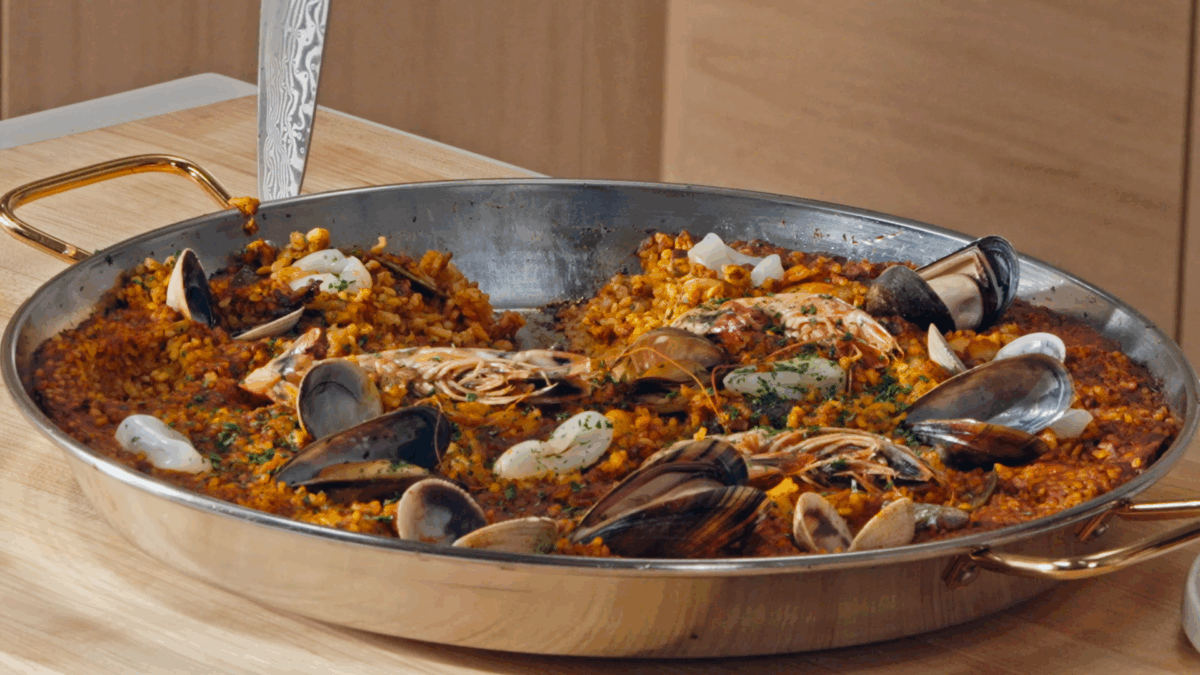
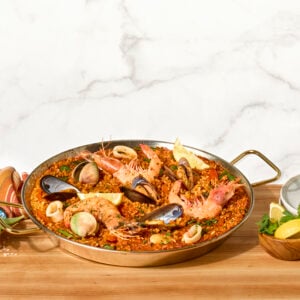
Learn how to make an authentic Spanish seafood paella recipe on the stovetop with simple steps and minimal prep. Just like the versions I’ve had in Spain, this homemade paella features tender, saffron-infused rice simmered in a rich seafood stock, layered with a flavorful tomato-based sofrito, vibrant vegetables, and fresh seafood. Finished with a perfectly crisp socarrat, it transports your taste buds without the need to board a plane!
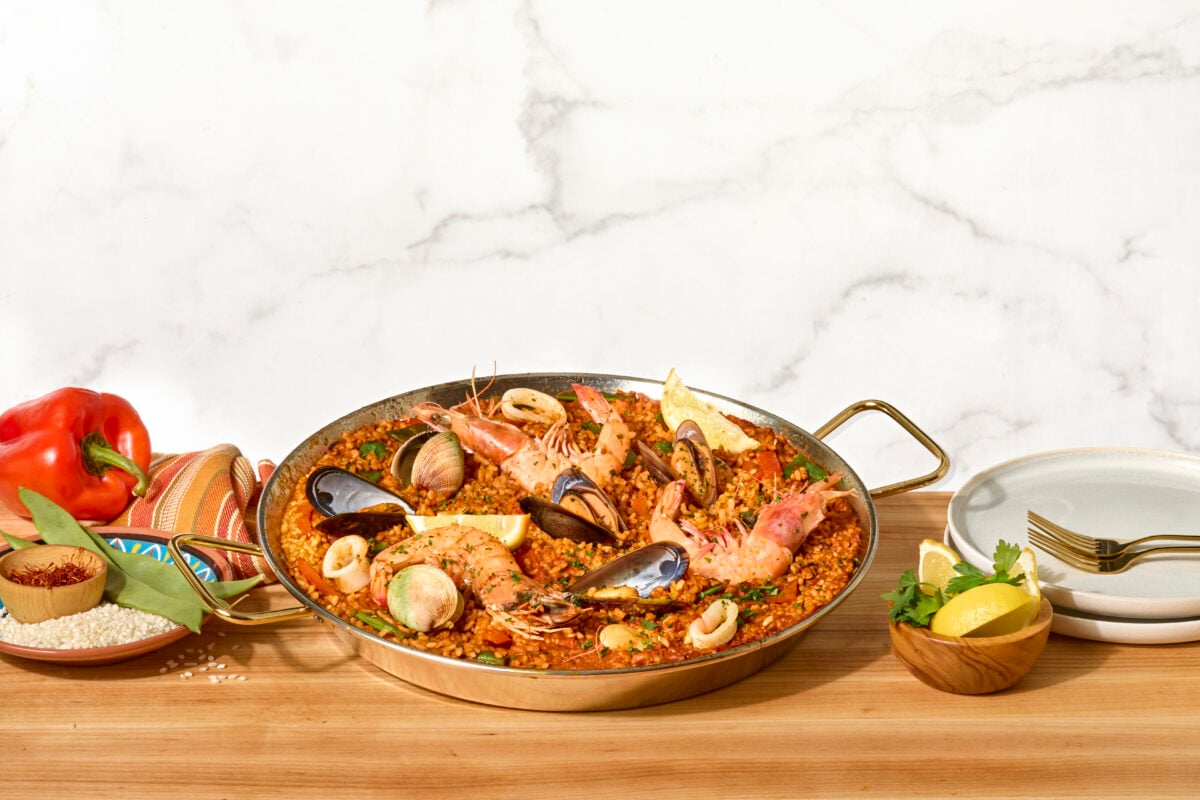
Table of Contents
If you’re unfamiliar, paella is a traditional Spanish rice dish that originated in the Valencia region and has become one of the most iconic meals in Spain. There are many variations, including seafood, chicken, and mixed paella, but they all contain short-grain rice, stock, and socarrat, which is a crispy, caramelized layer of rice on the bottom of the pan.
For this homemade Spanish paella recipe, I follow traditional methods, using a combination of seafood for an easy, hearty meal. Everything comes together in one large, shallow pan, where the ingredients are layered and left to simmer without constant stirring. This technique allows the rice to absorb maximum flavor while developing the perfect texture.
After years of recipe development and working with rice-based dishes, I’ve found that paella is less about complexity and more about patience, timing, and letting each step do its job. Follow the process, and you’ll achieve perfect seafood paella every time you cook!
Ingredients and Notes
See the recipe card below for the complete ingredient list and instructions.
Rice and Base
- Paella Rice – Bomba rice is a traditional Spanish short-grain rice that gives paella its signature tender consistency. If you can’t find bomba rice, Calasparra rice or another Spanish short-grain rice works well. Or, use a medium-grain rice, such as arborio rice, keeping in mind that the texture will change slightly.
- Seafood Stock – I enhance store-bought stock by simmering it with fish parts and shrimp shells, creating a savory, umami flavor base.
- Vegetables – Roma tomatoes, carrots, and onions infuse the stock with a sweet, savory flavor and a touch of acidity.
- Saffron Threads – This gives the paella a golden hue and adds slightly earthy, floral notes.
- Spanish Olive Oil – This has a fruitier, more robust flavor than standard olive oil, giving the base extra depth.
Seafood and Veggies
- Seafood – I use a mixture of shrimp, mussels, clams, and calamari for a classic Spanish seafood paella recipe. Head-on shrimp add extra flavor, and shellfish release briny juices into the rice as they cook. Feel free to use any seafood you like best, such as squid, scallops, or snapper.
- Vegetables – Flat green beans and red bell pepper add nutrients, texture, and subtle sweetness. Then, grated tomato and fresh garlic cook down into a rich, concentrated base and help thicken the paella. If you can’t find flat green beans, regular green beans also work.
- Beans (Garrofó) – Traditional in Valencian-style paella, these large, creamy beans add substance and a slightly buttery texture. Lima beans work well as a substitute if needed.
How to Make Spanish Seafood Paella
Nick’s Tips for Success
- Build a strong foundation. Take your time with the stock and sofrito. A rich seafood stock and a slow-cooked tomato base create the depth of flavor that makes paella stand out from other rice dishes.
- Use hot stock only. Always add warm or hot stock to the pan. Cold liquid can disrupt the cooking process and lead to unevenly cooked rice.
- Don’t rinse the rice. We want to keep the excess starch on the surface. It releases into the stock as the rice cooks, creating a thicker, creamier dish.
- Once the rice is coated, don’t stir again. Unlike mushroom risotto, paella should cook undisturbed. Stirring releases starch and prevents the rice from forming the proper texture and socarrat.
- Time the seafood carefully. Add the seafood toward the end of cooking so it stays tender. Overcooking can make shrimp rubbery and shellfish tough.
- Let it rest before serving. Allow the paella to rest uncovered for five to ten minutes. This helps the rice finish cooking and creates a thicker consistency.
Spanish Seafood Paella
Equipment
- 1 Large Pot
- 1 (15-16 / 38-40 centimeter) Paella Pan
- 1 Fine Mesh Strainer
- 1 Wooden Spoon or Spatula
- 1 Small Bowl
Ingredients
For the Rice and Base:
- 5 cup (1.2 liter) hot seafood stock
- 2 pound (900 gram) fish parts, shrimp shells
- 2 Roma tomato, halved
- 2 large carrot, chopped
- 1 onion, halved
- large pinch saffron threads
- ¼ cup (60 milliliter) Spanish olive oil
- 2 cup (400 gram) bomba rice
- salt
For the Seafood:
- 8 large head-on shrimp
- 12 mussels, cleaned
- 12 clams, cleaned
- 1 cup calamari rings
For the Vegetables & Sofrito:
- 1 cup (120 gram) flat green beans (judía verde plana), cut in half
- 1 red bell pepper, sliced
- 3 clove garlic, minced
- 1 ripe tomato, grated (about ½ cup / 120 milliliter) pulp
- ½ cup (75 gram) garrofó beans (or large lima beans), soaked and cooked
For the Garnish:
- fresh parsley, chopped
- lemon wedges
Instructions
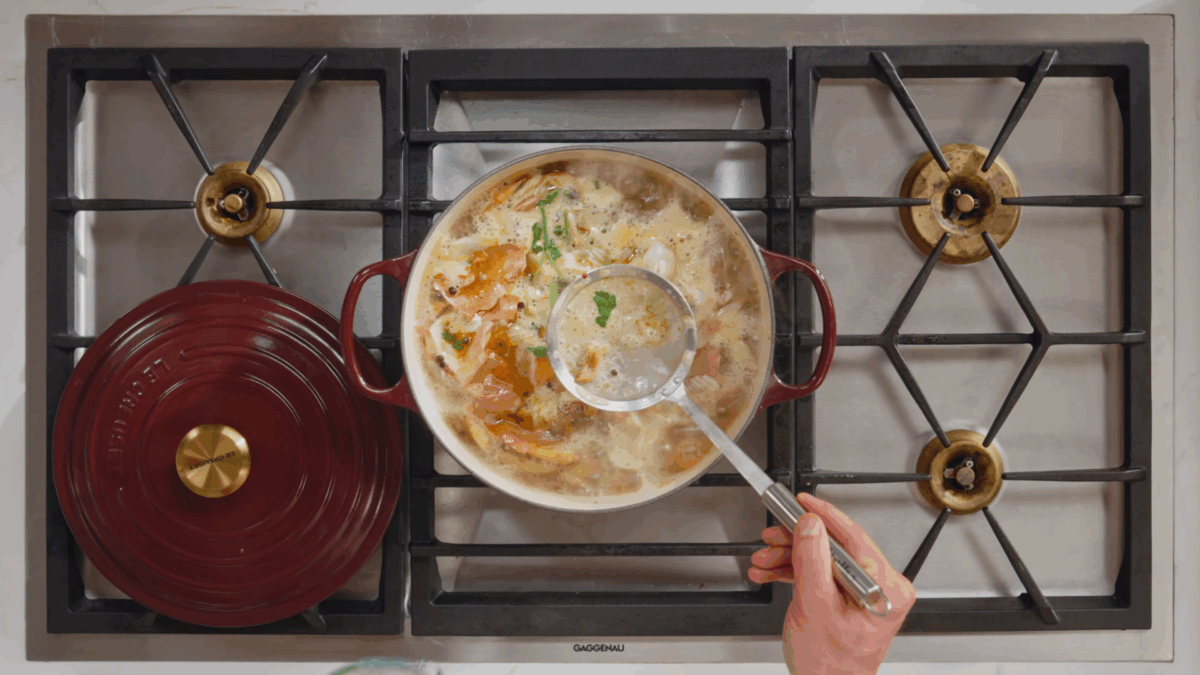
- Make the stock: In a large pot, combine the seafood stock, fish parts, shrimp shells, tomatoes, carrots, and onion. Bring to a boil, then reduce to a simmer. Cook for one hour, skimming any foam from the surface. Strain and keep the stock warm.5 cup hot seafood stock, 2 pound fish parts, shrimp shells, 2 Roma tomato, 2 large carrot, 1 onion
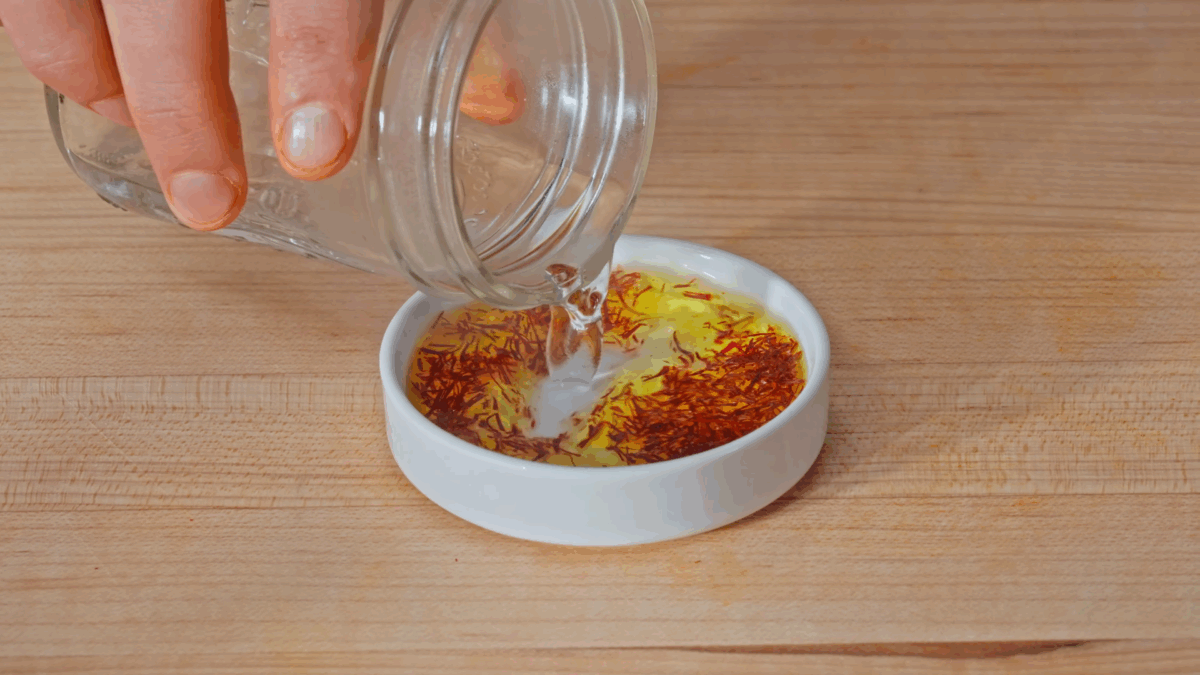
- Bloom the saffron: In a small bowl, combine saffron threads with two to three tablespoons (30-45 milliliters) of hot stock. Let steep for ten minutes.large pinch saffron threads
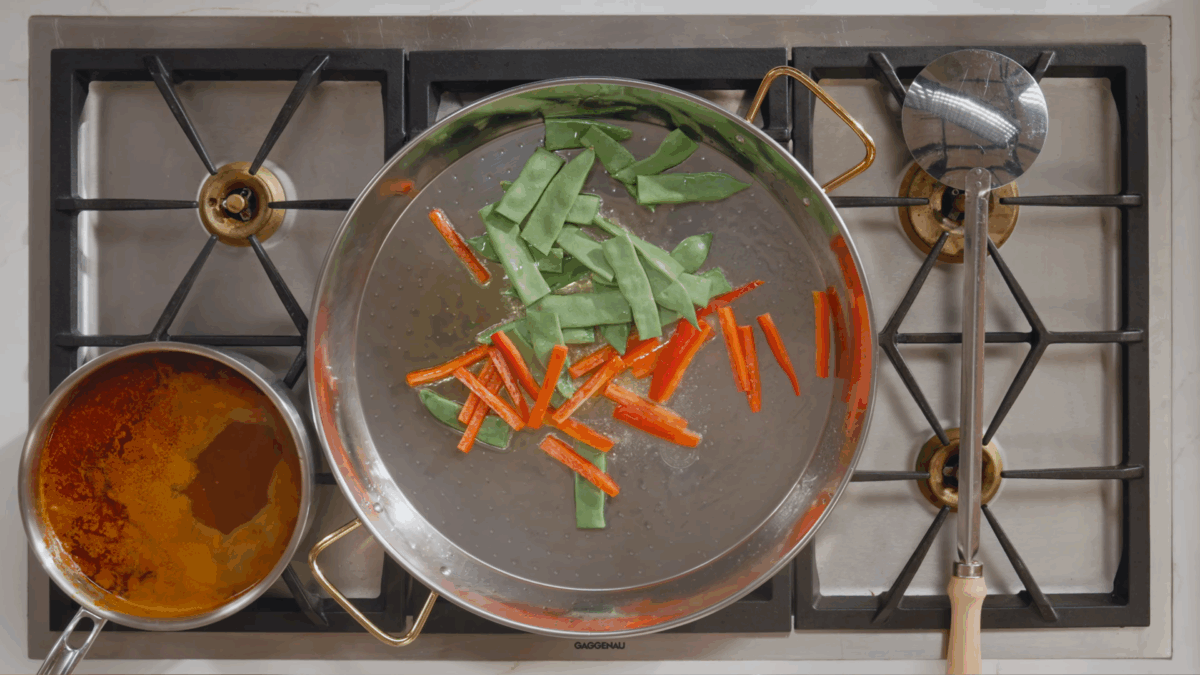
- Cook the vegetables: Heat olive oil in a 15-66 inch (38-40 centimeter) paella pan over medium-high heat. Add the green beans and red bell pepper. Cook for four to five minutes or until lightly blistered.¼ cup Spanish olive oil, 1 cup flat green beans (judía verde plana), 1 red bell pepper
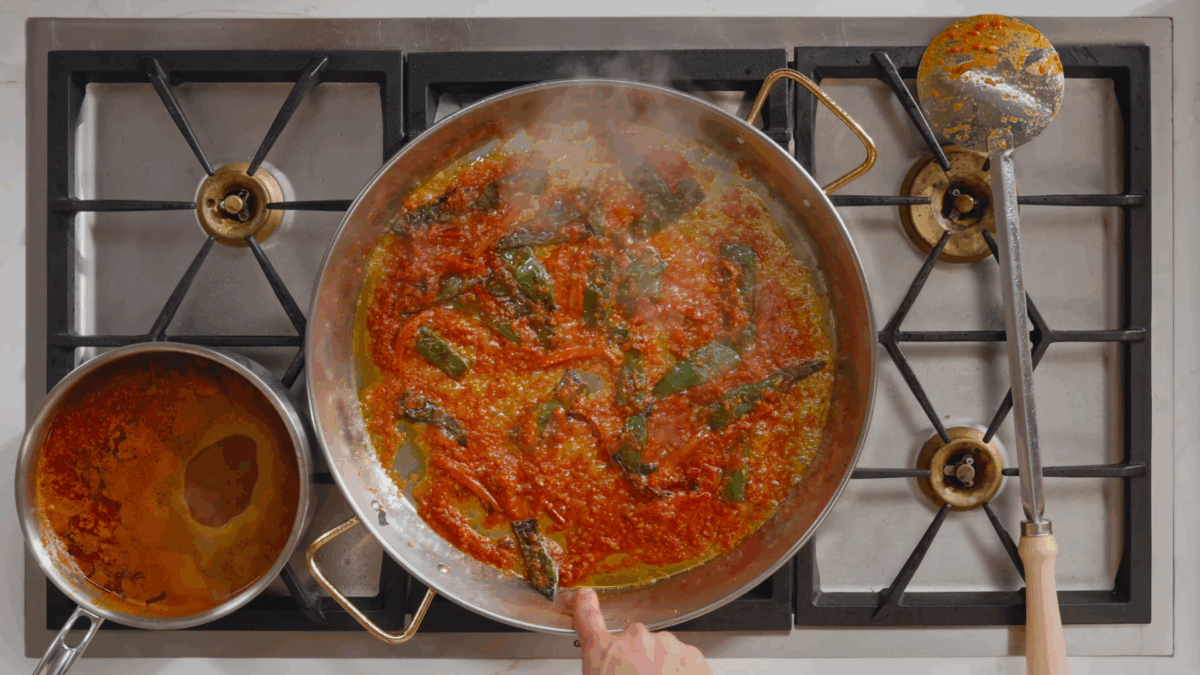
- Build the sofrito: Add the garlic, cook for 30 seconds or until fragrant. Stir in the grated tomato, and cook for eight to ten minutes or until the mixture is thickened, darkened, and jammy, with the oil beginning to separate.3 clove garlic, 1 ripe tomato
- Toast the rice: Stir in the bomba rice, and coat it evenly in the sofrito.2 cup bomba rice
- Add liquid: Pour in the hot stock and saffron mixture. Season with salt. Spread the rice evenly across the pan. Do not stir from this point forward.salt
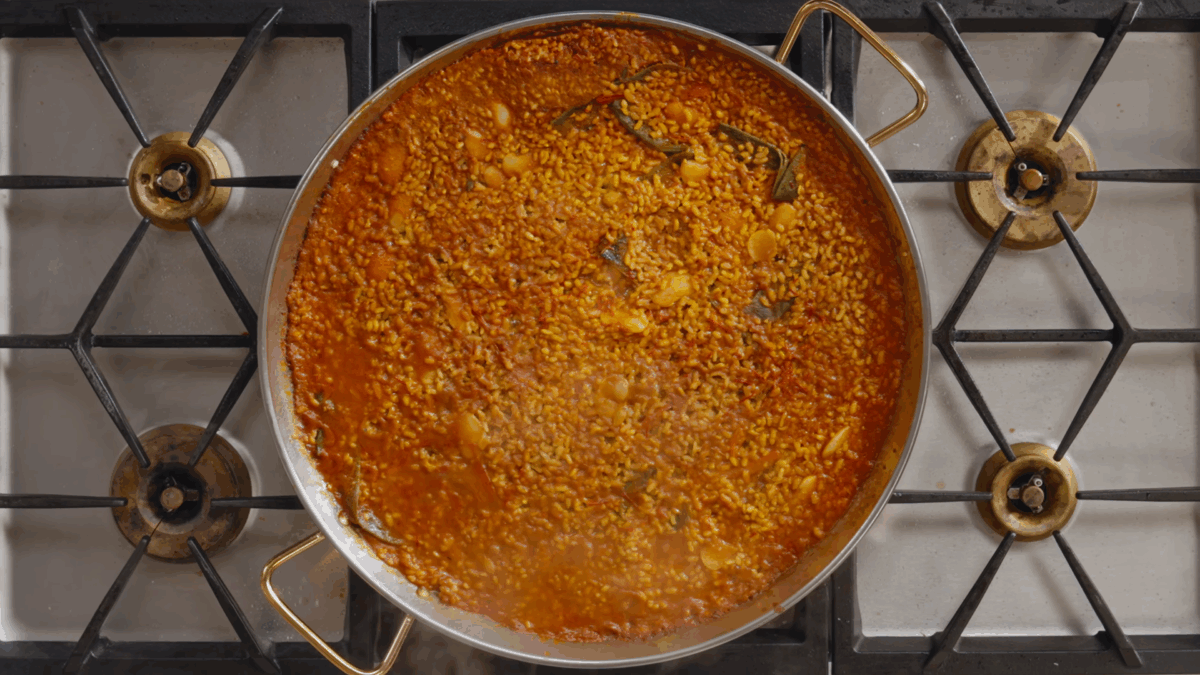
- Simmer the rice: Cook the rice over medium heat for ten minutes, rotating the pan occasionally for even cooking. Add the garrofó beans, and reduce the heat to low. Continue cooking for 25-30 minutes until the liquid reduces and the rice begins to appear on the surface.½ cup garrofó beans (or large lima beans)
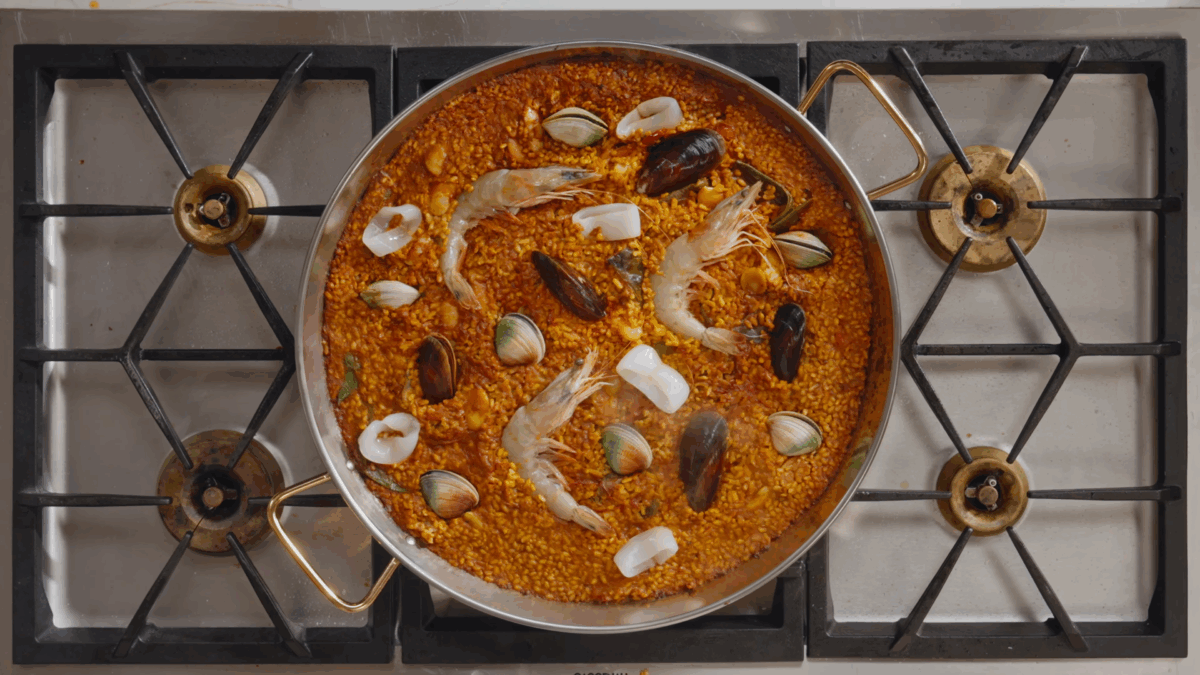
- Add seafood: Nestle the shrimp, mussels, clams, and calamari into the rice. Cook for five to eight minutes until the shellfish open and the rice is just tender. Discard any unopened shellfish.8 large head-on shrimp, 12 mussels, 12 clams, 1 cup calamari rings
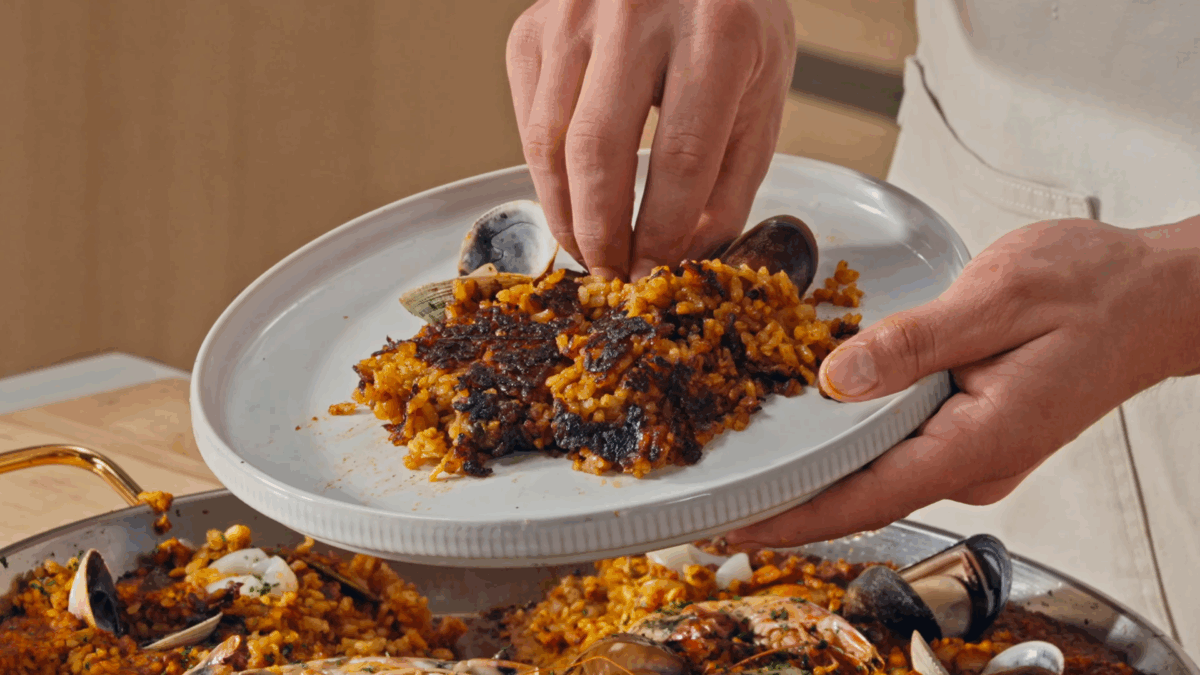
- Create the socarrat: Increase the heat to medium-high for one to two minutes. Listen for a gentle crackling sound and a toasted aroma from the bottom.
- Rest: Remove the pan from heat, and let the paella rest uncovered for five to ten minutes.
- Serve: Sprinkle the dish with chopped parsley and serve with lemon wedges directly from the pan.lemon wedges, fresh parsley
Video

Notes
Nutrition
Nutrition information is automatically calculated, so should only be used as an approximation.
 Like this recipe? Rate & comment below!
FAQs
I almost always serve paella family-style straight from the pan. After resting, add a garnish of fresh parsley and lemon wedges for a bright flavor that balances the richness of the oil and the acidity of the tomatoes.
Yes. A traditional paella pan is ideal because it’s wide and shallow, but you can use a large skillet instead. The key is to use a pan that allows the rice to spread out in a thin, even layer. Avoid deep pots or Dutch ovens, which will trap too much moisture and prevent the rice from cooking properly and forming socarrat.
Mushy paella usually comes down to too much liquid, overcooking, or stirring the rice. Paella should not be stirred once the stock is added, as this releases starch and creates a softer, risotto-like texture.
In addition, using the wrong type of rice or not allowing enough evaporation time can also lead to excess moisture. For the best texture, use short-grain rice like bomba, measure your liquid carefully, and cook until the rice is just tender with a slightly firm bite.



how many does this serve?
This should serve 6!
I was always intimidated by paella, but this turned out to be so simple. Thanks, Nick!