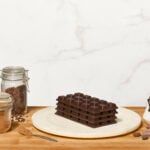
Homemade Chocolate Recipe
Learn how to make a homemade chocolate bar from scratch, starting with whole cacao pods. With just a few simple ingredients, you can turn raw cacao into smooth, rich chocolate that tastes better than anything you’ll find on store shelves.
Servings: 12 servings
Equipment
- 1 Fermentation Box (Wooden or Insulated Container)
- Banana Leaves or Breathable Cloth
- 2-3 Drying Racks or Dehydrator
- 2-3 Sheet Pans
- 1 Dehydrator Oven
- 1 Rolling Pin or Grinder (for Cracking)
- 1 Fan (for Winnowing)
- 1 Vitamix
- 1 Stone Melanger
- 1 Thermometer
- 1 Infrared Thermometer (Preferred)
- 4 Polycarbonate Bar Molds
- 1 Bench Scraper
- 1 Marble Slab (Optional, for Tabling)
- 1 Microfiber Cloth
Ingredients
- ~25 cacao pods yields ~ 2.2 pound / 1 kilogram dried fermented beans
- 1½ cup fine organic cane sugar (for 70% chocolate)
- ⅓ cup cocoa butter melted
Instructions
Ferment the Cacao Beans:
- Split cacao pods and remove the beans, keeping the pulp intact.~25 cacao pods
- Transfer the beans to a wooden fermentation box.
- Cover with banana leaves or a breathable cloth.
- Ferment for five to seven days, turning the beans on day two and day four to introduce oxygen.
- The internal temperature should reach 110-120°F (43-48°C).
Cut Test:
- Slice a bean in half to check doneness. Fully fermented beans will be brown inside. A purple interior indicates under-fermentation.
Dry the Beans
- Spread the fermented beans in a single layer on drying racks or sheet pans.
- Dry in the sun or a dehydrator at 95-115°F (35-46°C), leaving the door slightly open for airflow.
- Turn the beans daily to ensure even drying.
- Continue drying until moisture reaches approximately six to seven percent. The beans should feel hard and rattle when shaken.
Sort the Beans
- Remove and discard any moldy beans, flat beans, or germinated (sprouted) beans, along with any stones or debris.
Roast the Beans
- Add ~2.2 pound (one kilogram) beans to a roaster.
- Roast for 17 minutes.
- Turn off the machine immediately after roasting. Do not allow it to move to the next phase.
Crack and Winnow the Beans
- Crack the beans using a rolling pin or pulse in a food processor (four to six pulses).
- Sift the mixture through a colander.
- Transfer the mixture to a metal bowl.
- Airflow Method: Use a fan, heat gun, or hair dryer to blow away the lighter husks while rotating the bowl.
- The heavier cacao nibs will remain in the bowl. Discard all husks.
Grind into Cocoa Liquor
- Add about five cup (700 gram) cacao nibs to a high-speed blender (like a Vitamix).
- Blend on high until a thick, smooth paste forms (cocoa liquor). Do not exceed 140°F (60°C).
Prepare the Sugar
- Grind one and a half cup (300 gram) granulated sugar in a clean blender until very fine. This helps the melanger run smoothly and prevents grainy chocolate.1½ cup fine organic cane sugar (for 70% chocolate)
Refine the Chocolate
- Transfer the cocoa liquor to a melanger.
- Once fully liquid, add 1/3 cup (70 gram) melted cocoa butter.⅓ cup cocoa butter
- Slowly add the sugar.
- Refine for 24-48 hours, or up to 72 hours for an ultra-smooth texture.
- Maintain the chocolate between 110-130°F (43-54°C).
Temper the Chocolate
- Temper Curve (Dark Chocolate): - Melt: 115-120°F (45–50°C)- Cool: 80-82°F (26–27°C)- Working: 88-90°F (31–32°C)
Tabling Method:
- Pour the chocolate onto a marble slab.
- Move it continuously with a bench scraper until it cools to 80-82°F (26-27°C).
- Use a heat gun to gently reheat it to 88-90°F (31-32°C).
Seeding Method (Alternative)
- Melt chocolate to 115°F (46°C).
- Remove from heat.
- Add ten to twenty percent finely chopped tempered chocolate.
- Stir until cooled to 80-82°F (26-27°C).
- Gently reheat to 88-90°F (31-32°C).
- Hold at working temperature for molding.
Check Temper
- Spread a small amount on an offset spatula. It should set quickly with a glossy finish.
Mold the Chocolate
- Polish polycarbonate molds with a microfiber cloth. Ensure the molds are clean, dry, and at room temperature. Optional: Spray molds with cocoa butter for extra shine.
- Pour the tempered chocolate into the molds.
- Tap firmly to release air bubbles.
- Scrape off excess chocolate.
Set and Release
- Allow the chocolate to set at 60-65°F (16-18°C). Avoid refrigeration, as it can cause blooming and uneven crystallization. Chocolate will naturally contract as it sets.
- Once set, invert the molds and tap gently to release.
Video
Notes
*Adjust the ingredient amounts in the recipe instructions accordingly if doubling or tripling the recipe.
Nutrition
Serving: 1serving | Calories: 627kcal | Carbohydrates: 40g | Protein: 11g | Fat: 48g | Saturated Fat: 33g | Polyunsaturated Fat: 0.1g | Monounsaturated Fat: 0.4g | Sodium: 0.3mg | Potassium: 1mg | Fiber: 11g | Sugar: 26g | Calcium: 0.3mg | Iron: 0.02mg