
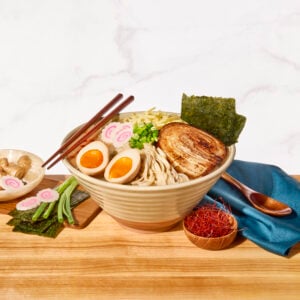
This tonkotsu miso ramen recipe is made with a homemade pork broth, homemade ramen noodles, caramelized pork belly, and runny eggs. Rich, savory, aromatic, and creamy, it’s a filling, hearty comfort food that tastes even better than the ramen bowls I’ve had in Japan!

Table of Contents
What is Miso Ramen?
If you’re unfamiliar, there are different types of ramen. Miso ramen, in particular, is a type of Japanese ramen built with miso paste, which is a fermented soybean seasoning that adds a deep, savory, umami flavor. Unlike more mild shoyu ramen, which is soy sauce-based, or shio ramen, which is salt-based, miso ramen is known for its bold flavor and slightly opaque appearance.
Miso ramen, in particular, is believed to have originated in Hokkaido, Japan, where the cold winters required a heartier, more filling ramen. Traditional miso ramen dishes are made with either chicken or pork-based stock. However, for this recipe, I’m making tonkotsu miso ramen, which combines pork broth (tonkotsu) and white miso paste. It’s slightly sweeter than other varieties, and the pork creates a unique savory flavor and almost creamy consistency I love.
Warm and filling, it’s one of my favorite comfort foods ever and is really fun to make at home, which saves me from hopping on a sixteen-hour flight when a craving strikes!
Ingredients and Notes
See the recipe card below for the complete ingredient list and instructions.
Tonkotsu and Miso Broth
- Pork Bones and Trotters (Feet) – Pork bones create the base of the tonkotsu broth, while the trotters add collagen, giving the broth its signature creamy, silky texture. A mix of both is key to creating the rich flavor we want.
- Aromatics – White onion, garlic, ginger, and scallions add depth to the broth and balance the richness with sharp, slightly sweet notes. I add peels and all because it all gets strained out later.
- Neutral Oil – Use any neutral oil you have on hand, such as avocado oil or vegetable oil, to sauté the aromatics and release their flavor.
- White Mushrooms – These add an extra umami taste and a subtle earthiness to the broth.
- White Miso Paste – A staple in tonkotsu miso ramen recipes, this adds a delicate, slightly sweet, fermented flavor, balancing the broth nicely.
- Sesame Oil – This adds a slightly nutty taste. Use it sparingly. A little goes a long way!
- Chili Oil – This is optional, but I like to add it for a touch of heat.
Chashu Pork Belly
- Pork Belly – Remove the skin before you begin.
- Soy Sauce – This forms the salty, savory base of the braising liquid. I recommend low-sodium soy sauce so that you have better control over the flavor of the dish.
- Sake and Mirin – These add sweetness and depth and help tenderize the pork.
- Sugar – This balances the saltiness and promotes caramelization.
- Aromatics – Garlic, ginger, and scallions infuse the pork with a tangy, savory, slightly sweet flavor as it braises.
Ramen Noodles
- Bread Flour – This has a higher protein content than all-purpose flour, which helps create chewy, springy noodles that hold up well in the hot broth.
- Salt – Don’t skip this! It enhances the flavor of the noodles and helps strengthen the dough.
- Baking Soda – This gives the noodles their signature bite and contributes to the yellow hue.
- Alkaline Water – Less acidic than regular tap water, this is essential to achieve the proper texture and elasticity. Technically, tap water will work if needed, but your noodles won’t have the same chewy bite.
Ramen Egg
- Large Eggs – Soft-boiled, these are served with jammy centers.
- Soy Sauce, Mirin, and Sake – These combine to create a savory, salty, sweet marinade.
- Garlic and Ginger – These add a sharp, aromatic flavor to the eggs, creating a cohesive taste throughout the dish.
- Kombu – This infuses the eggs with extra umami flavor.
How to Make Tonkotsu Miso Ramen Recipe from Scratch
1. Prepare the Broth
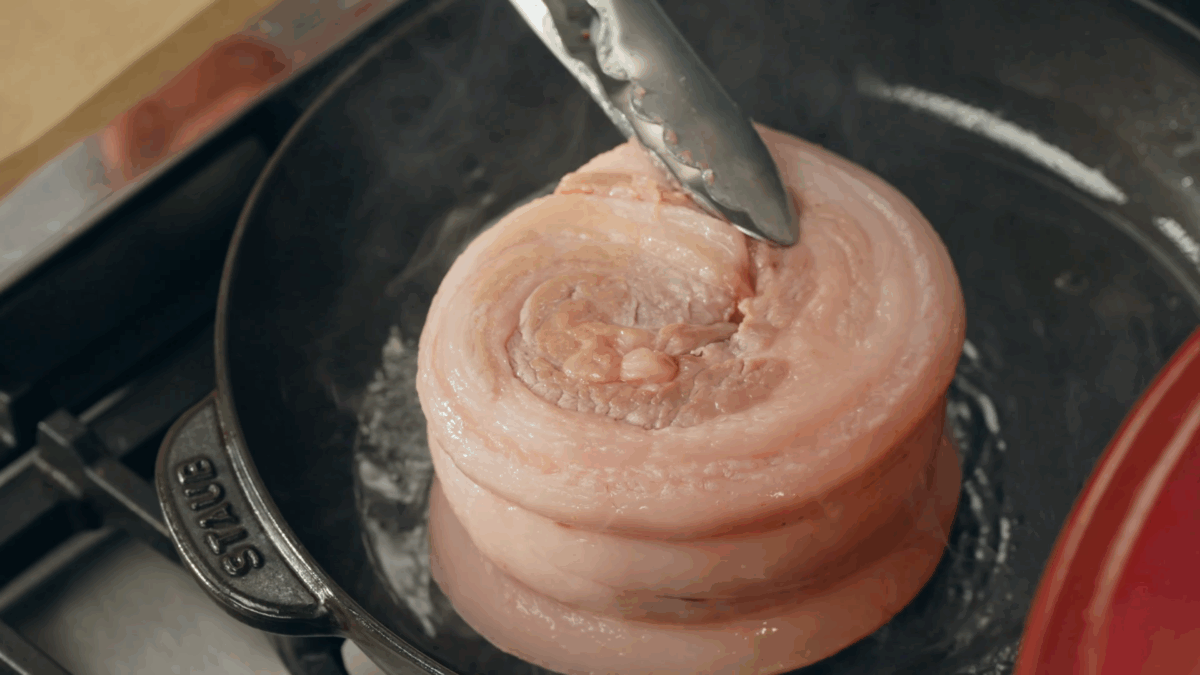
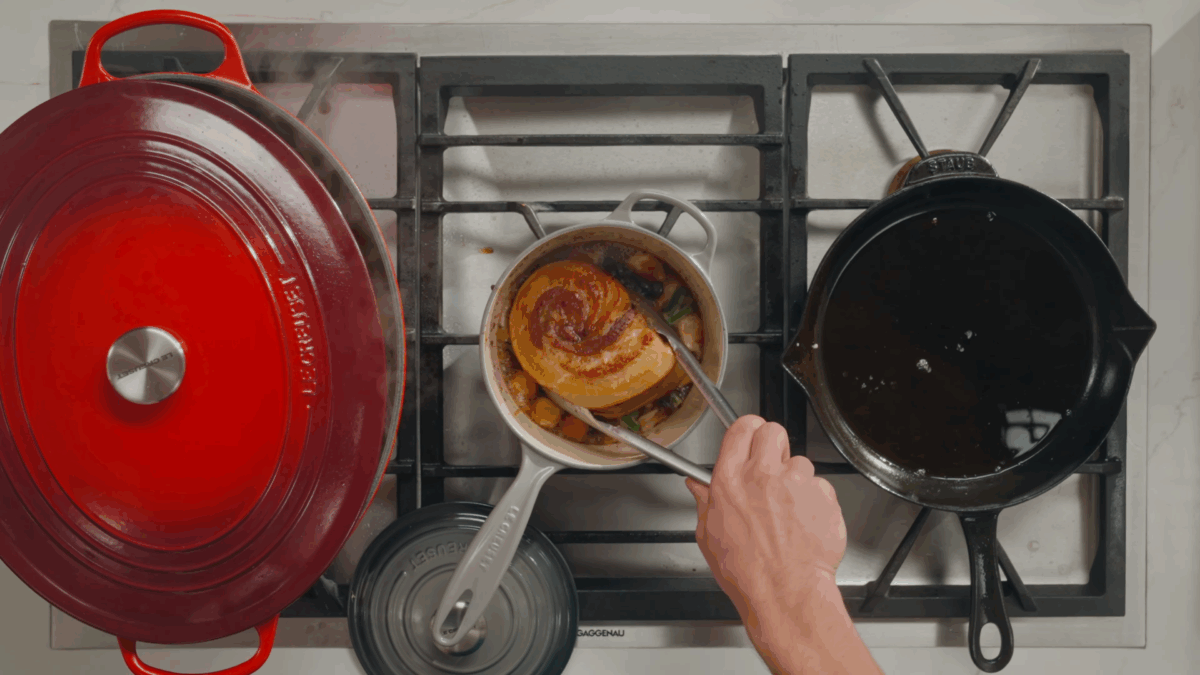
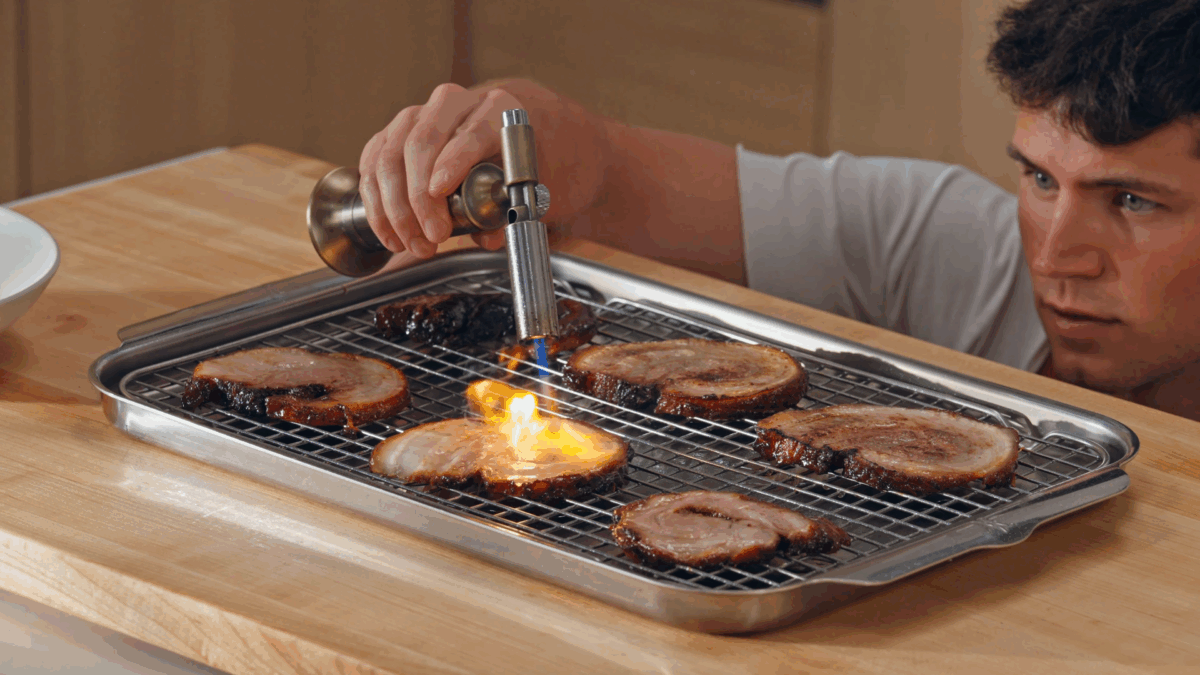
2. Cook the Pork Belly
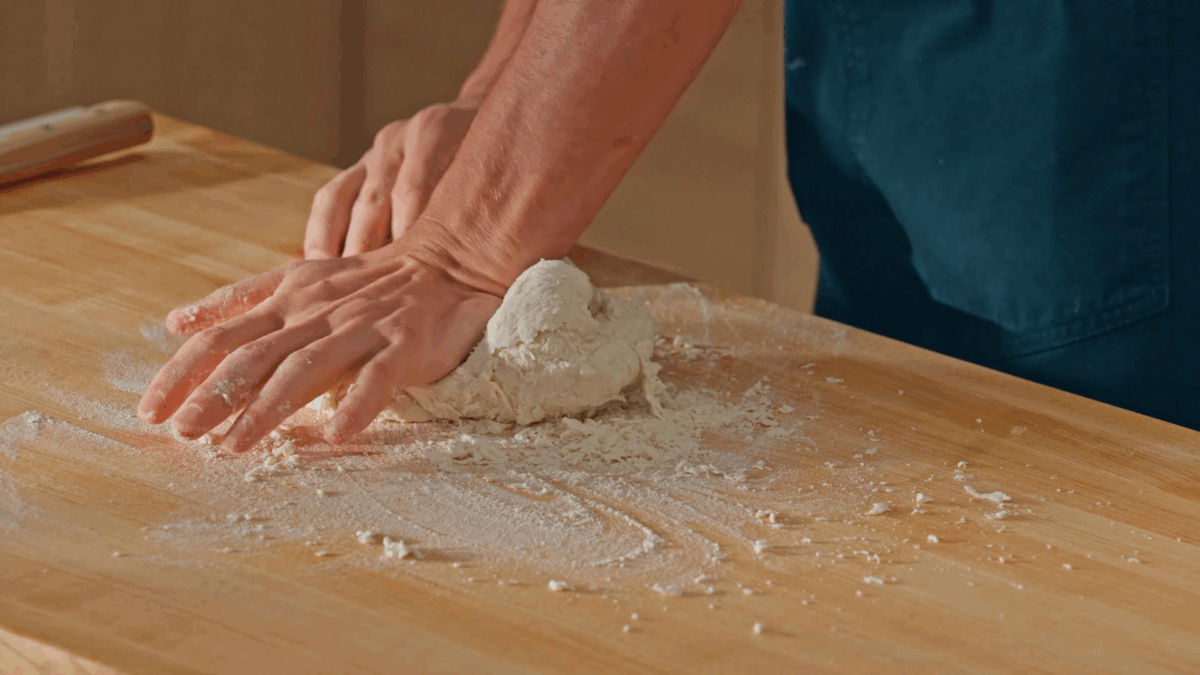
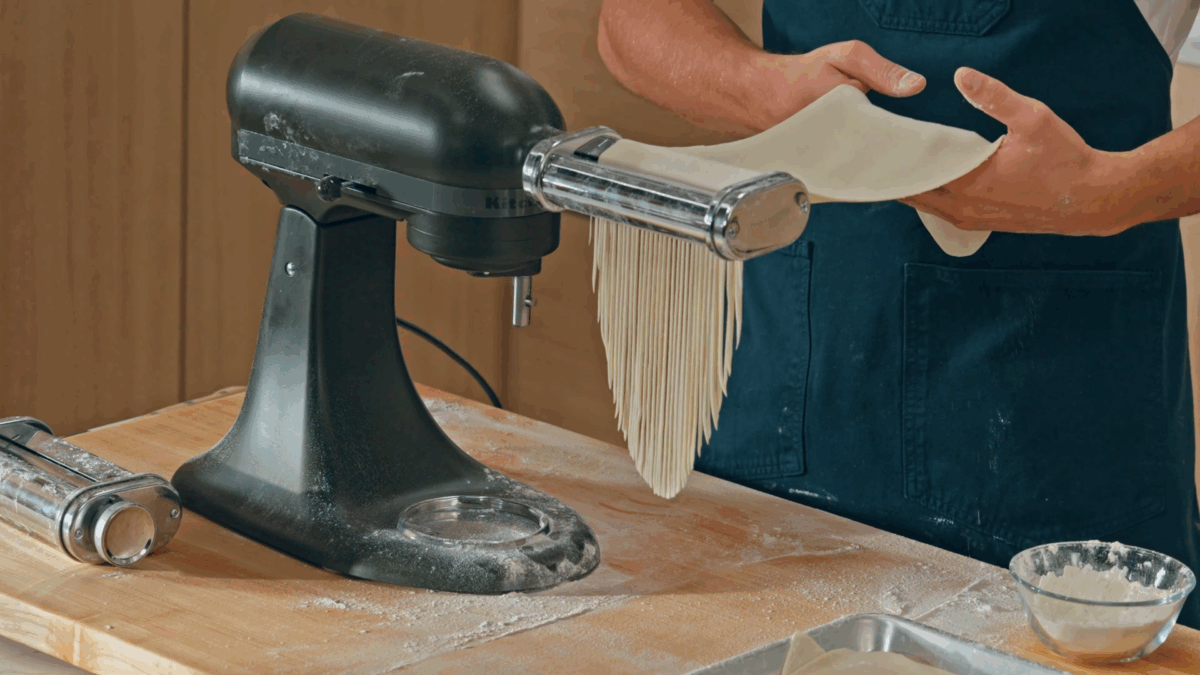
3. Make the Ramen Noodles
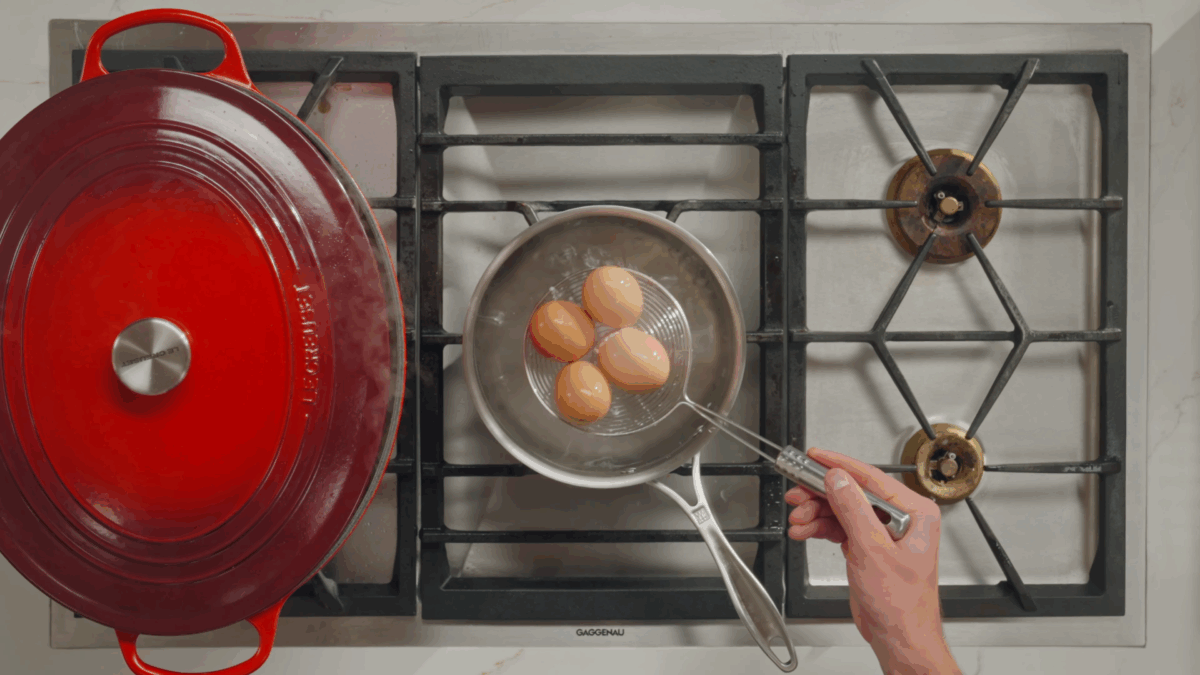
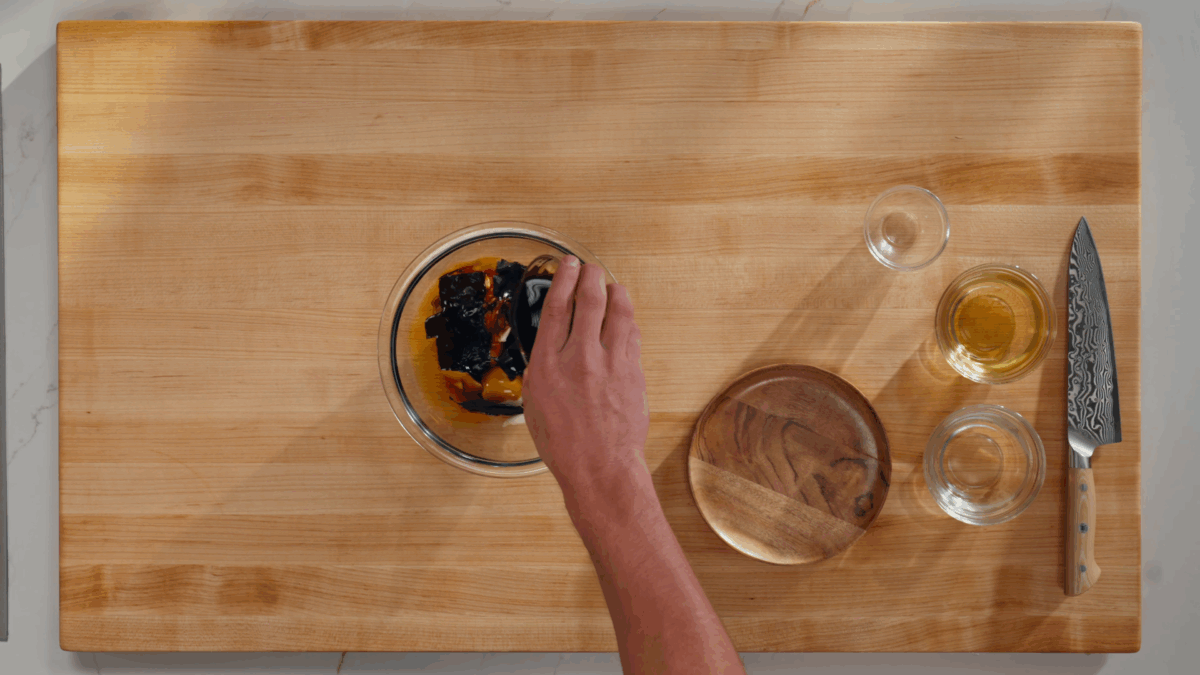
4. Prepare the Ramen Egg
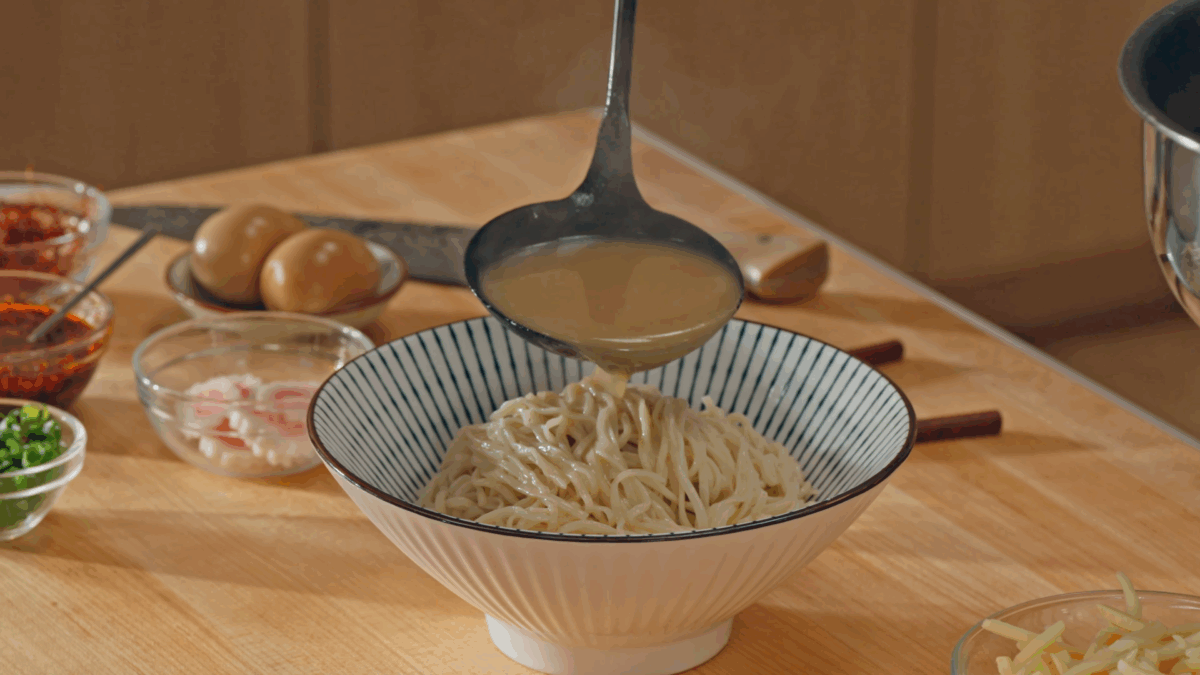
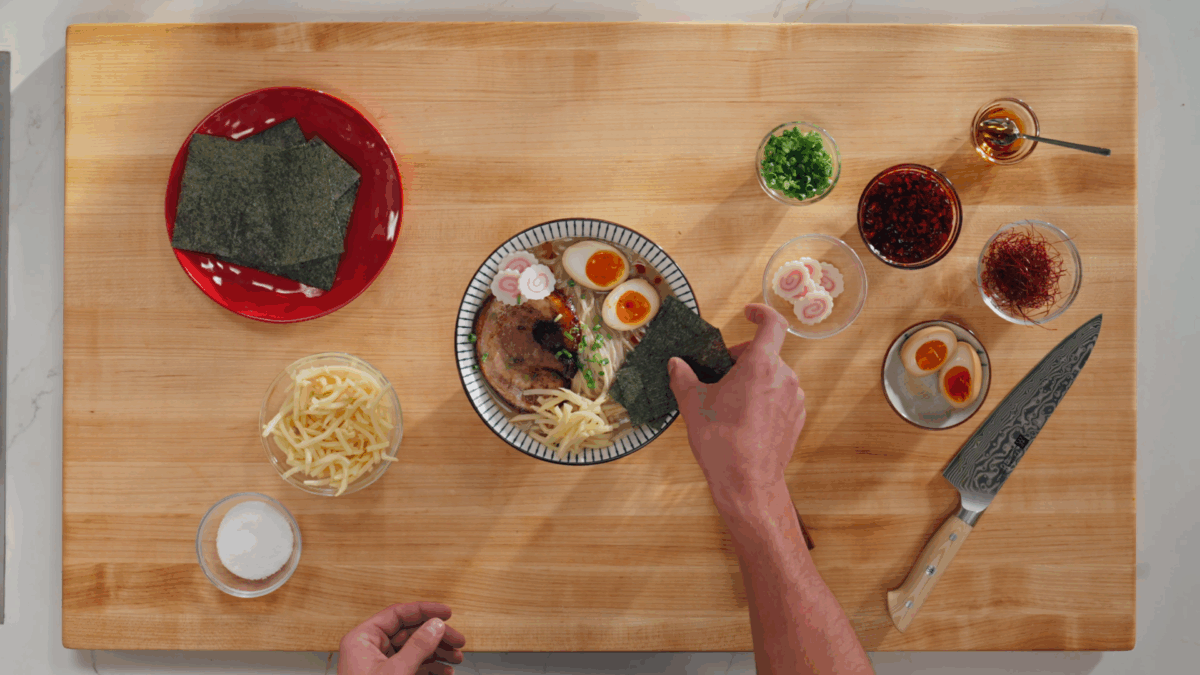
5. Assemble and Serve
Possible Variations
- Spicy Miso Ramen – Add 1-2 tablespoons of chili paste (doubanjiang, gochujang, or sambal) to the broth along with the miso, or finish each bowl with extra chili oil and chili threads for heat.
- Red or Yellow Miso Ramen – Swap the white miso for yellow or red miso for a deeper, saltier, more assertive flavor.
- Chicken Miso Ramen – Use chicken backs, wings, or carcasses in place of pork bones for a lighter chicken stock base. Finish with miso paste for a cleaner, less rich bowl that still delivers plenty of umami flavor.
- Vegetarian Miso Ramen – Replace the tonkotsu base with a kombu-and-shiitake broth. Add miso at the end and top with roasted mushrooms, corn, baby spinach, or tofu for a satisfying plant-based option.
- Corn and Butter Miso Ramen – Drawing inspiration from Hokkaido-style ramen, add sweet corn kernels and a small pat of butter to the bowl for richness and contrast.
- Extra-Protein Ramen – Top your bowls with additional proteins like grilled chicken, shrimp, or even leftover reverse-seared steak for a heartier meal.
- Shortcut Version – Use high-quality store-bought tonkotsu or chicken broth, and enhance it with white miso, garlic, ginger, and a splash of sesame oil for a faster, weeknight-friendly version. Then, skip making the noodles, and buy a package of ready-to-cook ramen noodles instead. I typically find them in the international or Asian sections of most grocery stores!
Nick’s Tips for Success
- Blanch the bones first. Boiling and rinsing the pork bones before simmering removes impurities and keeps the broth clean while still allowing it to turn rich and creamy.
- Keep the broth at a rolling simmer. A gentle boil, not a low simmer, is key for tonkotsu. The movement helps emulsify fat, collagen, and water, creating that signature milky texture we want.
- Top up with hot water, not cold. If the liquid reduces too much while simmering the broth, add hot water to maintain the temperature and avoid shocking the broth, which can dull the flavor.
- Add miso at the end. Miso should be whisked in after straining and off the heat. Boiling miso can mute its fermented flavor and make the broth taste flat.
- Season gradually. Between the miso, soy-marinated toppings, and finishing oils, the bowl can become very salty very quickly. To avoid an overpowering flavor, taste the broth before serving, and adjust slowly.
- Chill chashu overnight. Cooling the pork belly in its braising liquid firms it up, making it easier to cut clean, even slices.
- Don’t overcook the noodles. Ramen noodles cook very quickly and will continue to soften once combined with the broth. To avoid a mushy texture, keep a very close eye on them, and boil just to or shy of al dente.
- Warm your bowls. Preheating your serving bowls with hot water helps keep the broth hot longer and improves the overall eating experience.
Tonkotsu Miso Ramen Recipe
Equipment
- 1 Large Stockpot (10-12 quart / 9-11 Liters)
- 1 Dutch Oven
- 1 Fine Mesh Sieve
- 1 Large Mixing Bowl
- 1 Rolling Pin or Pasta Roller
- 1 Sharp Knife or Stand Mixer with Pasta Attachment
- 1 Saucepan
- Kitchen Twine
- 1 Blowtorch (or Broiler)
- 4-6 Ramen Bowls
Ingredients
Tonkotsu + White Miso Broth
- 5 pound (2.28 kilogram) pork bones
- 1 pound (.45 kilogram) pork trotters
- 2 tablespoon neutral oil
- 1 large onion, quartered
- 1 head garlic, halved crosswise
- 2-inch (2-inch / 5 centimeter) knob ginger, halved
- 2 scallion, trimmed
- 8 ounce (226 gram) white mushroom
- ¼ cup (~68 gram) white miso paste (added at the end)
Chashu Pork Belly
- 2 pound (0.9 kilogram) pork belly, skin removed
- 1 cup (236 milliliter) soy sauce
- ½ cup (118 milliliter) sake
- ½ cup (118 milliliter) mirin
- ¼ cup (50 gram) sugar
- 3 clove garlic, smashed
- 1-inch (2½ centimeter) knob ginger, sliced
- 2 scallion
Ramen Noodles
- 2½ cup (300 gram) bread flour
- ½ teaspoon (3 gram) salt
- ½ teaspoon (2 gram) baking soda
- ⅔ cup (150 milliliter) alkaline water
Ramen Egg (Ajitsuke Tamago)
- 4 large egg
- ½ cup (118) soy sauce
- ½ cup (118 milliliter) mirin
- ½ cup (118 milliliter) sake
- 1 clove garlic, smashed
- ½-inch (1-1½ centimeter) ginger slice
- 1 small piece kombu
Toppings & Garnish
- chashu pork, sliced
- half a ramen egg
- naruto, fish cake, sliced ⅛ inch (3 millimeter) thick
- bamboo shoots, canned and pre-sliced
- scallions, micro or finely sliced
- unsalted, toasted Nori sheet, tucked at the side
- optional finishes: chili oil drizzle, toasted sesame oil, red chili threads
Instructions
Make the Tonkotsu Miso Broth
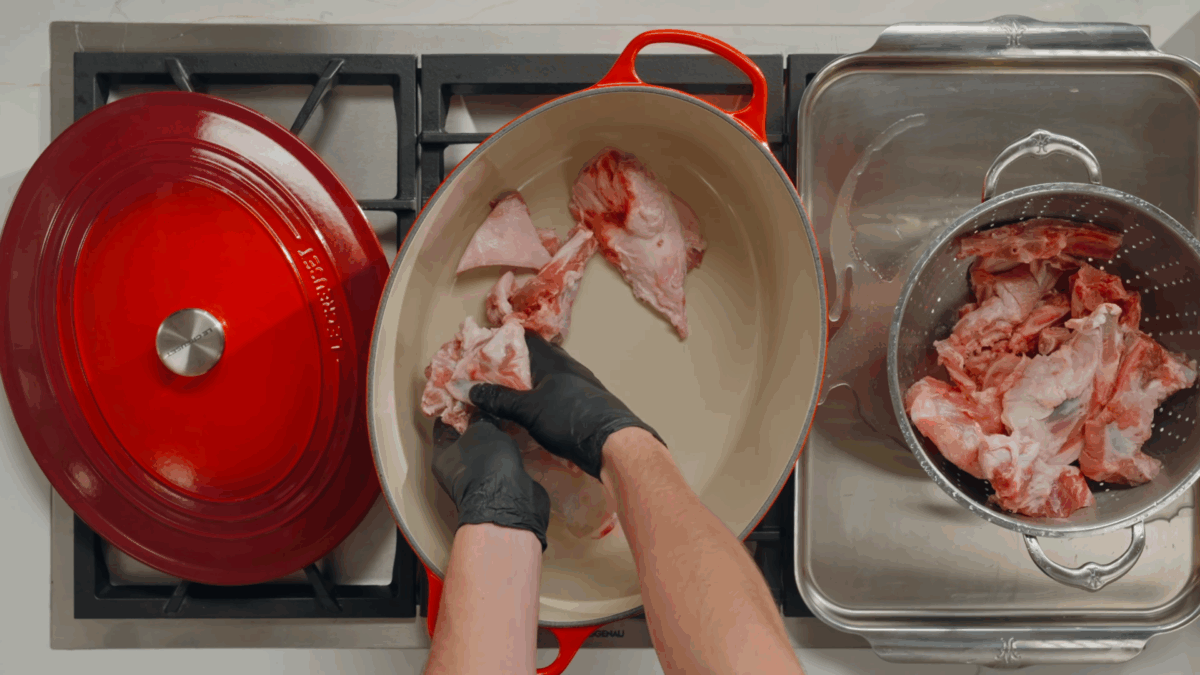
- Blanch the bones: Add the pork bones and trotters to a large pot, cover with cold water, and bring to a boil. Boil for ten minutes to release impurities. Drain, rinse thoroughly, and clean the pot.5 pound pork bones, 1 pound pork trotters
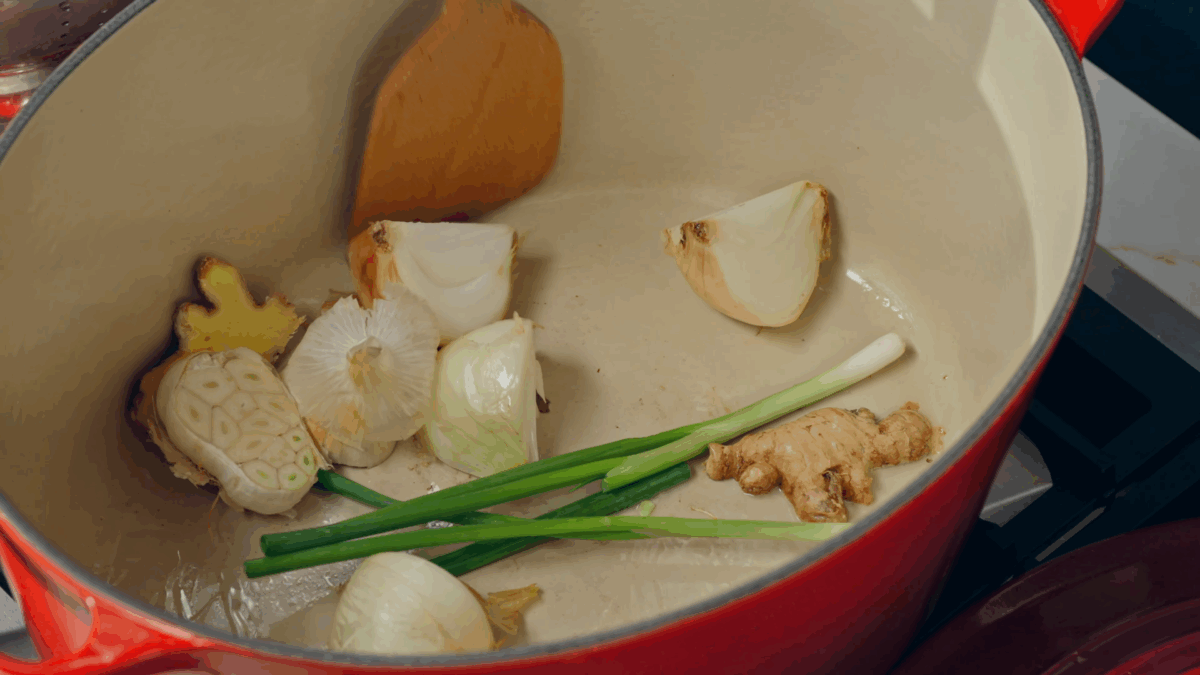
- Sauté aromatics: Heat neutral oil in the clean stockpot over medium heat. Add the onion, garlic, ginger, and scallions. Cook just until fragrant, about two to three minutes.1 large onion, 1 head garlic, 2-inch knob ginger, 2 scallion, 2 tablespoon neutral oil
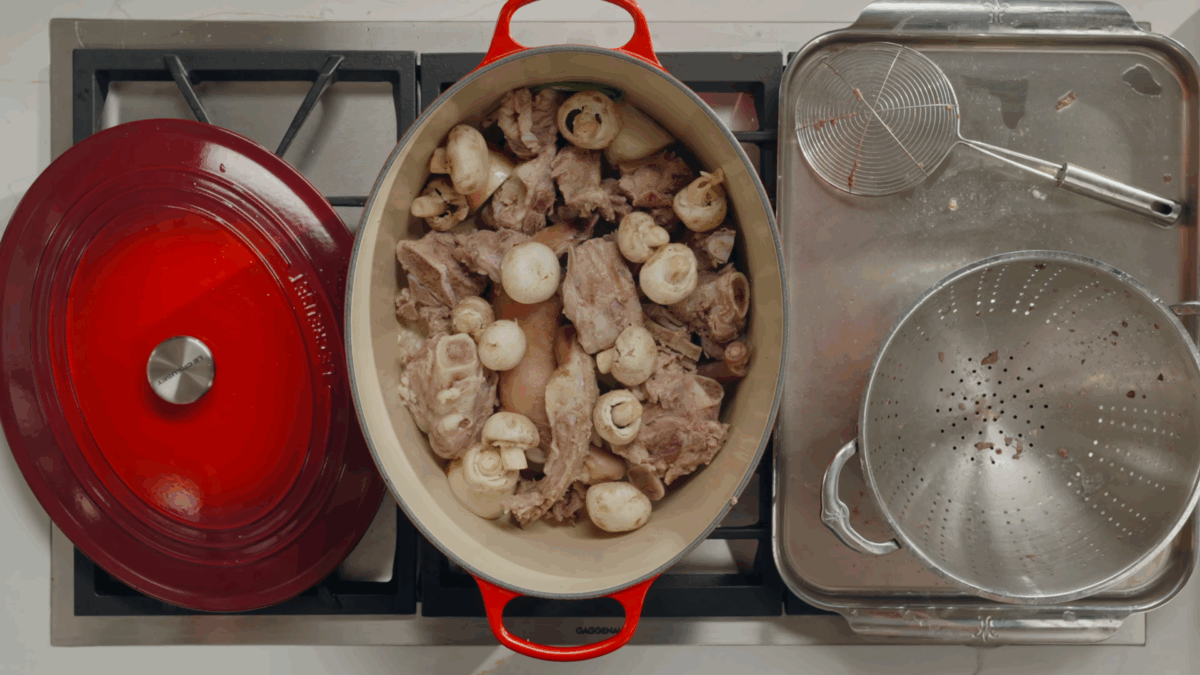
- Simmer the broth: Add blanched bones and mushrooms. Cover with four quarts (3.8 liters) water. Bring to a boil, then reduce to a rolling simmer. Skim foam during the first 30 minutes.8 ounce white mushroom
- Cook long and slow: Simmer partially covered for ten to twelve hours, topping up with hot water as needed. The broth should become milky, rich, and slightly opaque.
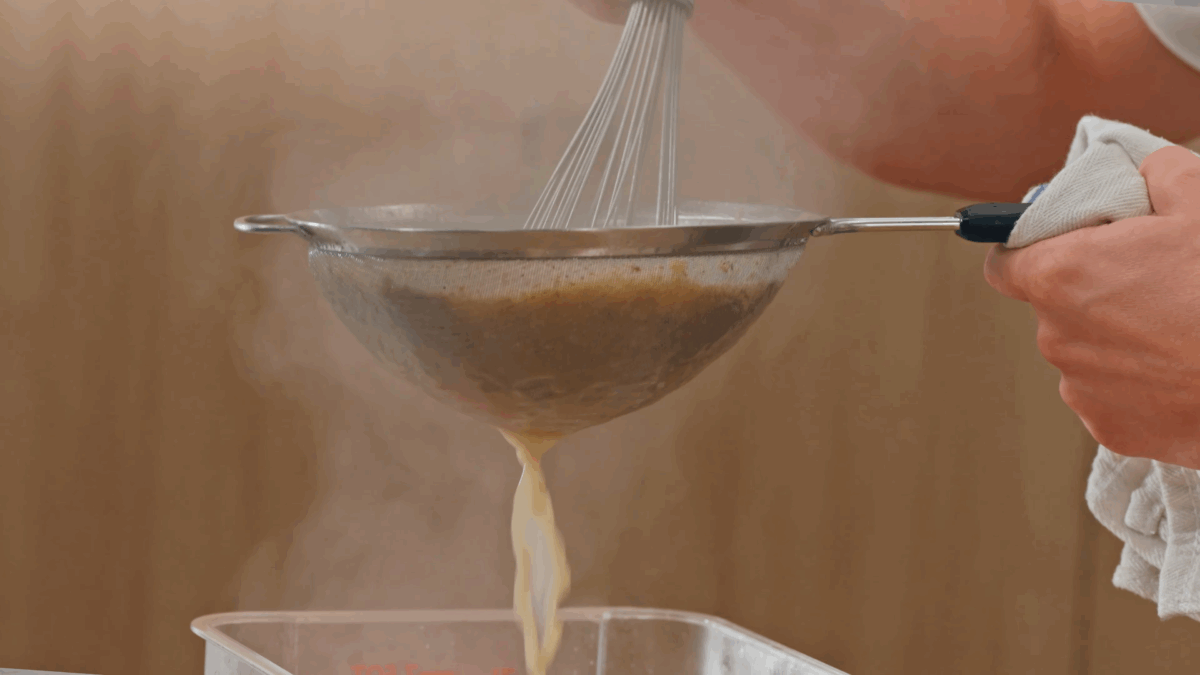
- Strain and season: Strain through a fine-mesh sieve. Whisk in white miso off the heat. Refrigerate until ready to use or reheat gently before serving.¼ cup white miso paste (added at the end)
Make the Chashu Pork Belly
- Roll the pork: Place pork belly fat-side down, roll tightly into a log, and tie with butcher’s twine every one inch (two and a half centimeter).2 pound pork belly
- Brown: Sear in a Dutch oven over medium heat until deeply golden on all sides.
- Braise: Add soy sauce, sake, mirin, sugar, garlic, ginger, and scallion. Bring to a simmer, cover, and cook on low for two hours.1 cup soy sauce, ½ cup sake, ½ cup mirin, ¼ cup sugar, 3 clove garlic, 1-inch knob ginger, 2 scallion
- Chill: Cool pork in the braising liquid overnight for easy slicing.
- Finish: Slice and torch or sear just before serving for caramelized edges.
Make the Ramen Noodles
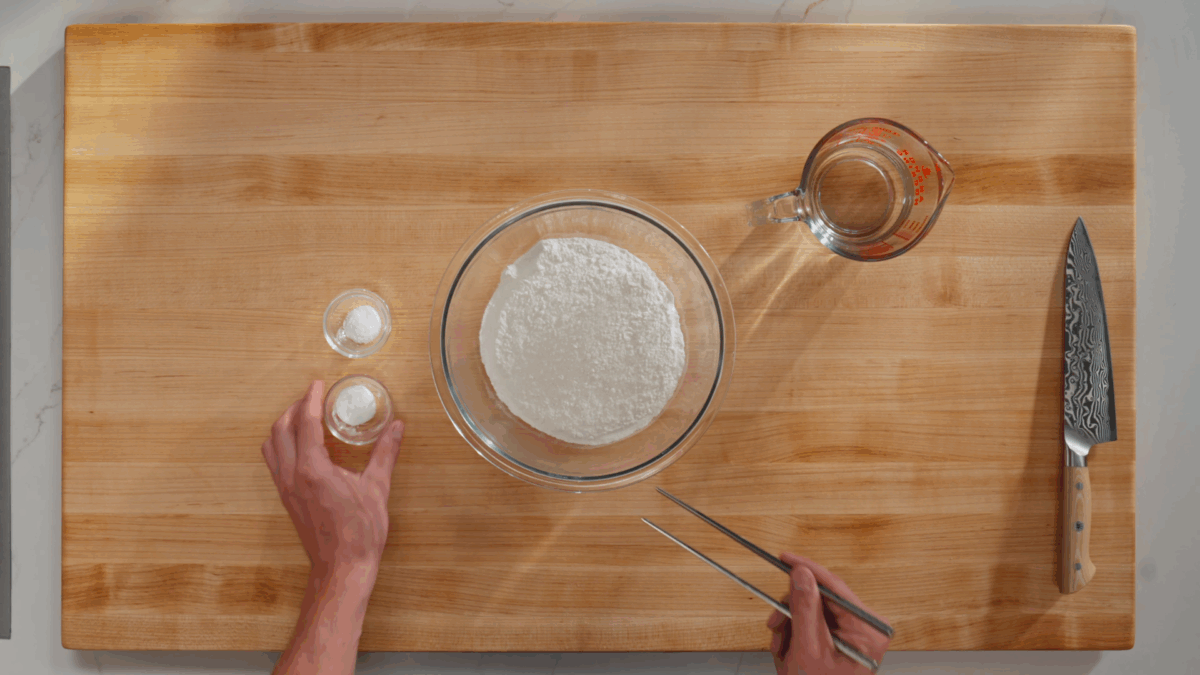
- Mix dough: Combine flour, salt, and baking soda. Slowly mix in alkaline water until a stiff dough forms.2½ cup bread flour, ½ teaspoon salt, ½ teaspoon baking soda, ⅔ cup alkaline water
- Knead and rest: Knead until smooth, cover, and rest for 30 minutes.
- Roll and cut: Roll dough very thin and slice into fine strands.
- Cook: Boil noodles in salted water for 60-90 seconds until just al dente. Drain and rinse briefly.
Prepare the Ramen Eggs
- Cook eggs: Bring water to a boil. Add eggs and cook for six and a half minutes. Transfer immediately to an ice bath and peel.4 large egg
- Marinate: Combine soy sauce, mirin, sake, garlic, ginger, and kombu. Add eggs and refrigerate at least four hours, preferably overnight.½ cup sake, ½ cup soy sauce, ½ cup mirin, 1 clove garlic, 1 small piece kombu, ½-inch (1-1½ centimeter) ginger slice
- Slice: Use floss or a sharp knife for clean halves.
Assemble & Serve
- Add the cooked noodles to warmed ramen bowls.
- Ladle over about one and a half cup (360 millileter) hot broth per bowl.
- Top with chashu pork, ramen egg, and desired toppings.chashu pork, half a ramen egg, naruto, bamboo shoots, unsalted, scallions
- Finish with sesame oil, a few drops of chili oil, and red chili threads, if desired. Serve immediately.optional finishes: chili oil drizzle
Video

Notes
Nutrition
Nutrition information is automatically calculated, so should only be used as an approximation.
 Like this recipe? Rate & comment below!
FAQs
Tonkotsu miso ramen pairs best with lighter sides. Classic options include pan-fried or steamed gyoza, a simple cucumber salad (sunomono), or lightly salted edamame. For something heartier, small portions of karaage (Japanese fried chicken) work well, too.
Yes. If your broth tastes too salty, start by reducing the amount of miso or switching to a milder white miso. You can also dilute the broth slightly with hot water or unsalted stock until it reaches your preferred balance. Avoid over-seasoning early, especially since toppings like chashu, marinated eggs, and soy-based garnishes add salt to the final bowl. Taste and adjust at the very end for best results!



This is so so good😒
He don’t accept 4 nor 3 stas, so..
Tasted amazing!
Duck and chicken wings should not be in your soup, and also, that’s not how you make the noodles traditionally.
Duck and chicken wings should not be in your soup, and also, that’s not how you make the noodles traditionally.
What brand sake do you recommend using?
I love this recipe! Keep doing amazing recipes Nick ! You are doing a really great job !
Going to make this recipe this weekend. super excited, can’t wait. Thanks, Nick!
Unreal recipe – I am going to make this many times over. Bookmarking this tab…
Really enjoyed this one. Thanks, Nick!