
Learn how to make pork soup dumplings (xiao long bao) using the traditional method I was taught in Shanghai, China. Filled with savory pork and rich homemade broth, each delicate dumpling bursts with hot, flavorful soup the moment you bite in. The result is an irresistible combination of flavors and textures that keeps you coming back for more.
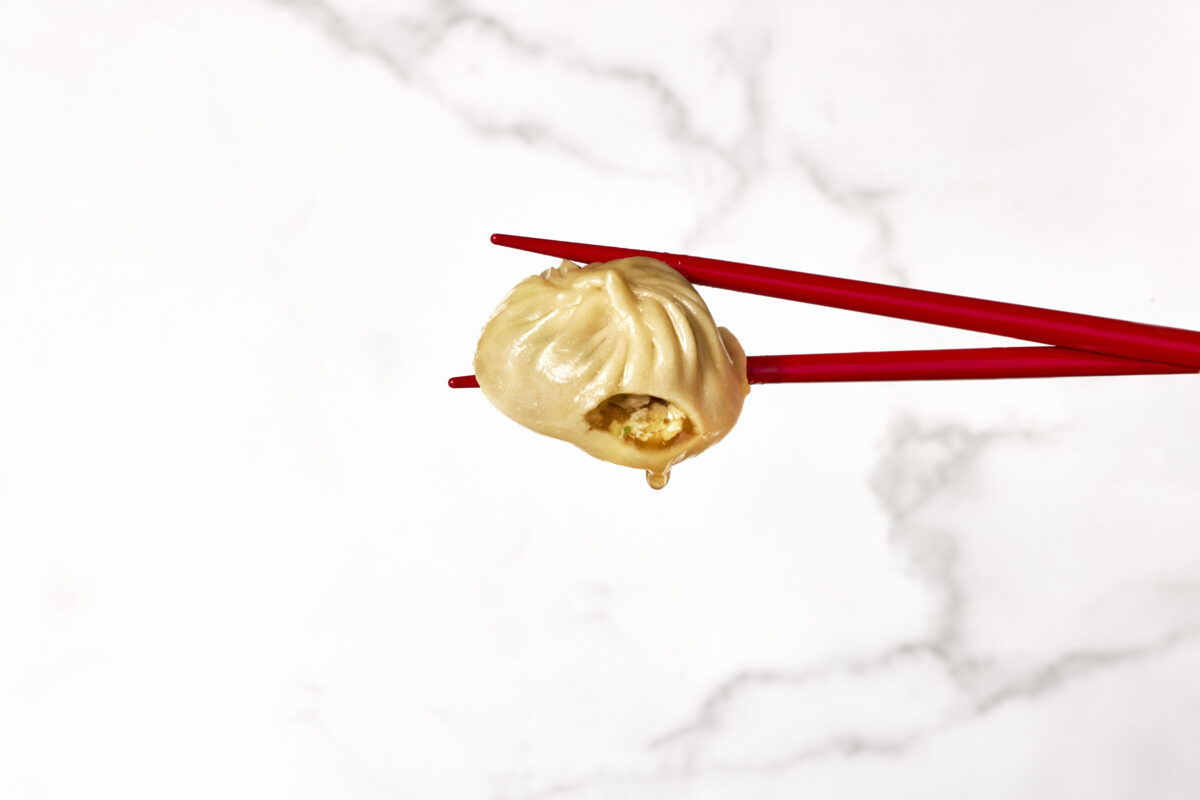
What Are Soup Dumplings?
Soup dumplings, known as xiao long bao, are delicate Chinese dumplings filled with seasoned pork and hot, savory broth. Unlike other dumplings, the soup isn’t added as liquid. Instead, it starts as a gelatin-rich pork stock that melts during steaming, creating the signature pocket of flavorful broth inside each dumpling.
I first learned about soup dumplings while working in a Michelin-star restaurant, where I was responsible for mixing and portioning the filling each day. Later, I became even more familiar with them while eating my way through Shanghai, where they’re a beloved daily staple.
Originating in Shanghai’s Jiangnan region, soup dumplings are traditionally steamed in bamboo baskets and served with black vinegar and slivered ginger. With their delicate wrappers, juicy pork filling, and soup-filled centers, they’re one of the most iconic dumplings in the world and easily one of my favorite recipes to make at home.
Ingredients and Notes
See the recipe card below for the complete ingredient list and instructions.
Broth Jelly
- Pork Skin and Bones – This provides flavor and collagen, which sets into the aspic (meat jelly) that melts into soup during steaming.
- Jinhua Ham – A type of dry-cured ham from Jinhua, China, this adds deep, umami flavor to the broth. If you can’t find Jinhua ham, substitute prosciutto instead. The flavor won’t be quite the same, but it’s close!
- Ginger and Scallions – These add depth to the broth, giving it a warm, subtle, aromatic flavor.
- Shaoxing Wine – This enhances the savoriness of the broth and balances the richness of the liquid. Dry sherry works as a substitute if needed.
- Star Anise – This adds subtle warmth and complexity to the flavor.
Dumpling Dough
- Flour – All-purpose flour forms the base of the dough, giving it structure and elasticity.
- Salt – This enhances the flavor and strengthens the dough, helping it hold its shape.
Pork Filling
- Scallion, Ginger, Garlic – These are the foundation of every good pork soup dumpling, creating a tangy, pungent taste.
- White Pepper – Milder than black pepper, this adds a subtle earthy spice.
- Sichuan Peppercorn Powder – This adds depth and a slightly citrusy touch.
- Oil – Use a neutral-tasting oil, such as vegetable oil, to lock in moisture and richness, preventing the filling from being dry.
- Roasted Sesame Seeds – These add a subtle nutty flavor.
- Salt, Soy Sauce, and Sugar – These infuse the filling with a sweet and savory umami flavor.
- Pork – Use ground pork with a bit of fat for extra flavor and to prevent the filling from being dry.
How to Make Pork Soup Dumplings from Scratch
1. Make the Gelatin Broth
2. Prepare the Dumpling Dough
3. Make the Pork Filling
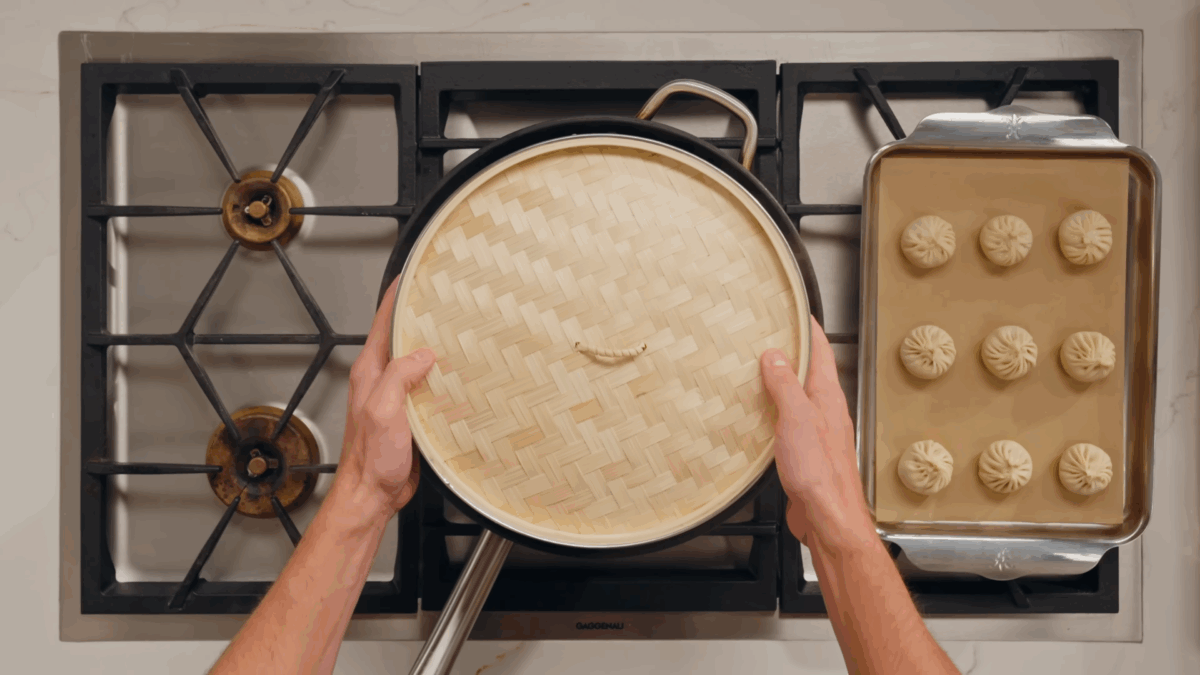
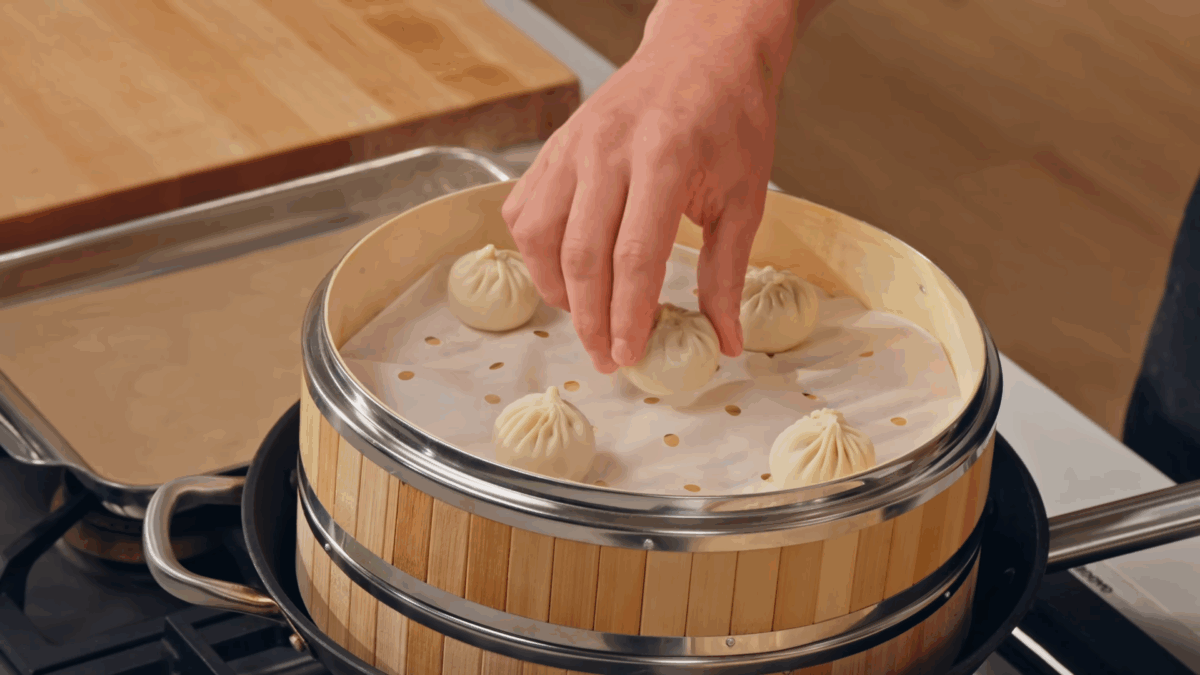
4. Cook the Dumplings
Nick’s Tips for Success
- Keep all the ingredients cold, especially the pork broth jelly. The gelatinized broth melts quickly at room temperature, which can cause the dumplings to become soggy. To prevent this, keep it refrigerated until you fold it into the filling, and work in small batches. If the filling starts to feel soft, transfer it back to the fridge before shaping the dumplings.
- Avoid overfilling. It’s tempting to try to pack the dumplings as full as possible, but this leads to breakage and leaks. The wrapper should comfortably encase the filling while allowing you to create clean pleats and seal the top with ease. I use a heaping spoonful (18-25 grams) of filling for each pork soup dumpling.
- Make sure to seal the dumplings completely. Even the smallest opening will cause the soup broth to leak out. To avoid this, pleat carefully, making sure not to tear the dough, and firmly pinch and twist the top closed.
- Don’t overcrowd the steamer. Make sure to leave a bit of space between each dumpling so they cook evenly on all sides and have room to expand without sticking together. Work in batches if needed!
- Rest before serving. It’s tempting to dig into the cooked dumplings right away, but trust me. Right out of the steamer, the broth is lava-hot and likely to explode. Letting the dumplings rest for a few minutes allows the broth to settle and cool so you don’t burn yourself on the first bite.
Pork Soup Dumplings
Equipment
- 1 Large Stock Pot
- 1 Fine Mesh Sieve
- 1 Stand Mixer with a Dough Hook
- 1 Small Rolling Pin
- 1 Kitchen Scale
- 1 Bamboo Steamer Basket
- 1 Large Pot or Wok
- Parchment Paper or Cabbage Leaves
Ingredients
Broth Jelly (Traditional Method)
- 6 ounce (170 gram) pork skin
- 1 pound (450 gram) pork bones
- 5 cup (1.2 liter) water
- 10 slice fresh ginger, 1-inch / 2.5 centimeter each
- 3 scallion
- 3 ounce (85 gram) Jinhua ham (or prosciutto)
- ¼ cup (milliliter) Shaoxing wine
- 2 star anise
Shortcut Broth Jelly Option (Skip if making traditional broth)
- 1½-2 cup (360-470 milliliter) unsalted stock
- 4½ teaspoon (14 gram) gelatin powder
- ¼ teaspoon (1½ gram) salt
Dumpling Dough
- 2½ cup (300 gram) all-purpose flour
- ¼ teaspoon (gram) salt
- ⅔ cup warm water (105°F / 40°C)
Pork Filling
- ½ cup (32 gram) scallion, diced
- 1 tablespoon (gram) garlic, minced
- 2 teaspoon (6 gram) ginger, minced
- ¼ teaspoon (0.6 gram) ground white pepper
- ¼ teaspoon (0.4 gram) Sichuan peppercorn powder
- 2½ tablespoon neutral oil
- 1 tablespoon (9 gram) roasted sesame seeds
- ¼ teaspoon (gram) salt
- 1 tablespoon soy sauce
- 1 teaspoon (4.2 gram) sugar
- 8.8 ounce (250 gram) ground pork
- ¼ cup water
- 8.8 ounce (250 gram) gelatinized broth, cut into ¼-inch / 6 millimeter cubes
Instructions
Make the Broth Jelly (Traditional Method)
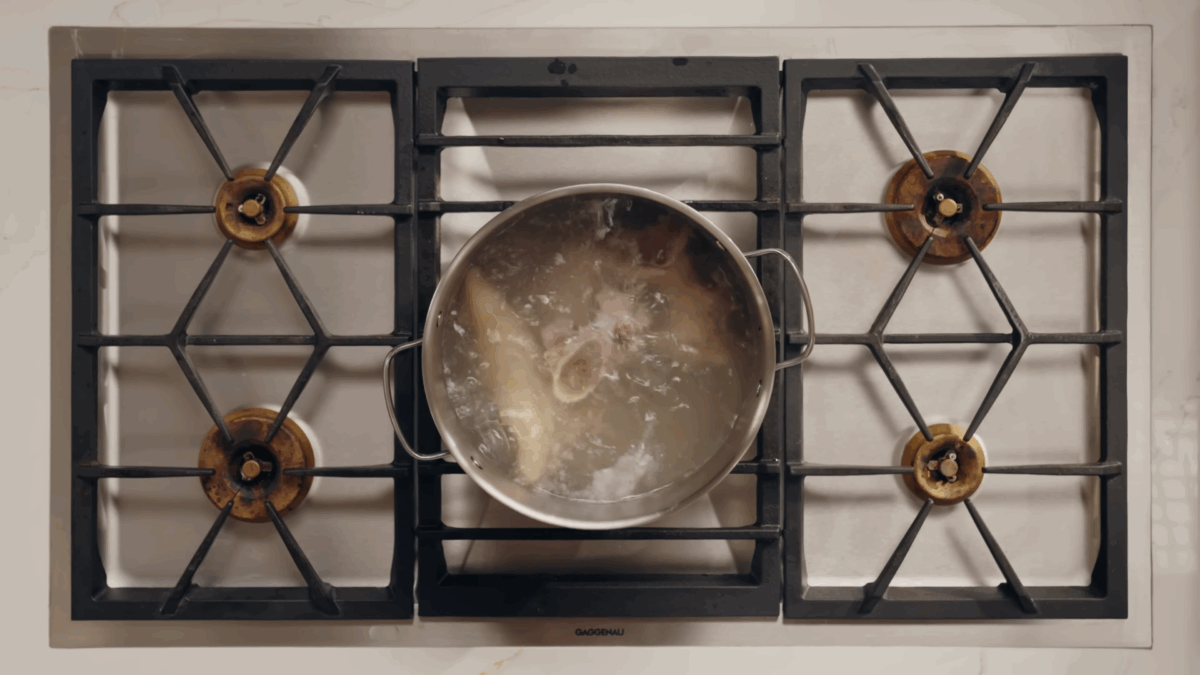
- Add pork skin and pork bones to a large stock pot. Cover with water and bring to a boil.6 ounce pork skin, 1 pound pork bones
- Discard the blanching water and rinse the pork skin and bones thoroughly to remove the foamy scum.
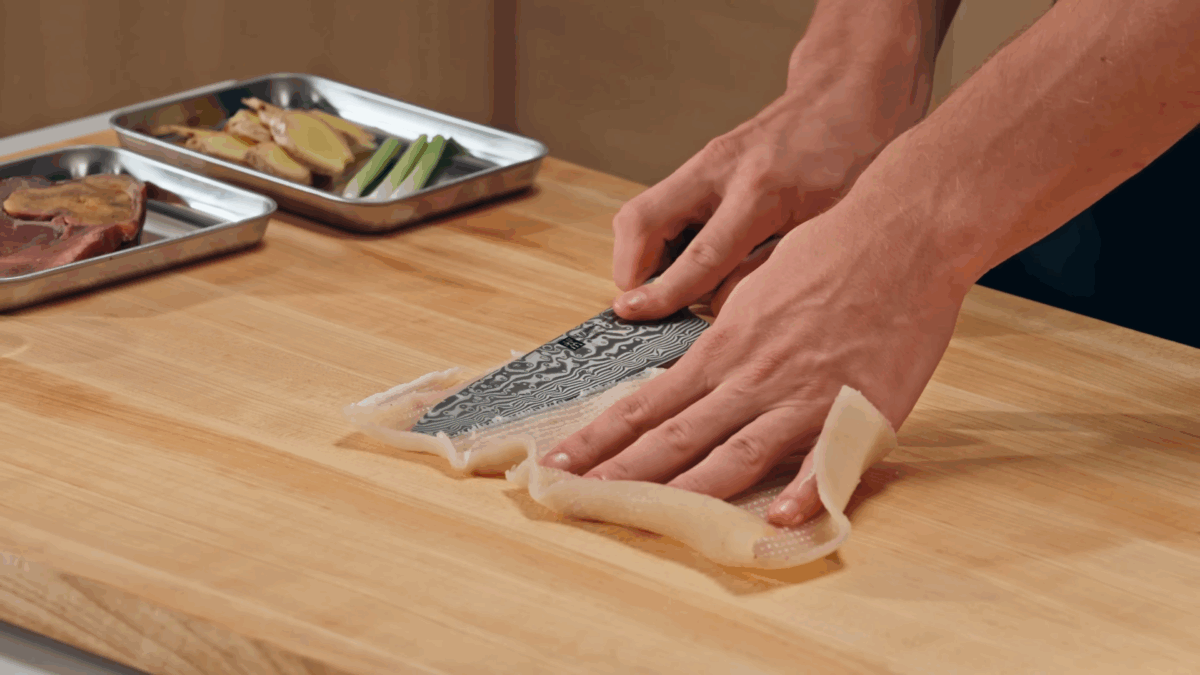
- Use a chef’s knife to scrub any attached fat from the pork skin, and cut the skin into thin strips.
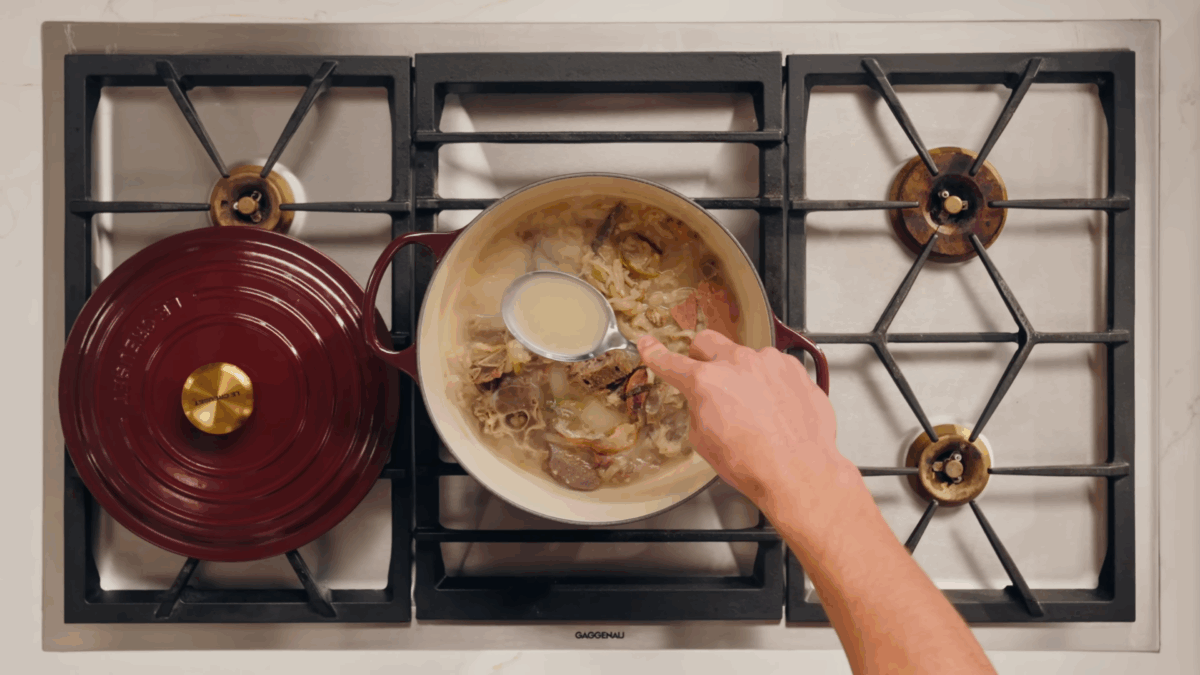
- In a clean pot, combine five cups (one point two liters) of water, pork skin, bones, ginger, scallions, Jinhua ham, Shaoxing wine, and star anise.10 slice fresh ginger, 3 scallion, 3 ounce Jinhua ham (or prosciutto), ¼ cup Shaoxing wine, 2 star anise, 5 cup water
- Bring to a boil, then reduce to the lowest simmer. Cook for three hours or until the broth turns milky and creamy.
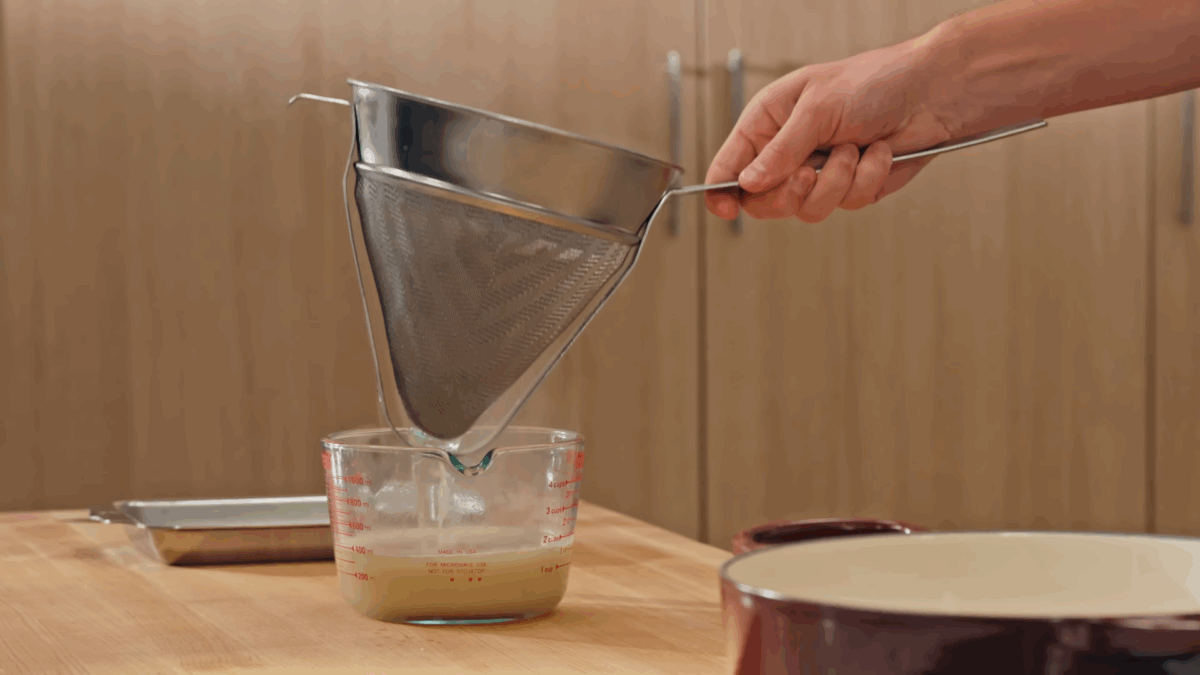
- Strain through a sieve. Reduce to about one and three fourths cups (420 milliliters / 420 grams) on the stove if needed. Add water if needed to reach one and three fourths cups (420 milliliters).
- Chill the broth in the fridge for at least six hours or until it is completely set.
- Working quickly, finely mince the broth jelly and return it to the fridge.
Shortcut Broth Method (Skip if making traditional broth)
- Warm the stock slightly on the stovetop.1½-2 cup unsalted stock
- Whisk in the gelatin and salt until dissolved.4½ teaspoon gelatin powder, ¼ teaspoon salt
- Refrigerate until fully set (about four to six hours).
- Cube the broth, and chill in the fridge.
Prepare the Dough
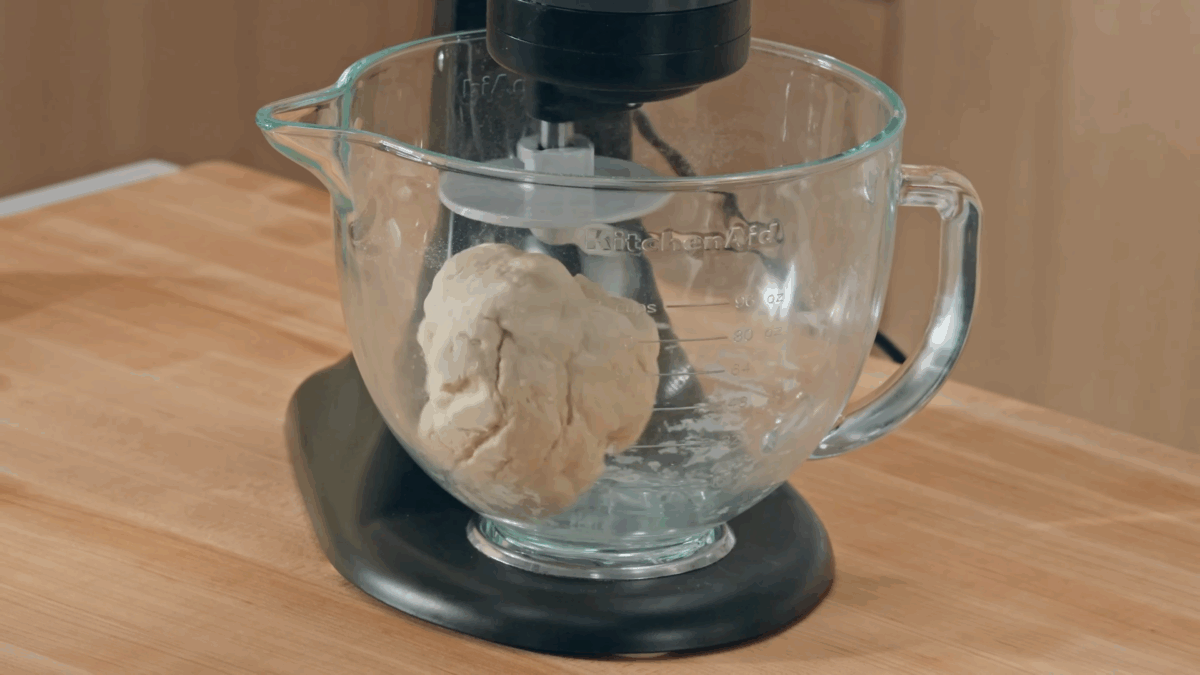
- Add flour and salt to a stand mixer fitted with a dough hook. Gradually add the hot water, mixing with chopsticks or a spatula until a shaggy dough forms. Continue to mix until the liquid is mostly absobred.2½ cup all-purpose flour, ¼ teaspoon salt, ⅔ cup warm water (105°F / 40°C)
- Cover the dough, and let it rest at room temperature for ten minutes.
- Turn the stand mixer on medium, and knead the dough for five to ten minutes or until it is very soft and smooth. The dough should not be sticky!
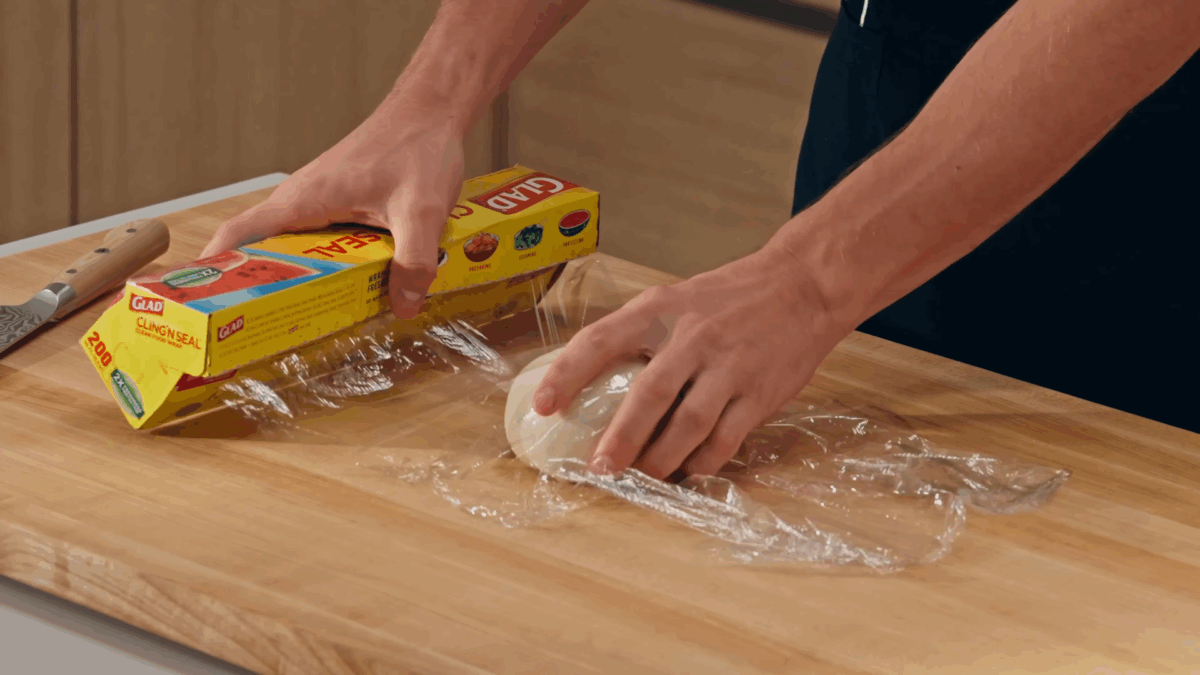
- Cover the dough tightly with plastic wrap or a damp cloth, and rest for 60 minutes. This second rest is crucial for creating an elastic dough that can be rolled thinly without tearing.
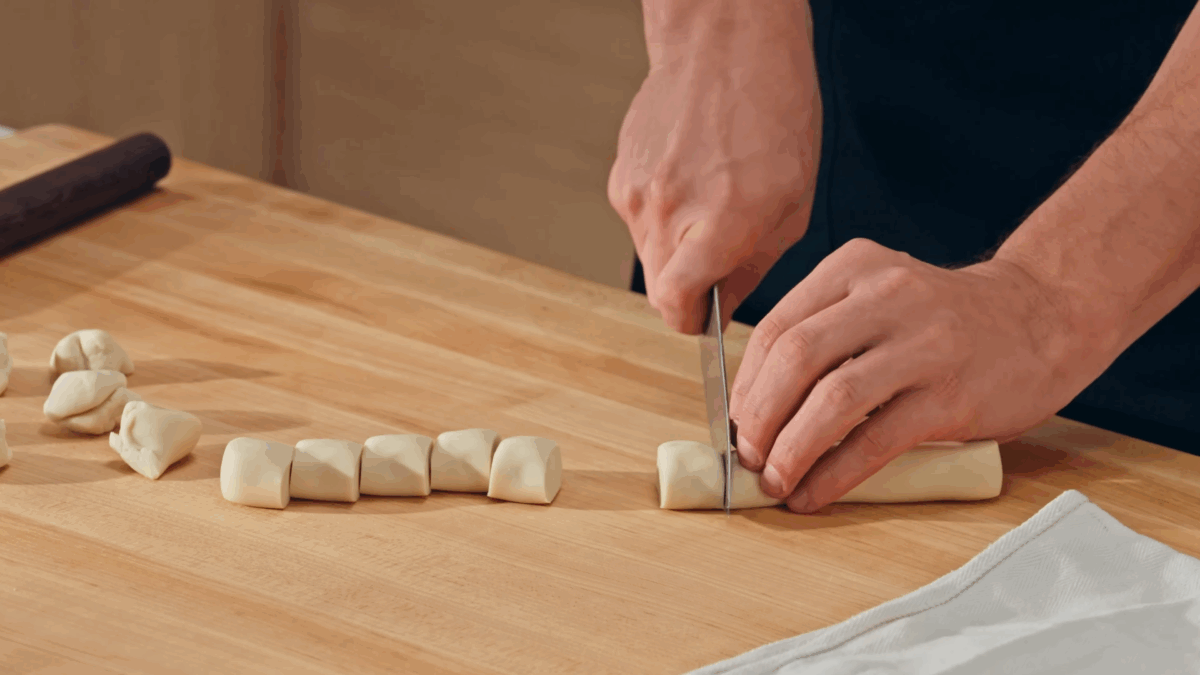
- Shape the rested dough into a long, even roll (about one inch or two and a half centimeters in diameter). Divide the roll into 20 to 25 equal-sized pieces weighing roughly 14 grams each.
- Place the dough pieces under a damp cloth or plastic wrap to prevent them from drying out.
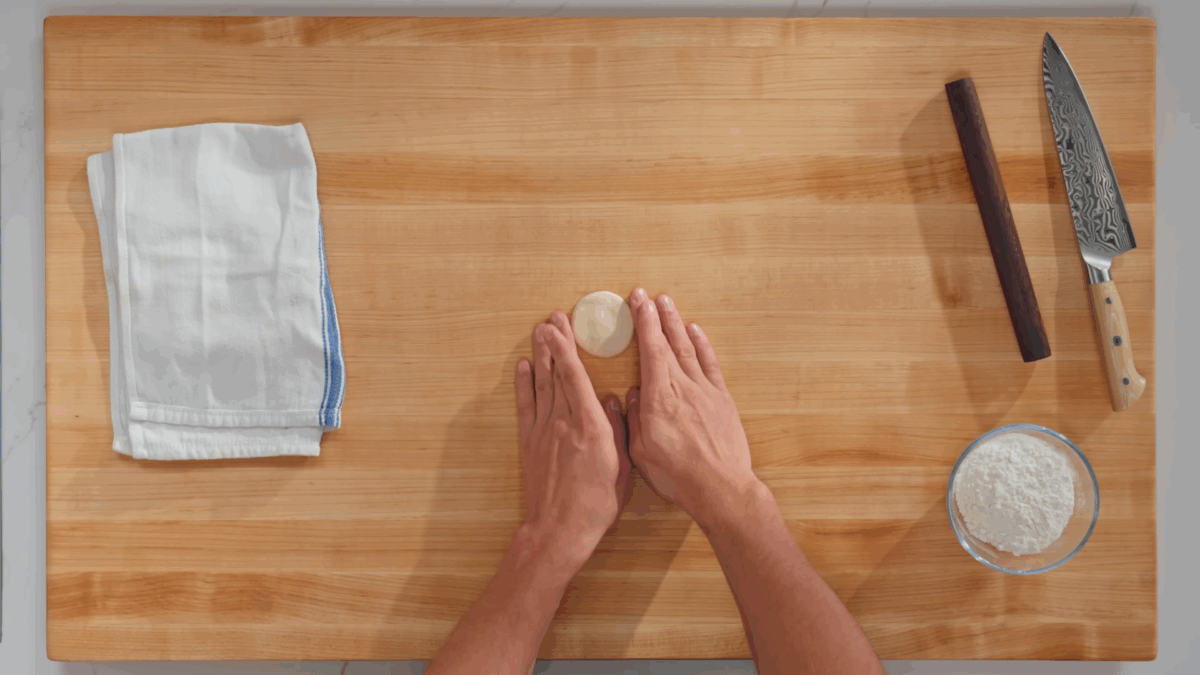
- Take one dough piece, and flatten it into a disc.
- Use a small rolling pin to roll out the dough disc into a thin, round wrapper, about three to four inches in diameter. Use the “roll-and-turn” technique: roll the dough forward with one hand while turning it with the other. The goal is to create a wrapper with a thicker middle and thinner edges.
- As soon as the wrapper is rolled out, place 18 to 25 grams of filling in the center, and begin pleating. (See steps below)
Make the Filling
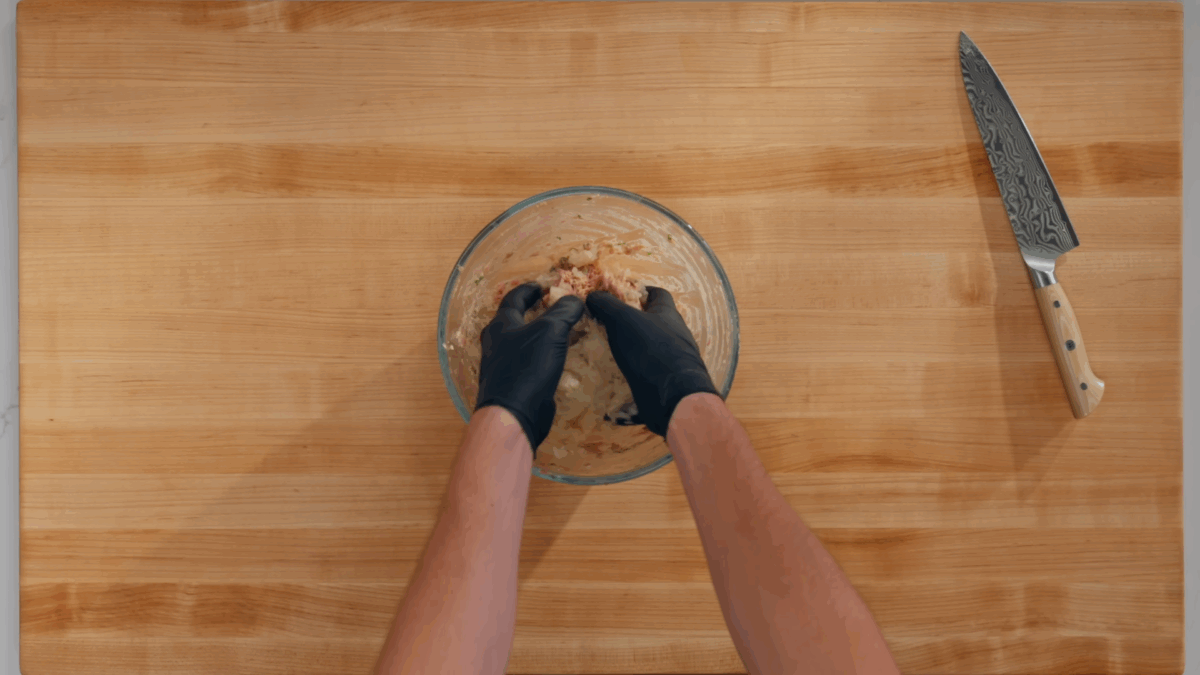
- In a bowl, mix all ingredients for the filling together, except the gelatinized broth.½ cup scallion, 1 tablespoon garlic, 2 teaspoon ginger, ¼ teaspoon ground white pepper, ¼ teaspoon Sichuan peppercorn powder, 2½ tablespoon neutral oil, 1 tablespoon roasted sesame seeds, ¼ teaspoon salt, 1 tablespoon soy sauce, 1 teaspoon sugar, 8.8 ounce ground pork, ¼ cup water
- Knead the mixture vigorously until a smooth paste forms.
- Gently fold in the gelatinized broth/aspic to prevent it from breaking apart.8.8 ounce gelatinized broth, cut into ¼-inch / 6 millimeter cubes
Shape and Fill the Dumplings
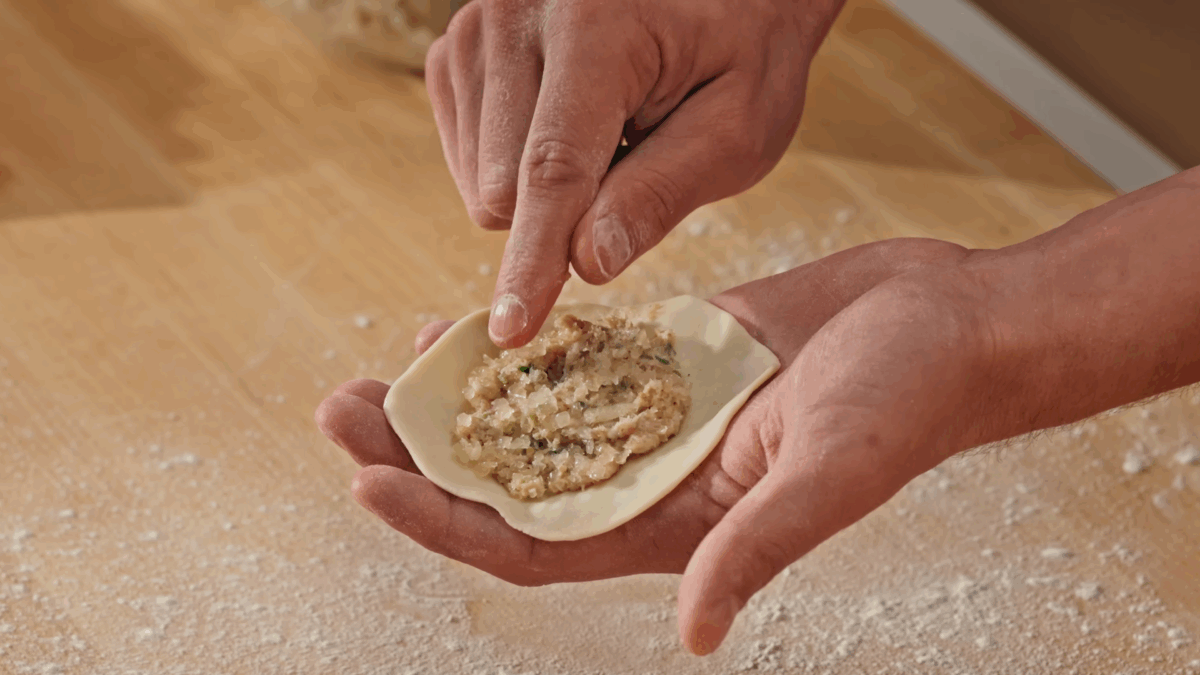
- Work with one wrapper at a time and keep the rest covered with a damp towel. Roll the dough into a disc, and place it in the palm of your non-dominant hand, letting it gently cup into a shallow bowl.
- Spoon a rounded tablespoon of well-chilled filling into the center. It should look generous without overfilling.
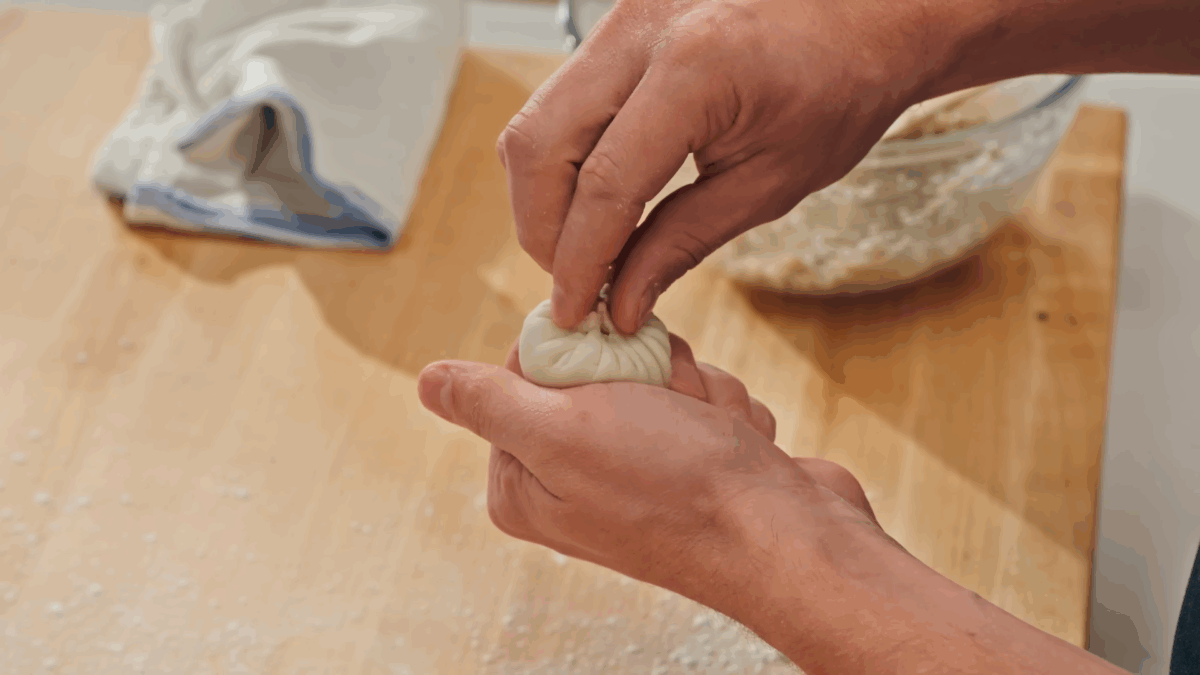
- Using your thumb and forefinger, pinch a small section of dough at the edge to create your first pleat. With your other fingers supporting the filling, fold the next section of dough over itself, slightly overlapping the first pleat. Think tight, tidy folds rather than big ruffles.
- Continue pleating in one direction, rotating the dumpling in your hand as you work. The pleats should gather naturally toward the top. Aim for 18 pleats, it’s the lucky number.
- When you’ve circled all the way around, bring the final pleat to meet the first. Gently press and pinch the gathered top to close completely, giving it a twist to secure. There should be no visible gaps.
Cook the Dumplings
- Line a steamer with parchment or cabbage.
- Bring an inch of water to a simmer in a large pot, and fit the steamer on top.
- Add the dumplings, leaving space between each piece. Don’t thaw if frozen.
- Steam the dumplings for six to eight minutes if fresh and eight to twelve minutes if frozen.
- Cool slightly, and enjoy warm.
Video

Notes
Nutrition
Nutrition information is automatically calculated, so should only be used as an approximation.
 Like this recipe? Rate & comment below!
FAQs
Pork soup dumplings are best served hot as an appetizer or as part of a dim sum meal, though I also often enjoy them as a snack. They’re most commonly paired with Chinese black vinegar, sliced fresh ginger pieces, and chili oil for a touch of heat. I’ve also seen pork soup dumplings served with a sprinkle of green onions and a dash of sesame oil and rice wine vinegar.
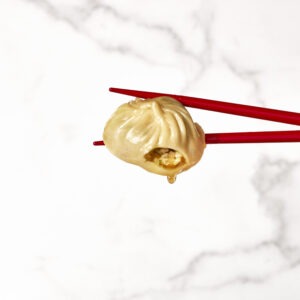
The first time I ever tried a soup dumpling, I almost choked. I quickly learned that there’s a right and wrong way to eat them. To avoid burning your mouth, place a dumpling on a soup spoon. Then, nibble or pierce the wrapper with a fork to release steam, and let the broth spill into the spoon.
Sip the broth. Then, dip the dumpling in vinegar and ginger, if desired, and enjoy it in a bite or two.




My family loved this recipe!