
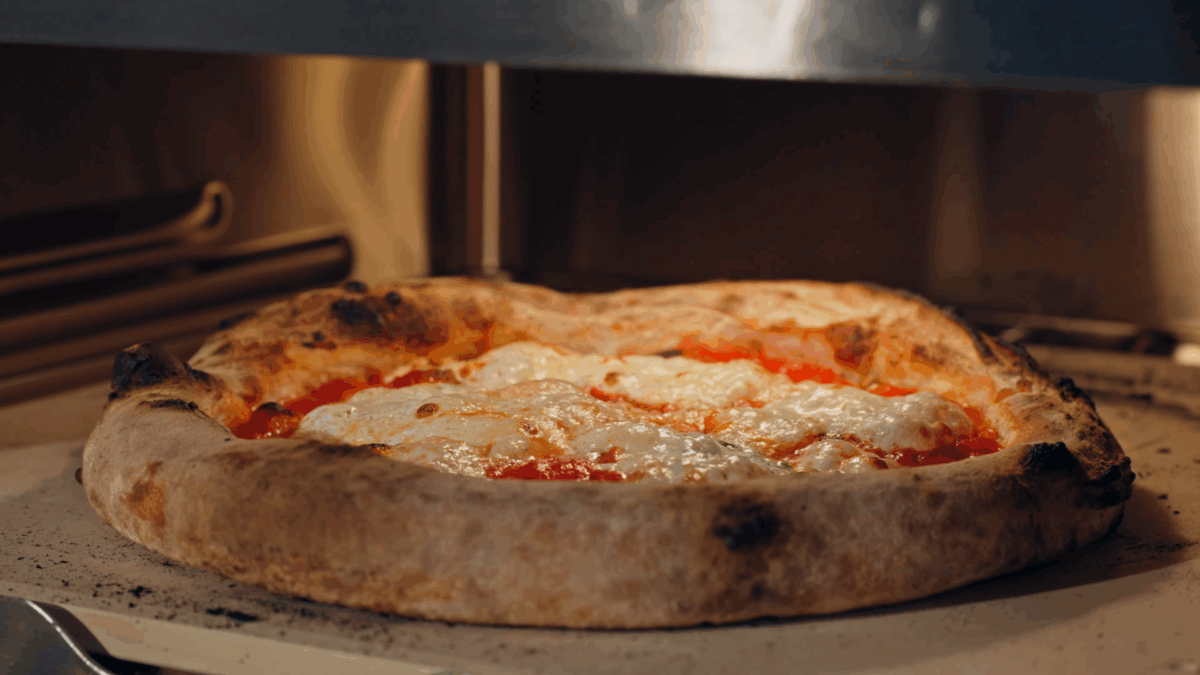
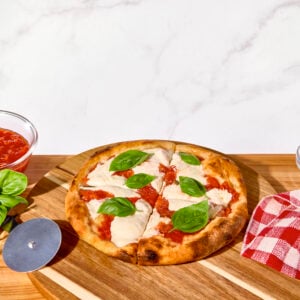
This authentic Neapolitan pizza recipe starts with a long-fermented homemade dough, a fresh, uncooked tomato sauce, and simple, high-quality toppings. With a quick cooking time, the finished pizza has a soft, airy center and a puffy, blistered crust, just like a pie you’d find in Italy.

What is Neapolitan-Style Pizza?
Neapolitan pizza is a classic style of pizza that originates in Naples, Italy, not far from where my family is from. Unlike sheet pan pizza or New York-style pizza, Neapolitan-style pizza is characterized by a soft, thin center with an airy texture and a signature puffy, blistered crust.
That signature texture comes from a high-hydration dough cooked at extremely hot temperatures, traditionally in about 90 seconds. In addition, unlike many American-style pizzas that come with tons of toppings, authentic Neapolitan pizza relies on fresh, simple, quality ingredients, such as crushed San Marzano tomatoes, fresh mozzarella, basil, and olive oil.
After eating the best pizza in the world, I’ve picked up a few techniques and details used by top pizzaiolos, and I’m breaking them all down here. I’ll walk you through the full process so you can make incredible Neapolitan-style pizza at home, even in a standard oven!
Ingredients and Notes
See the recipe card below for the complete ingredient list and instructions.
Homemade Pizza Dough
- Flour – I asked the top pizza chefs in the world what flour I should use when developing this recipe, and they recommended Tipo 00 flour, ideally Caputo “Pizzeria” Blue Bag, for the perfect Neapolitan pizza. Unlike other types of flour, it’s finely milled and designed for high-heat pizza, producing a soft, elastic dough with an airy crumb and tender chew. If needed, all-purpose flour will work, but the texture won’t be quite the same.
- Yeast – A very small amount of instant yeast helps promote a long, slow fermentation, which is crucial to achieving the soft, chewy texture we want.
- Salt – This flavors the dough and enhances its strength, making it easier to work with and shape.
Pizza Sauce and Toppings
- Tomatoes – Whole canned tomatoes work best. San Marzano-style tomatoes are preferred by every chef I know because they have a balanced, sweet taste and less acidity than other varieties. Crush them by hand for a rustic texture.
- Basil – This adds a bright, refreshing taste. Skip chopping, and tear it by hand to prevent bruising, which can negatively impact its taste.
- Garlic – This infuses the sauce with a pungent taste. Use fresh cloves, not pre-minced garlic!
- Salt – This enhances the flavor of the sauce.
- Toppings – I use fresh mozzarella cheese, fresh basil, and a drizzle of high-quality olive oil to create a classic margherita pizza.
How to Make an Authentic Neapolitan Pizza Recipe
1. Prepare the Dough
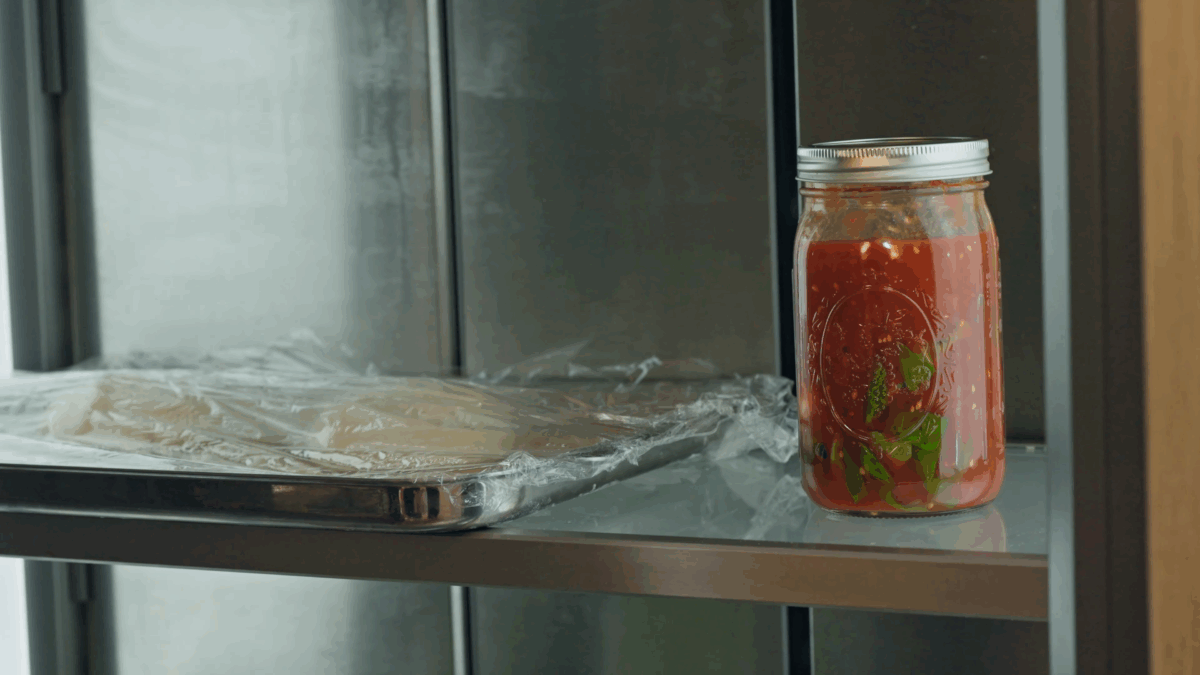
2. Make the Sauce
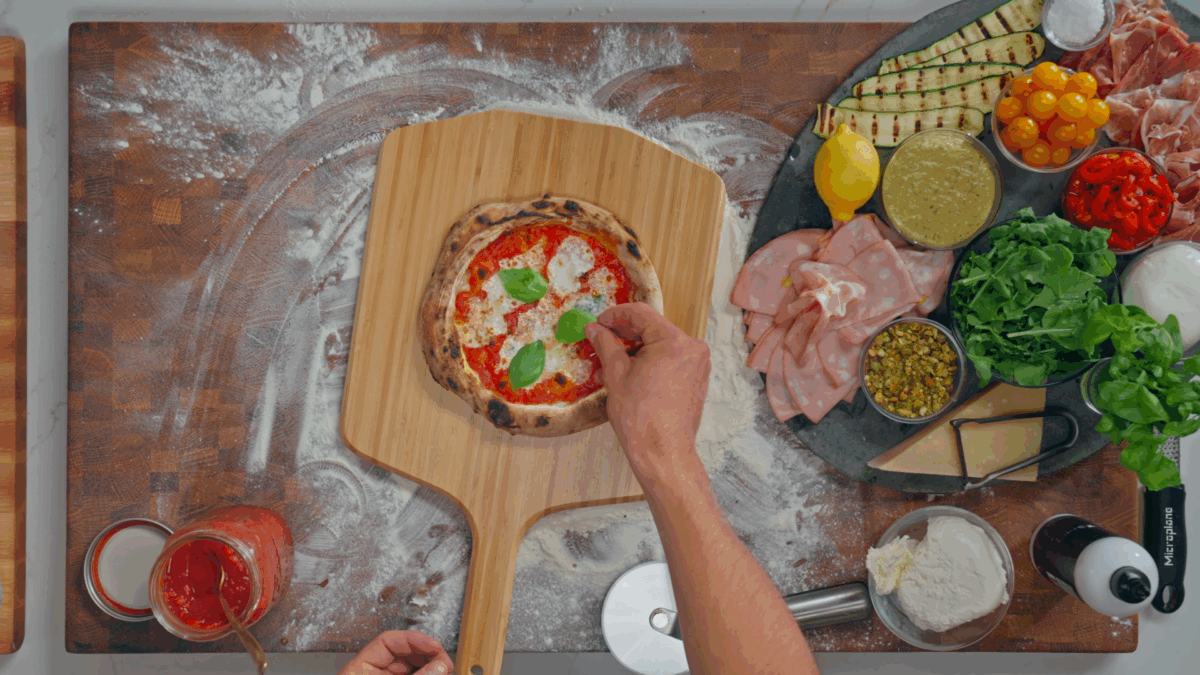
3. Assemble the Pizza
Topping Variations
- Marinara: Layer your pizza with tomato sauce, garlic, oregano, and olive oil, skipping the cheese for a bolder flavor.
- Bianca: Skip the tomato sauce and top your dough with fresh mozzarella, olive oil, and fresh basil. Finish with a sprinkle of flaky salt after baking.
- Pistachio: Skip the tomato sauce and use pistachio cream. Then, add mozzarella, bake, and finish with mortadella, fresh burrata cheese, crushed pistachios, lemon zest, and a drizzle of olive oil.
- Jam: Use fig jam as a base, add mozzarella, and bake. Then, finish with prosciutto, fresh figs, arugula, Parmesan cheese, and a drizzle of olive oil.
- Veggie: Start with tomato sauce, mozzarella cheese, and olive oil. After baking, add fresh basil, olive oil, grilled zucchini, halved cherry tomatoes, roasted red peppers, a touch of salt, and a sprinkle of lemon zest.
Nick’s Tips for Success
- Weigh everything. Neapolitan dough is all about precision. Using a digital scale ensures proper hydration, fermentation, and consistency every time, eliminating any guesswork from the process.
- Don’t rush the fermentation. The long room-temperature rise followed by a cold ferment builds flavor and structure in the dough. It’s what sets Neapolitan pizza apart from other varieties!
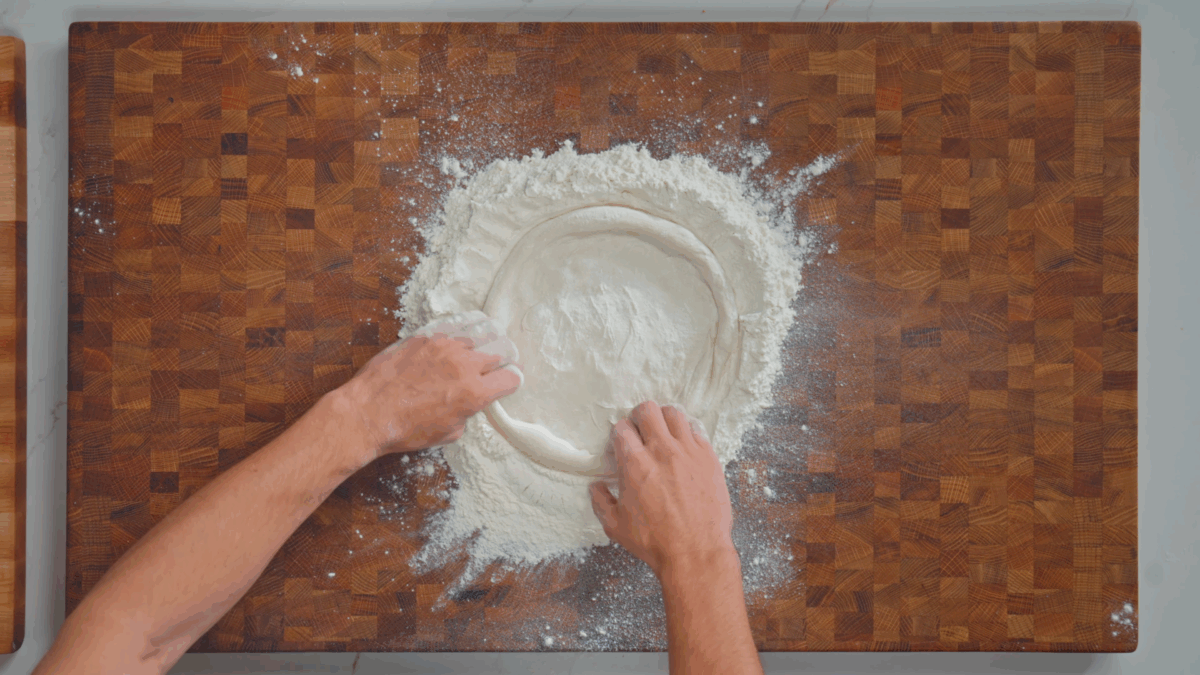
- Never use a rolling pin. Press and stretch the dough by hand to push air toward the edges. This keeps the center thin while creating the signature puffy crust.
- Use minimal flour when stretching. Too much bench flour can burn in the oven and toughen the crust. A light dusting to prevent sticking is all you need.
- Avoid overloading the crust. Neapolitan pizza should be light and balanced. Too many toppings prevent proper rising and can make the center soggy.
Neapolitan Pizza Recipe
Equipment
- 1 Digital Kitchen Scale
- 1 Large Mixing Bowl
- 1 Covered Dough Container or Baking Sheet with Lid
- 1 Pizza Stone or Heavy-Duty Baking Sheet
- 1 Bench Scraper or Spatula
- 1 Pizza Peel or Large Flat Cutting Board
- 1 Airtight Container
Ingredients
Pizza dough (yields two personal pizzas):
- 215 gram (215 milliliter) gram water
- 10 gram (¾–2 teaspoon) fine sea salt, 2%
- 330 gram (2⅔ cup) Tipo 00 Caputo “Pizzeria” Blue Bag flour, divided (297 gram & 33 gram)
- 1 gram (¼ teaspoon) instant yeast, ≈0.3%
- dusting: extra Tipo 00 or semolina
Sauce:
- 28 ounce (794 gram) whole tomatoes
- 1 bunch basil
- 4 garlic clove
- 1 teaspon kosher salt
Toppings:
- ½-1 cup (55-110 gram) fresh mozzarella cheese, torn
- high-quality olive oil, for drizzling
- fresh basil
Instructions
Make the Dough
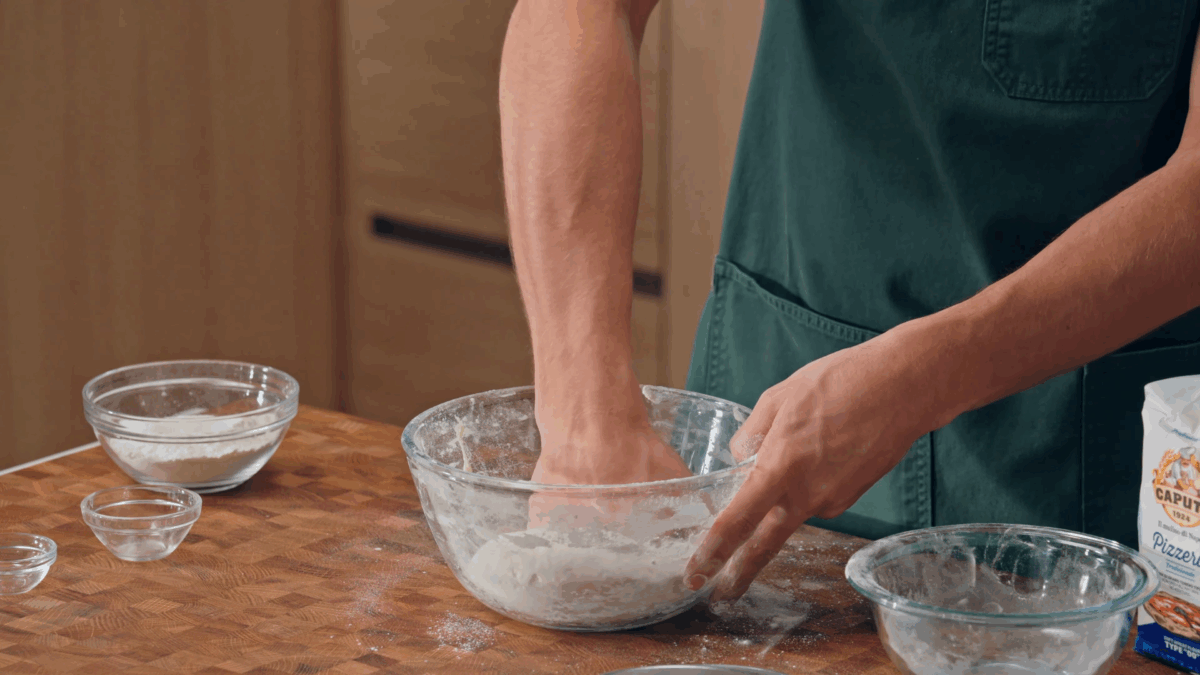
- In a large bowl, combine the water and salt, using your hand to dissolve the salt completely.215 gram gram water, 10 gram fine sea salt
- Add 33 gram (about 10%) of the flour, and mix with your hand until the flour dissolves and the mixture resembles thin pancake batter.330 gram Tipo 00 Caputo “Pizzeria” Blue Bag flour
- Add the yeast, and quickly mix with your hand until fully dissolved.1 gram instant yeast
- Continue mixing with one hand while gradually adding the remaining flour, one handful at a time, until the dough begins to come together.
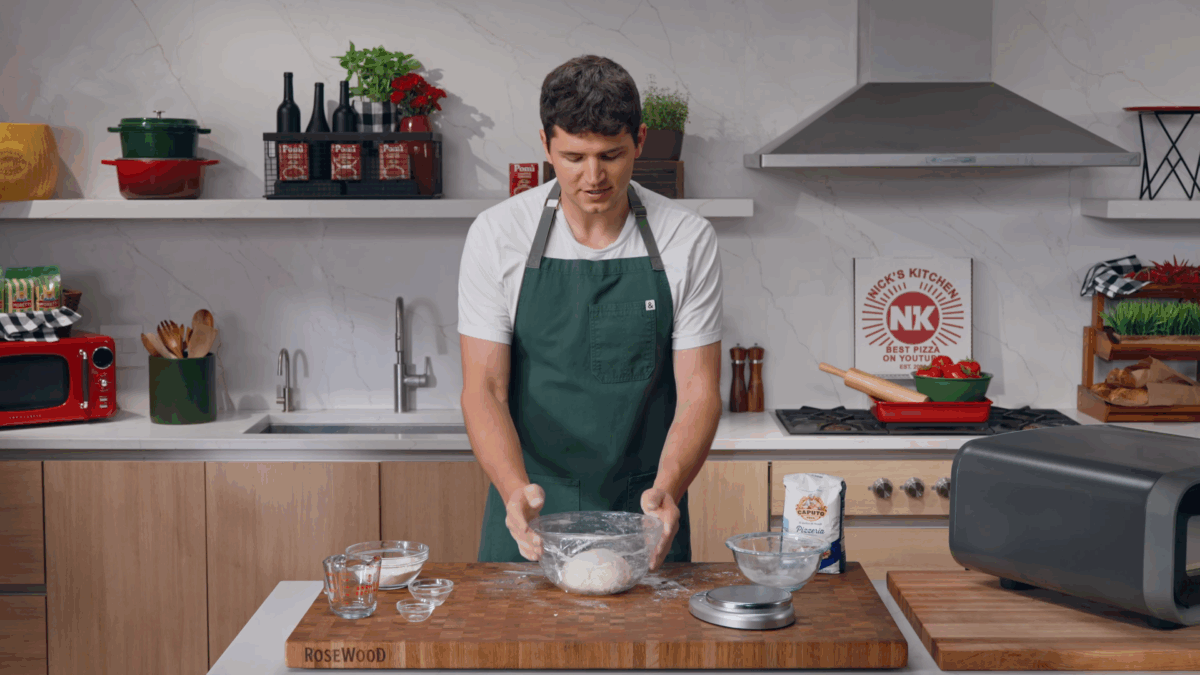
- Turn the dough out in the bowl, cover, and let rest at room temperature for 16 hours.
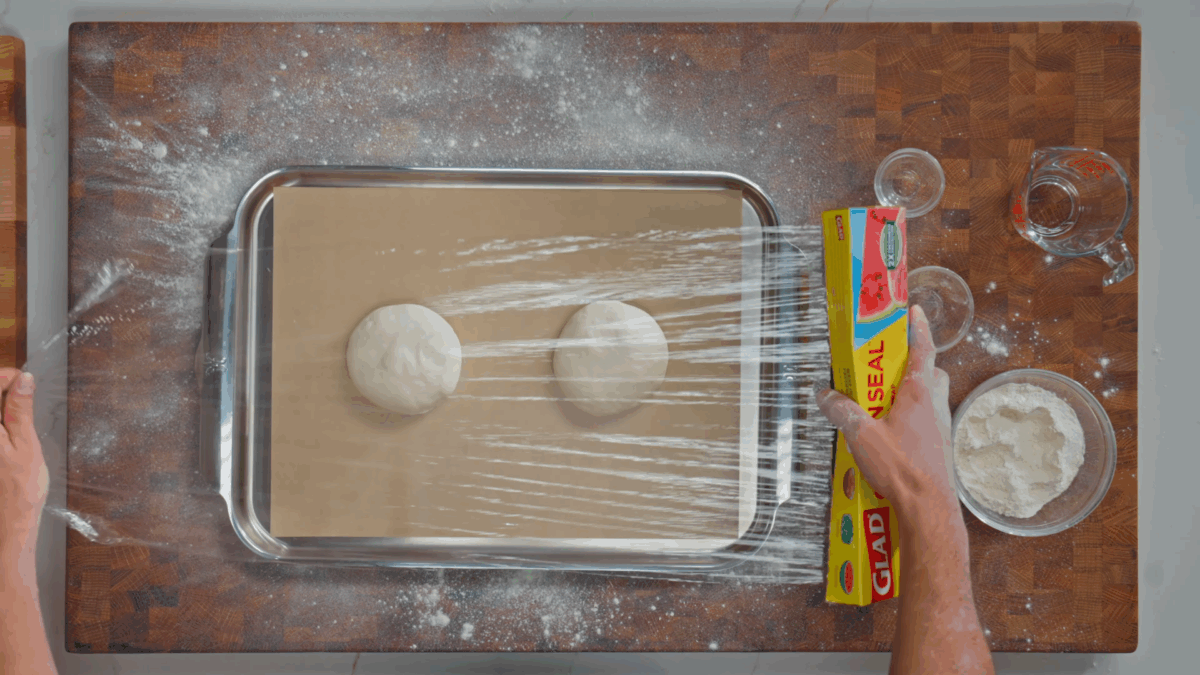
- Divide the dough into two equal balls (about 250 gram or 8.82 ounce each). Place in a covered container and refrigerate for 24-30 hours.
Make the Sauce
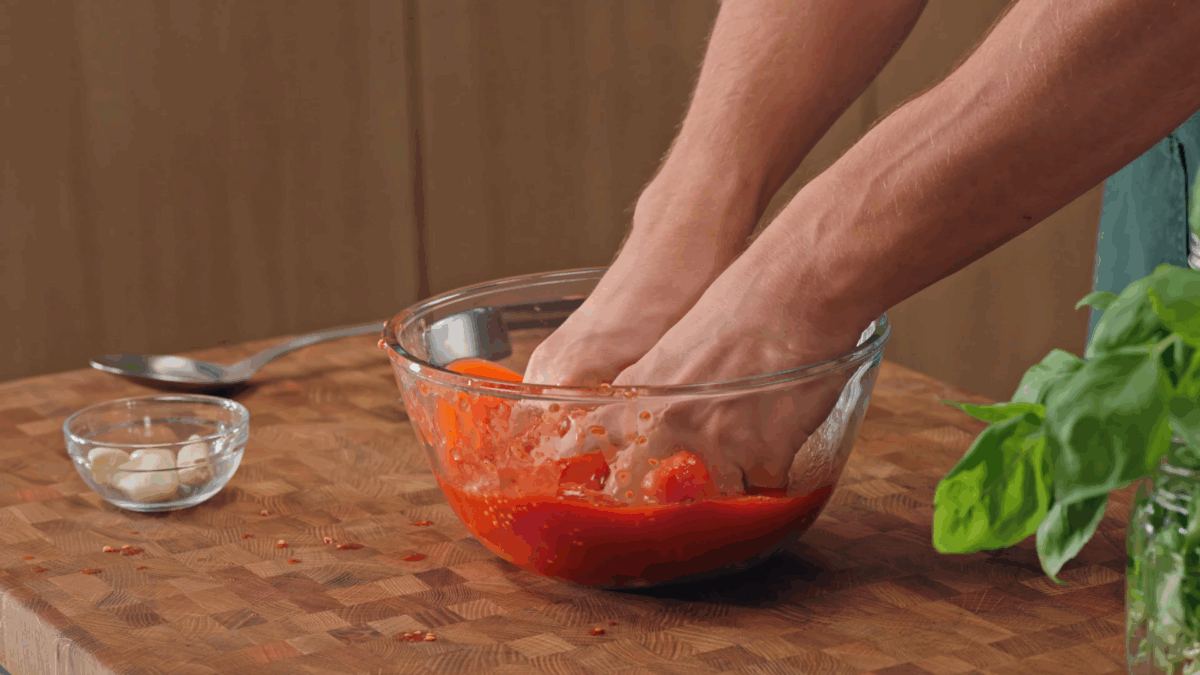
- About 24-30 hours before baking, combine the tomatoes, basil, garlic, and salt in a bowl.28 ounce whole tomatoes, 1 bunch basil, 4 garlic clove, 1 teaspon kosher salt
- Crush the tomatoes by hand until slightly chunky. Cover, and refrigerate until ready to use.
Build and Bake
- Remove the dough from the refrigerator two hours before baking to allow it to come fully to room temperature.
- Preheat the oven to 500°F (260°C). If using a pizza stone, place it in the oven while preheating.
- On a lightly floured surface, gently hand-stretch each dough ball into an eight to ten-inch (20-25 centimeter) circle. Do not use a rolling pin.dusting: extra Tipo 00 or semolina
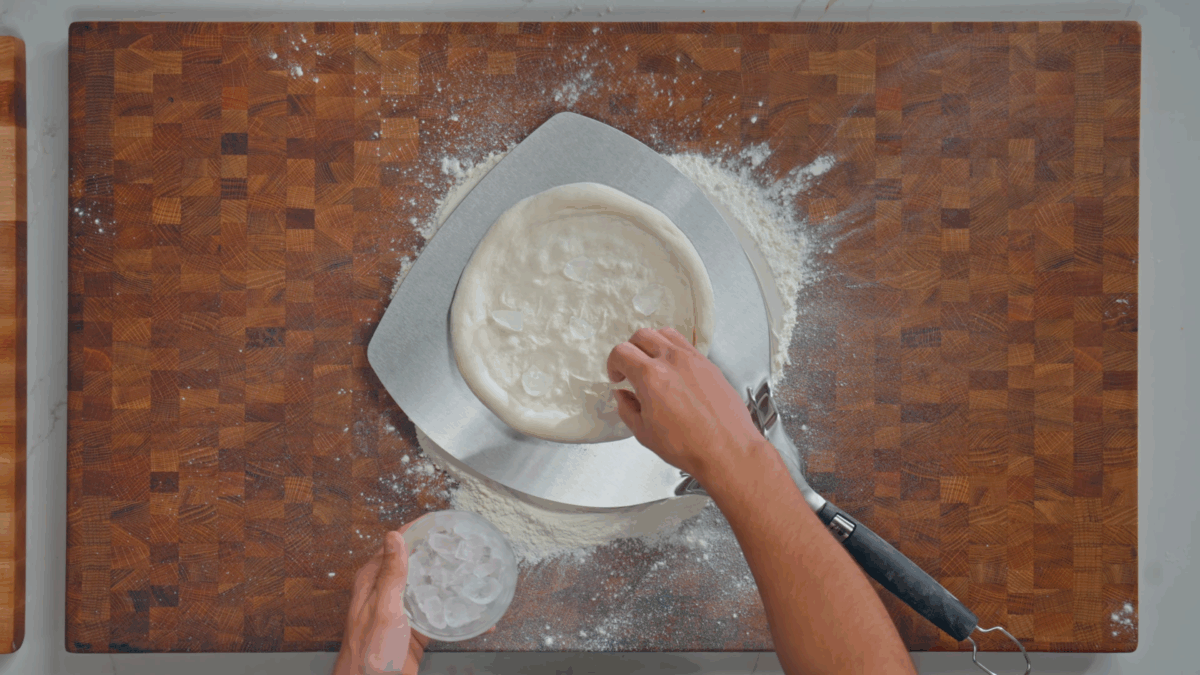
- Place a few small pieces of crushed ice in the center of the dough. Transfer to the pizza stone or baking sheet, and bake for three to five minutes, until the crust puffs and the ice melts.
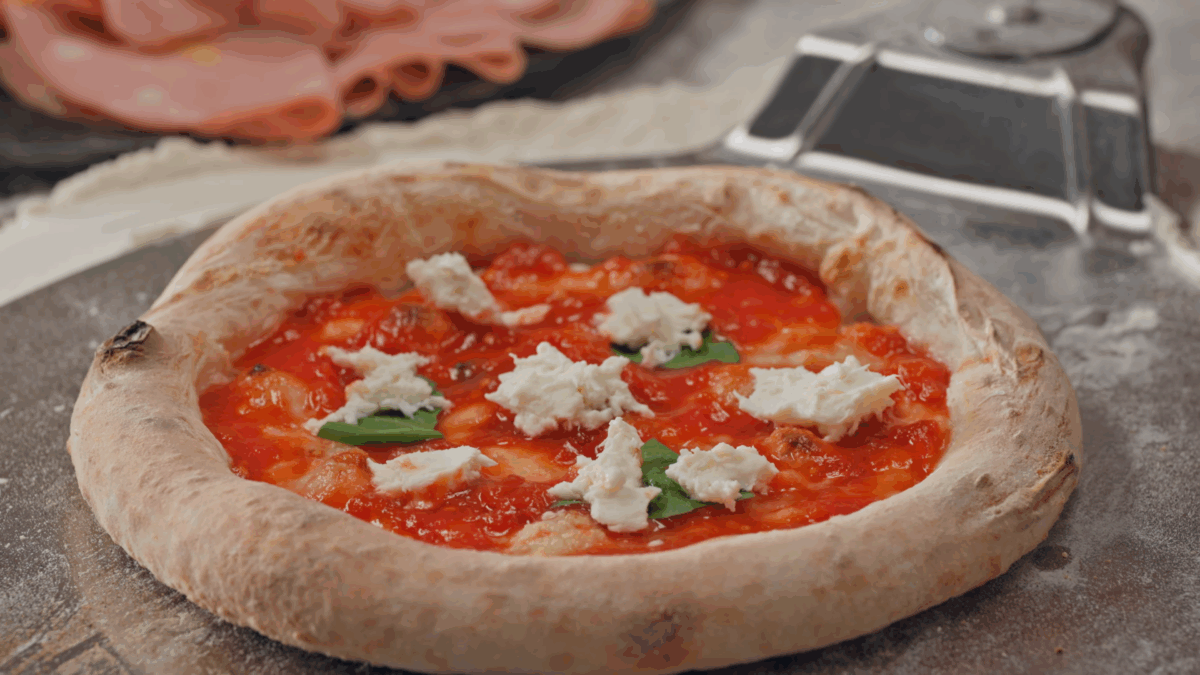
- Remove the dough from the oven, and spread the sauce evenly on top. Add torn mozzarella, making sure to scoop some basil and garlic from the sauce.½-1 cup fresh mozzarella cheese
- Drizzle lightly with olive oil.high-quality olive oil
- Switch the oven to broil. Return the pizza to the oven and broil for another three to five minutes, until the crust is deeply golden with light charring and the cheese is melted and bubbly.
- Finish with fresh basil and another drizzle of olive oil. Serve hot.fresh basil
Video

Notes
– Dough: After dividing, dough balls can be stored covered in the refrigerator for up to 48 hours. For longer storage, wrap tightly and freeze for up to two months. Thaw overnight in the refrigerator, then let the dough come to room temperature before shaping.
– Sauce: Store uncooked tomato sauce in an airtight container in the refrigerator for up to three days.
– Baked Pizza: Neapolitan pizza is best enjoyed fresh. If needed, store leftovers in an airtight container in the refrigerator for up to two days.
– Reheating: Reheat pizza in a hot skillet or on a baking stone in a 450°F (230°C) oven until warmed through and the crust re-crisps. Avoid microwaving, which softens the crust.
Nutrition
Nutrition information is automatically calculated, so should only be used as an approximation.
 Like this recipe? Rate & comment below!
FAQs
Yes. In fact, Neapolitan pizza dough benefits from being made ahead. The long fermentation, both at room temperature and in the refrigerator, develops flavor, improves texture, and makes the dough easier to stretch. You can prepare the dough up to 48 hours in advance, and keep it covered in the refrigerator until you’re ready to bake. Just be sure to let the dough come to room temperature for about one to two hours before shaping so it stretches easily without tearing.
Dough that tears is usually too cold or under-fermented. Let the dough fully come to room temperature and avoid adding extra flour, which can dry it out and weaken the structure.




Tastes like made at a restaurant for $35+, and I just made it in my home oven! Highly recommended.
I’m 13 and I’ve been cooking since I was 5. For the last 2 years or so I’ve been trying to get those beautiful puffy edges on my pizza but I still can’t seem to get it right. I also have the right caputto flour and when I tried this recipe it finally worked out for me. Nick, thank you for making these videos. Keep it up.
Just asking please… Friday is pizza night!
I’d recommend adding more cheese but still was amazing
How do I get the dough to get brown like yours
This tastes just like the pizzas I ate in Italy! Thanks, Nick!
this was the best pizza in my intire life thank’s and you are best youtuber
I’m 13 and I’ve been cooking since I was 5. For the last 2 years or so I’ve been trying to get those beautiful puffy edges on my pizza but I still can’t seem to get it right. I also have the right caputto flour and when I tried this recipe it finally worked out for me. Nick, thank you for making these videos. Keep it up.