
Learn how to make a traditional Beef Wellington recipe with a beautifully seared beef tenderloin, savory mushroom duxelles, delicate crêpes, and golden, all-butter puff pastry. I’ll walk you through the key techniques to achieve clean slices, a crisp crust, and a perfectly cooked center every time!

What is Beef Wellington?
If you’re unfamiliar, Beef Wellington is a traditional English dish made with tender beef tenderloin, a mushroom paste, prosciutto, and puff pastry. The exact origins of the dish remain debated. However, it is largely believed to have been created to honor the first Duke of Wellington, Arthur Wellesley, for his victory over Napoleon at Waterloo in 1815, and later became popular in the mid-1900s.
The dish is notoriously complex and can be intimidating to make. However, if I can make the world’s largest Beef Wellington with Gordon Ramsay, I promise you can make a much smaller version at home. I’ll walk you through the entire process, sharing my top tips and tricks after making the dish for years, so that you can have success every time. I promise, it’s easier than you may think!
Serve this traditional Beef Wellington recipe for Christmas dinner, special holidays, or any time you want to really impress your guests, and I guarantee you won’t have any left.
Ingredients and Notes
See the recipe card below for the complete ingredient list and instructions.
Beef and Assembly
- Beef Tenderloin – Use a center-cut beef tenderloin, also known as chateaubriand, for the best taste and texture. Remove the silverskin before you begin.
- Salt and Black Pepper – Beef tenderloin takes well to generous seasoning, so don’t be stingy with the salt.
- Dijon Mustard – This adds a sharp, tangy taste and helps the prosciutto cling to the beef.
- Prosciutto – This adds a savory, salty layer. If you can’t find prosciutto, substitute Parma ham, pancetta, or bacon.
- Puff Pastry – All-butter puff pastry delivers the best flavor and rise. Keep it cold at all times for clean layers and a golden, crispy exterior once baked.
- Egg Yolks – Brushed over the pastry, this helps the dough adhere to the beef and creates a beautiful golden exterior.
Duxelles
- Mushrooms – I use a combination of mushrooms, such as crimini, shiitake, oyster, lion’s mane, and chanterelle, for a woody, complex taste. Then, I include dried porcini mushrooms for a layer of earthy, umami flavors.
- Extra Virgin Olive Oil and Butter – This combination adds richness to the paste and helps the mushrooms cook evenly without burning.
- Chestnuts – These add a subtle sweetness and creamy texture, balancing the earthiness of the mushrooms and contributing to the smooth consistency.
- Shallots and Garlic – These add an aromatic taste.
- Thyme – Fresh thyme adds a pop of brightness that pairs well with the beef.
- Madeira Wine – This helps deglaze the pan, adding sweetness and acidity, while contributing to the puree-like consistency.
Crêpes
- Flour – All-purpose flour forms the base of the crêpe batter.
- Eggs – These add richness, help bind the batter, and give the crêpes structure.
- Whole Milk – This adds richness and helps the batter spread evenly. I don’t recommend substituting low-fat milk, or the flavor won’t be the same.
Red Wine Reduction
- Red Wine – Use a dry red wine you enjoy drinking on its own for the base of the sauce.
- Beef Stock – Substitute veal stock, if preferred.
- Shallots and Garlic – These add subtle sweetness and an aromatic taste, creating a cohesive flavor profile when paired with the Beef Wellington.
- Peppercorns – These add a gentle heat, giving the sauce lots of depth.
- Aged Balsamic Vinegar – The acidity balances the richness of the reduction and adds a slightly sweet taste.
- Cold Butter – This creates a silky, glossy finish.
How to Make the Best Beef Wellington Recipe
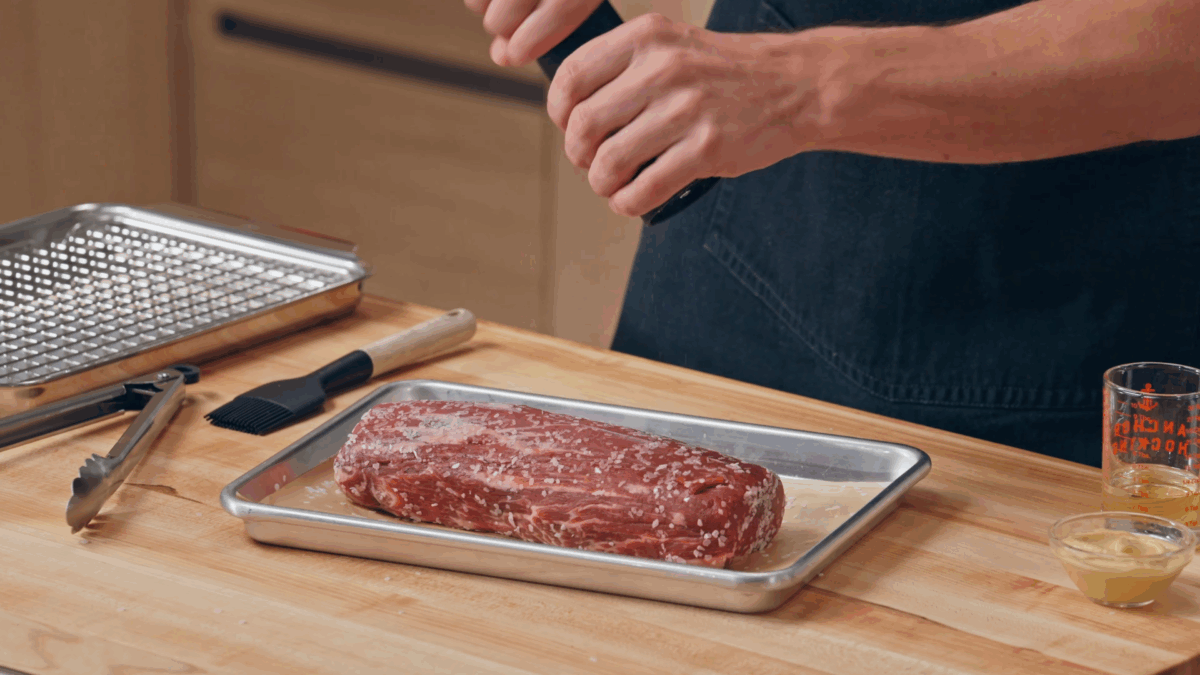
1. Prep and Sear the Beef
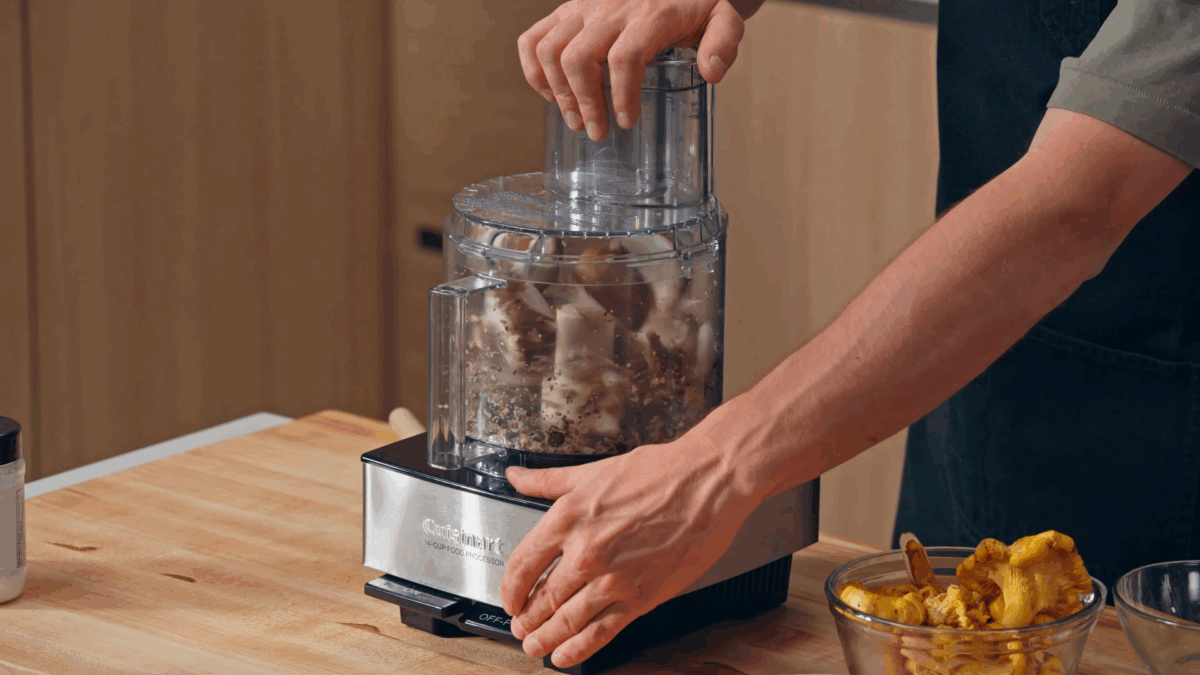
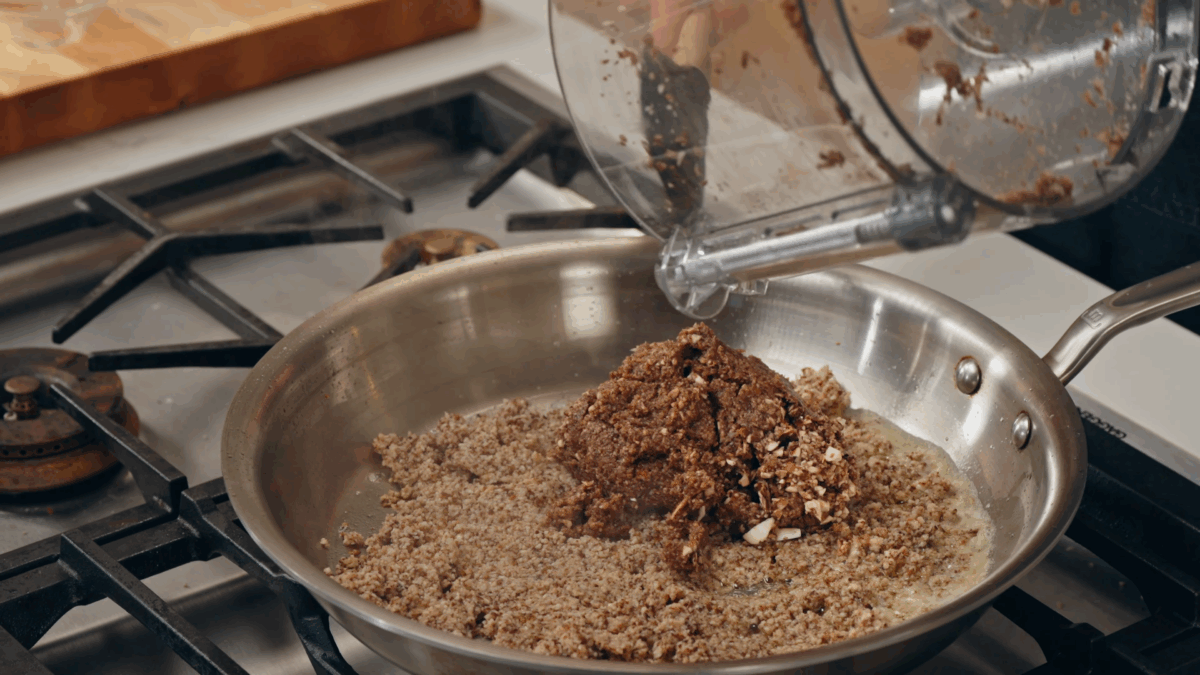
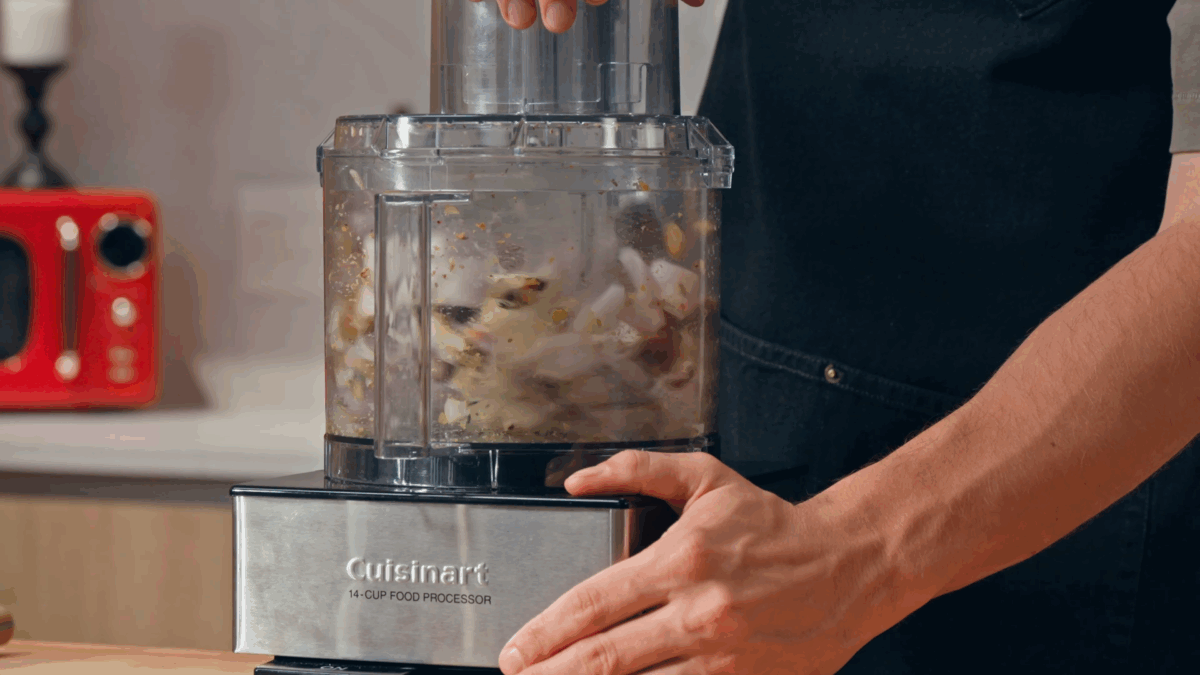
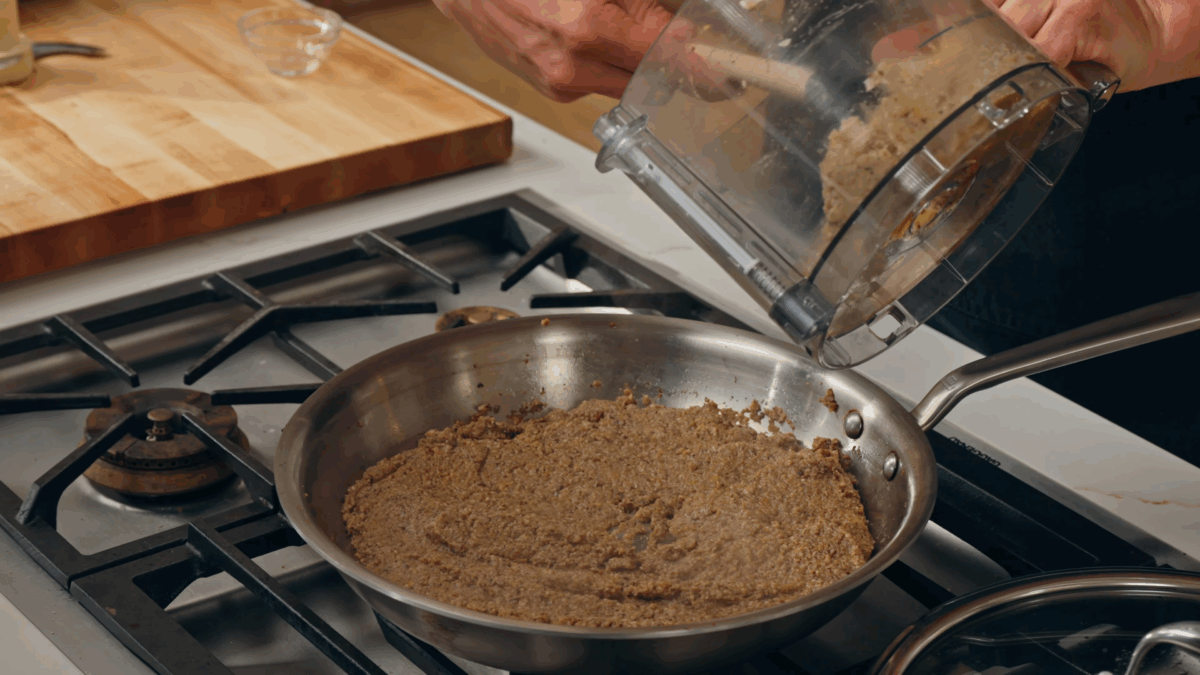
2. Make the Duxelles (Mushroom Paste)
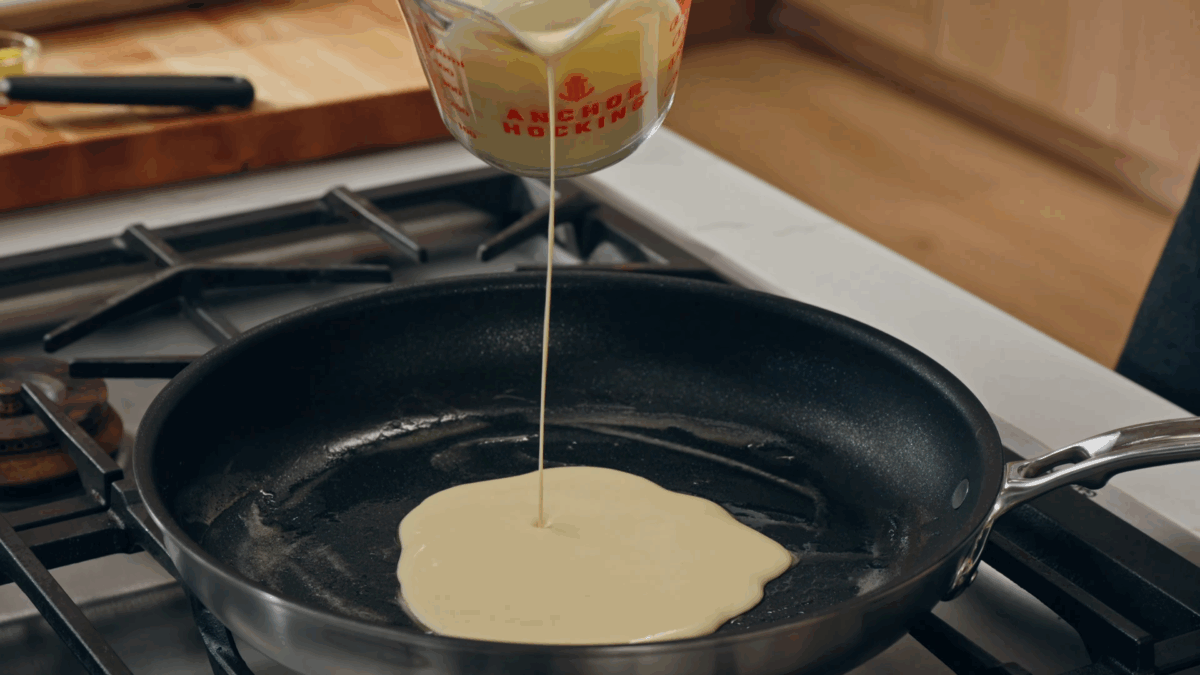
3. Make the Crêpes
4. Wrap the Beef Wellington
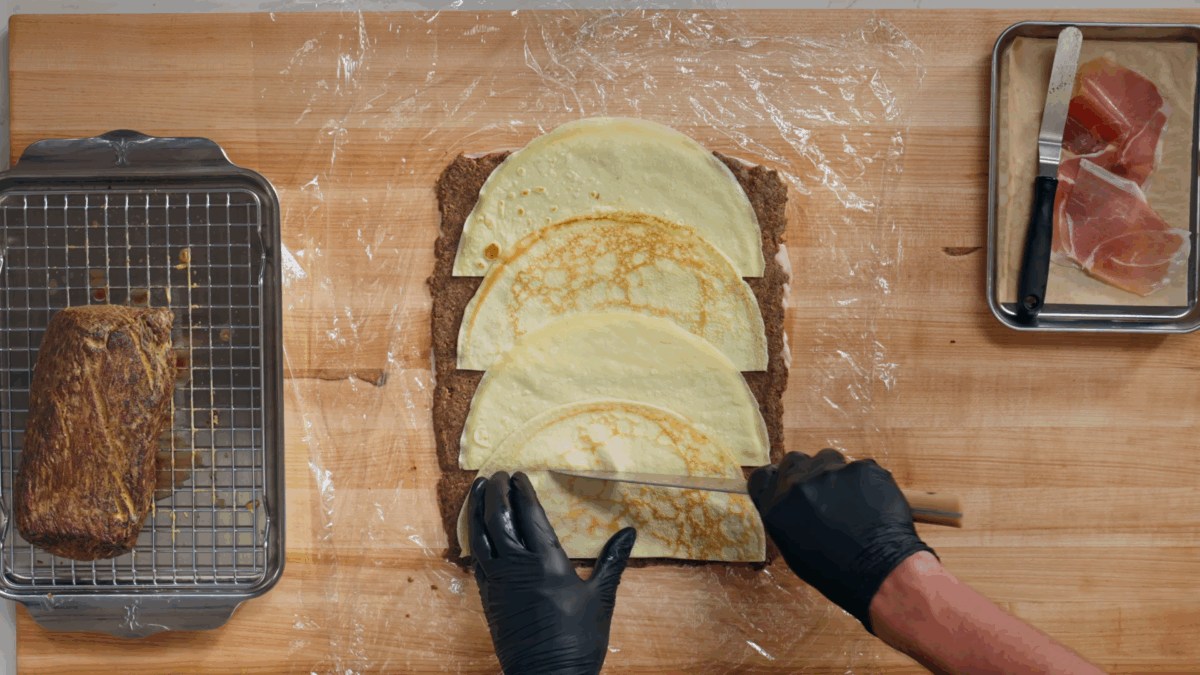
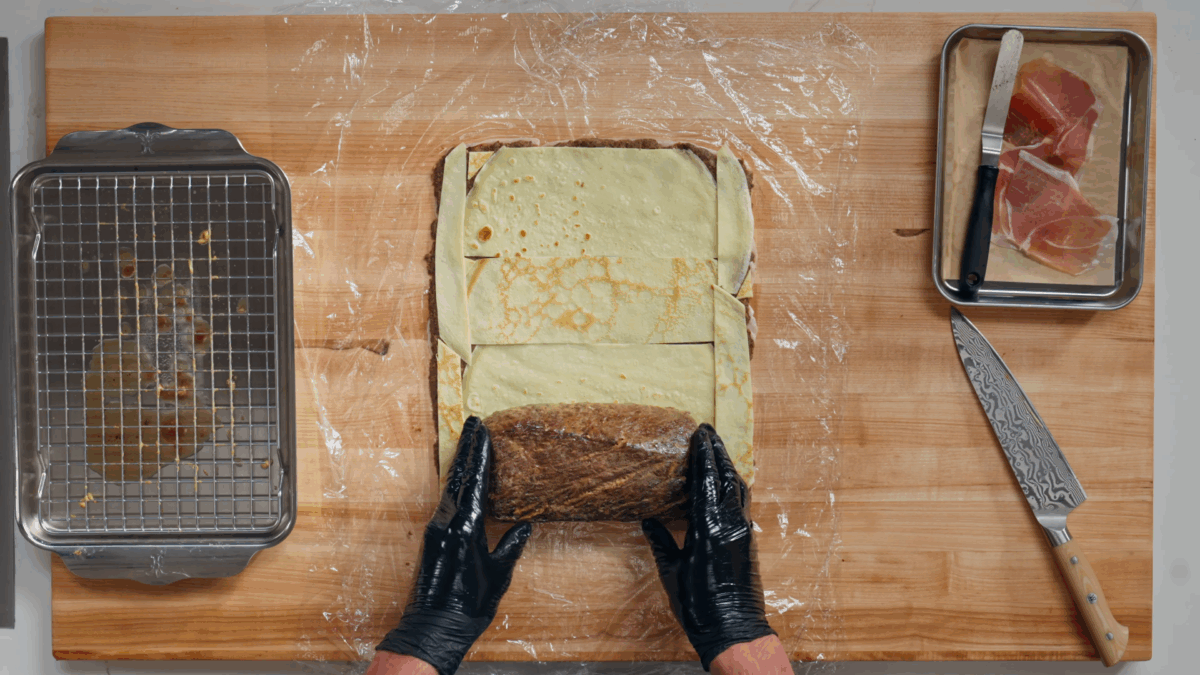
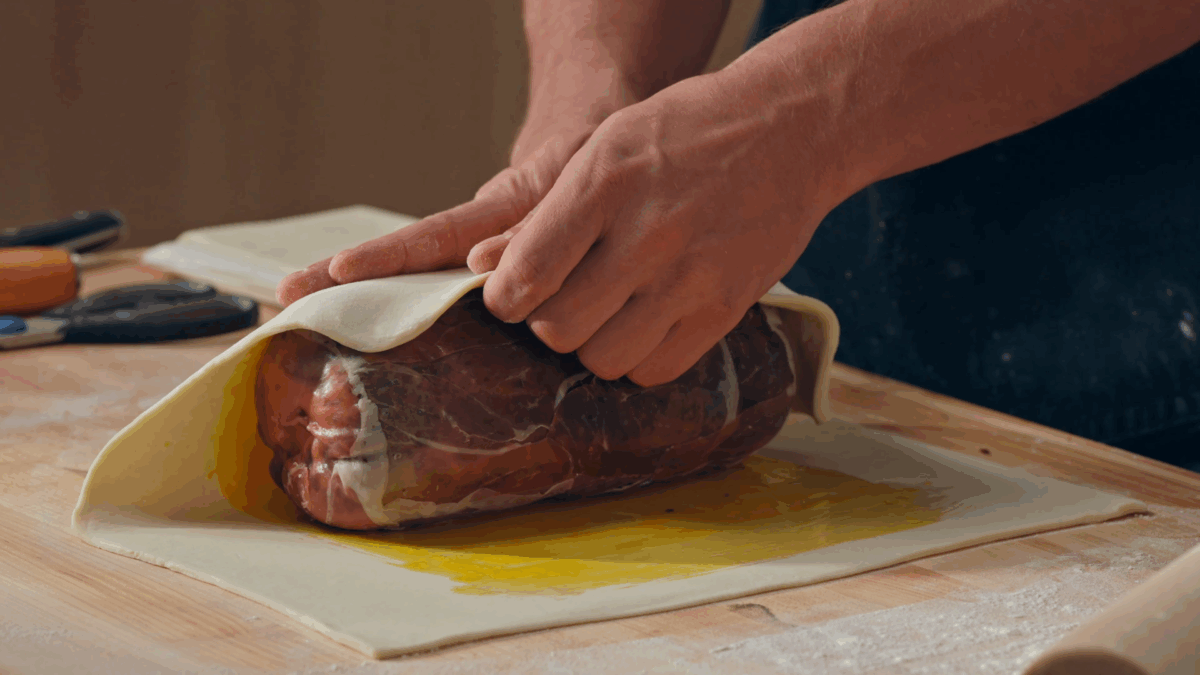
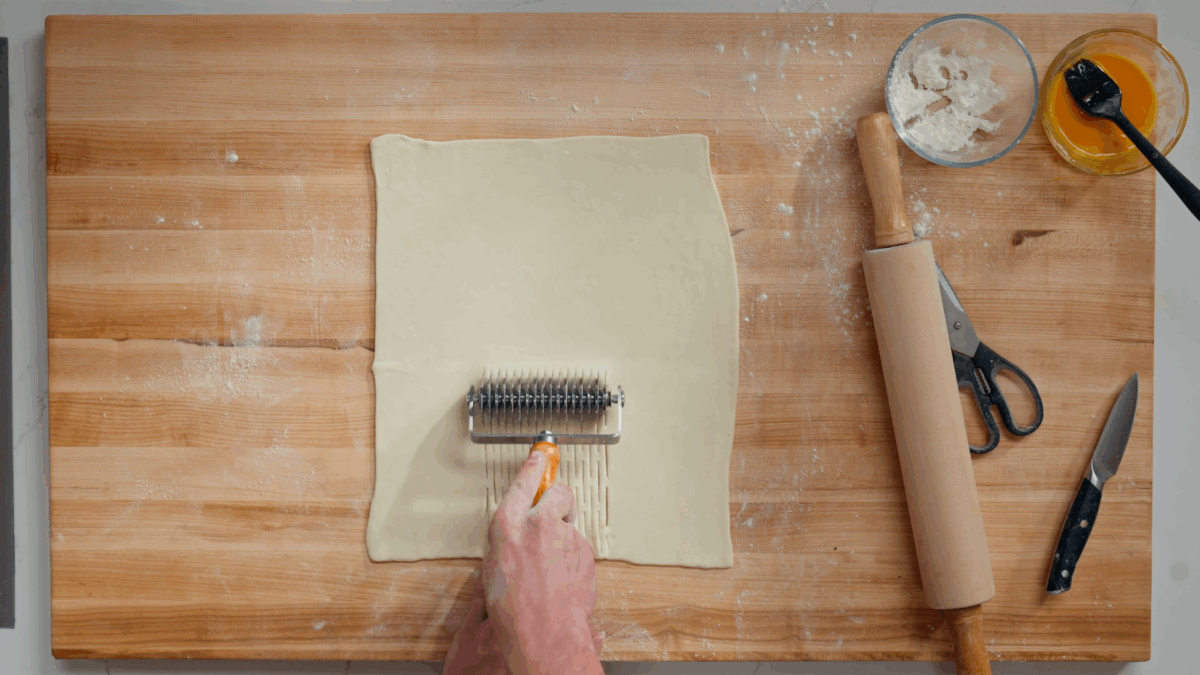
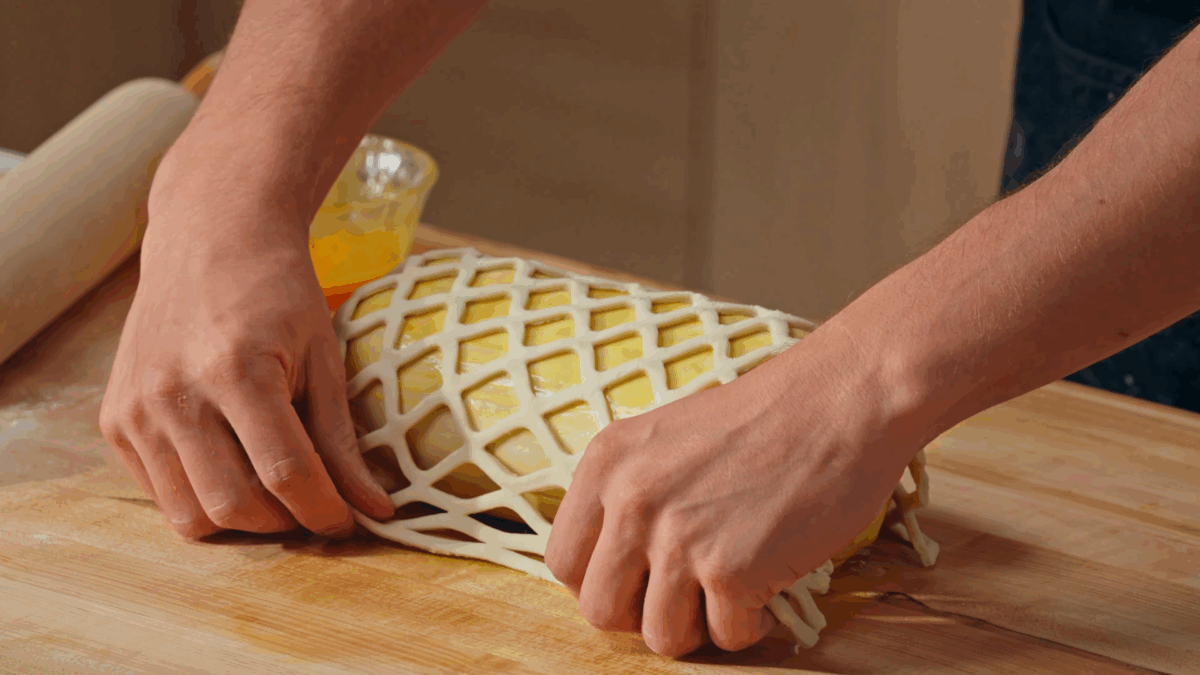
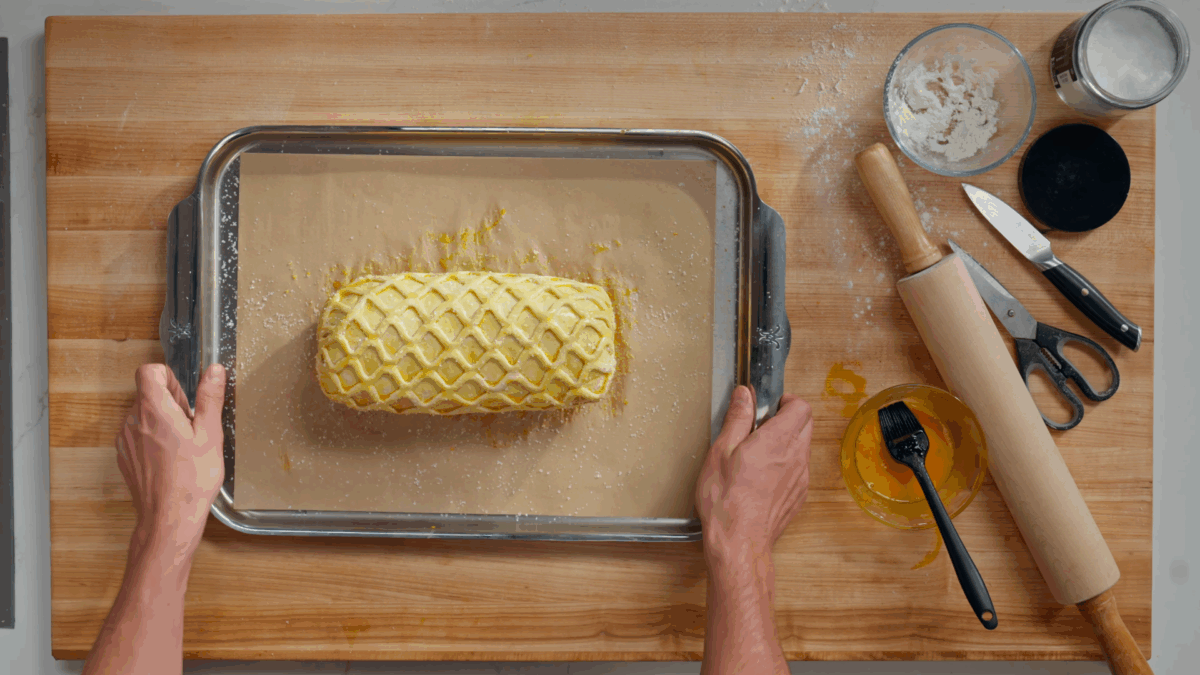
5. Add the Pastry
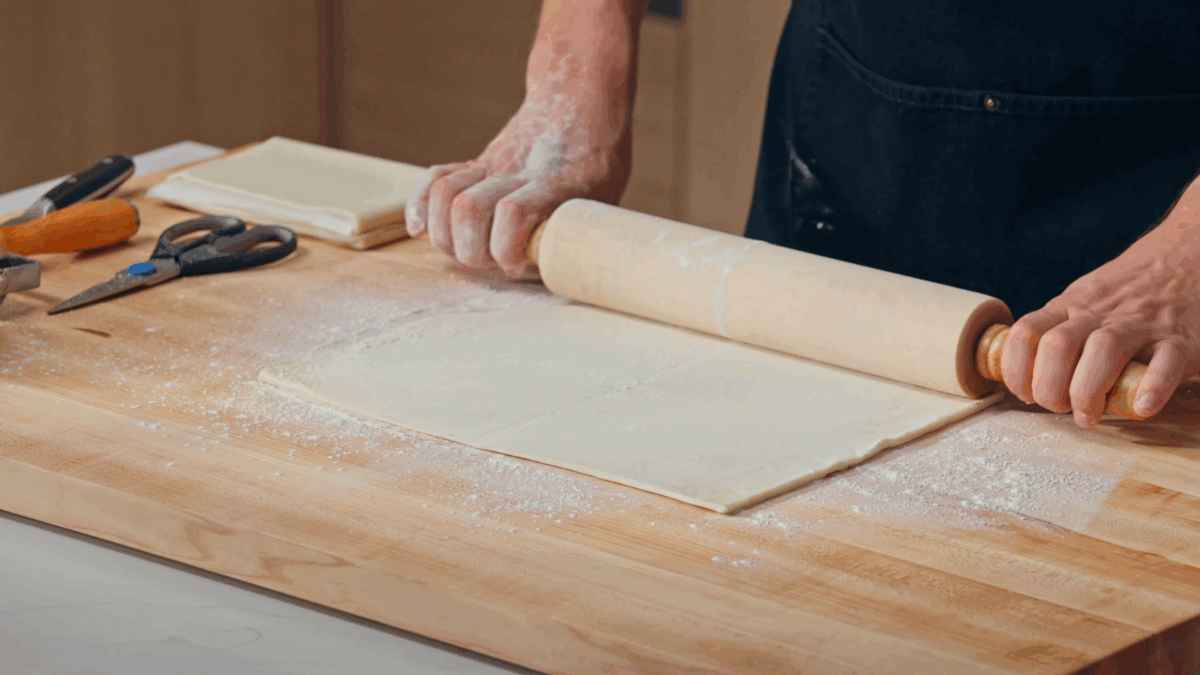
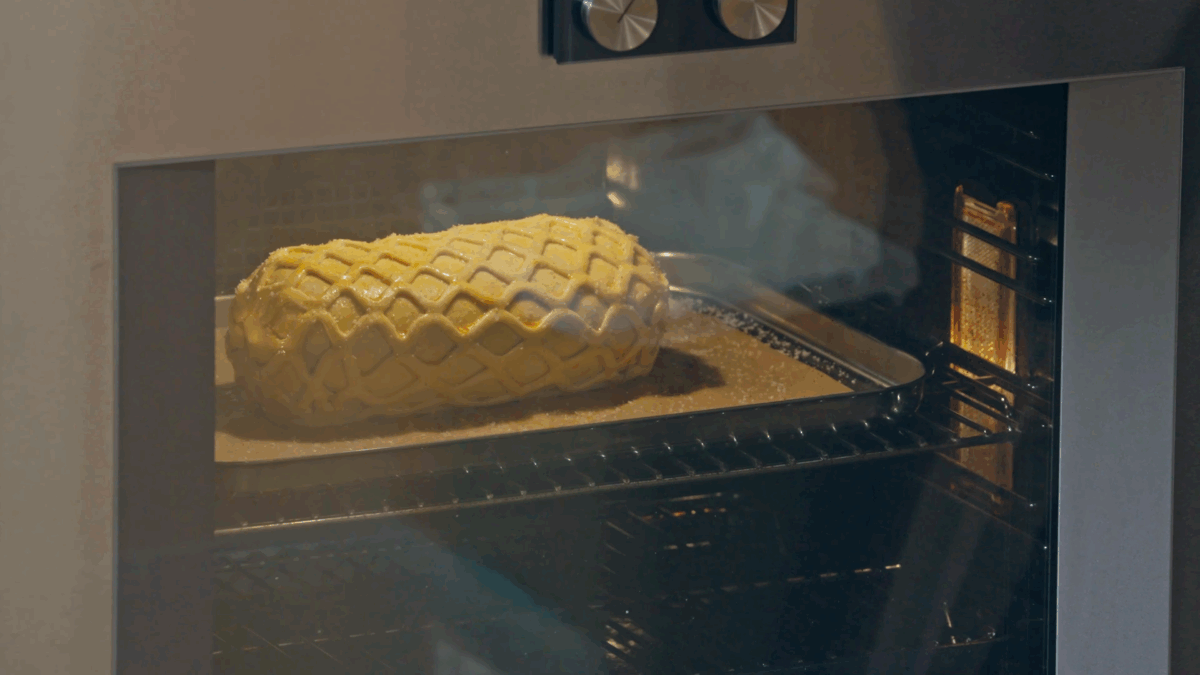
6. Bake
7. Make the Sauce and Serve
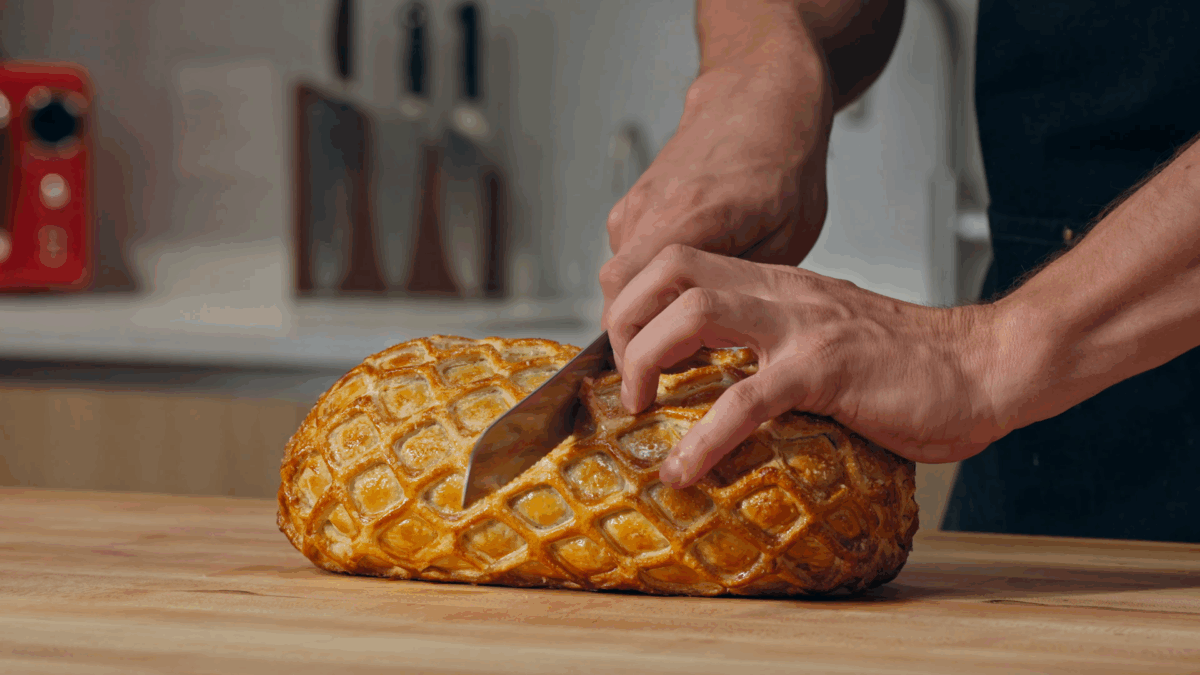
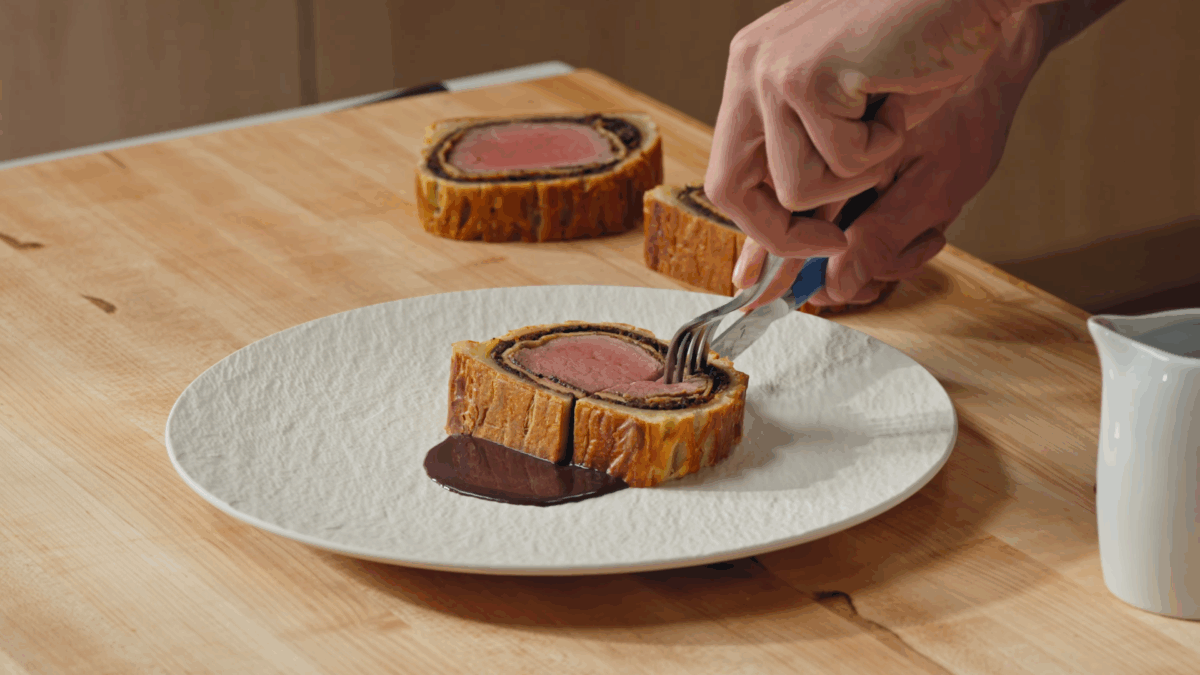
Nick’s Tips for Success
- Start with cold components. The beef, duxelles, crêpes, and pastry should all be fully chilled before assembly. Cold ingredients are key to clean wrapping and a crisp pastry.
- Cook the duxelles until very dry. Any excess moisture will steam the pastry from the inside and make it soggy. The mixture should be dark, concentrated, and almost paste-like.
- Use crêpes as a moisture barrier. Crêpes prevent juices from soaking into the pastry, ensuring a crisp, flaky exterior once baked.
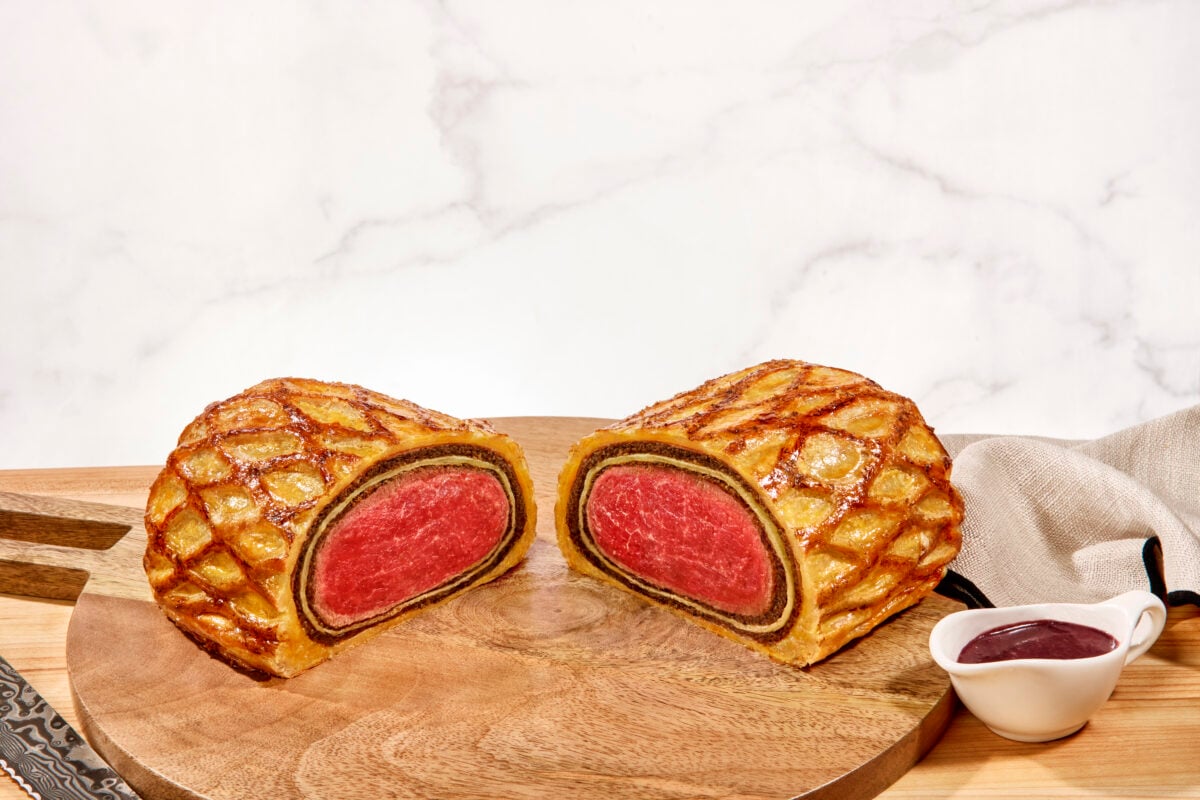
Traditional Beef Wellington Recipe
Equipment
- 1 Well-Seasoned Cast-Iron Skillet
- 1 Food Processor
- 1 Large Sauté Pan
- 1 Blender
- 1 Nonstick or Well-Seasoned Skillet
- Plastic Wrap
- 1 Rolling Pin
- 1 Lattice Cutter
- 1 Pastry Brush
- 1 Instant-Read Thermometer
- 1 Chilled Sheet Pan
- 1 Sharp Serrated Knife
Ingredients
For the Beef & Assembly
- 1 (2.5-3 pound / 1.1-1.3 kilogram) center-cut beef tenderloin, chateaubriand
- kosher salt & freshly ground black pepper, to taste
- 3 tablespoon (45 milliliter) neutral oil
- ¼ cup (60 gram) Dijon mustard
- 8 -10 (115-140 gram) thin slices prosciutto
- 2 (~14 ounce / 400 gram) sheet Dufour all-butter puff pastry, chilled (not frozen)
- 6 (~100 gram) egg yolk, lightly beaten
Duxelles
- 1 ½ pound (680 gram) mixed mushrooms, stemmed (crimini, shiitake, oyster, mitake, lion's mane, chanterelle, etc.)
- ⅛ ounce (7 gram) dried porcini mushrooms
- 1 tablespoon (15 milliliter) extra virgin olive oil
- 4 tablespoon (56 gram) unsalted butter
- ½ cup (72 gram) chestnuts, vacuum-packed or roasted
- 2 (~80 gram) shallot, peeled and quartered
- 3 clove (~9 gram) garlic, peeled
- 4 –5 (~2 gram) sprig fresh thyme, stems removed
- ¼ cup (60 milliliter) Madeira wine
- Kosher salt & freshly ground black pepper, to taste
Crêpe
- 1/2 cup (60 gram) all-purpose flour
- 1 (50 gram) large egg
- 1/2 cup (118 milliliter) whole milk
- 1 tablespoon (14 gram) unsalted butter, melted, plus more for the pan
- 1/4 teaspoon (1 ½ gram) kosher salt
Red Wine Reduction
- 1 cup (237 milliliter) red wine
- 2 (~60 gram) shallot, sliced
- 1 clove (~3 gram) garlic, smashed
- 2 sprig fresh thyme
- 4 –5 (~1 gram) black peppercorn
- 1 ½ cup (355 milliliter) beef or veal stock
- 1 tablespoon (14 gram) cold unsalted butter
- 1 teaspoon (5 milliliter) aged balsamic vinegar, or more to taste
- salt, to taste
Instructions
Prep & Sear the Beef
- Pat the beef dry, and season assertively with salt and pepper.1 center-cut beef tenderloin, kosher salt & freshly ground black pepper
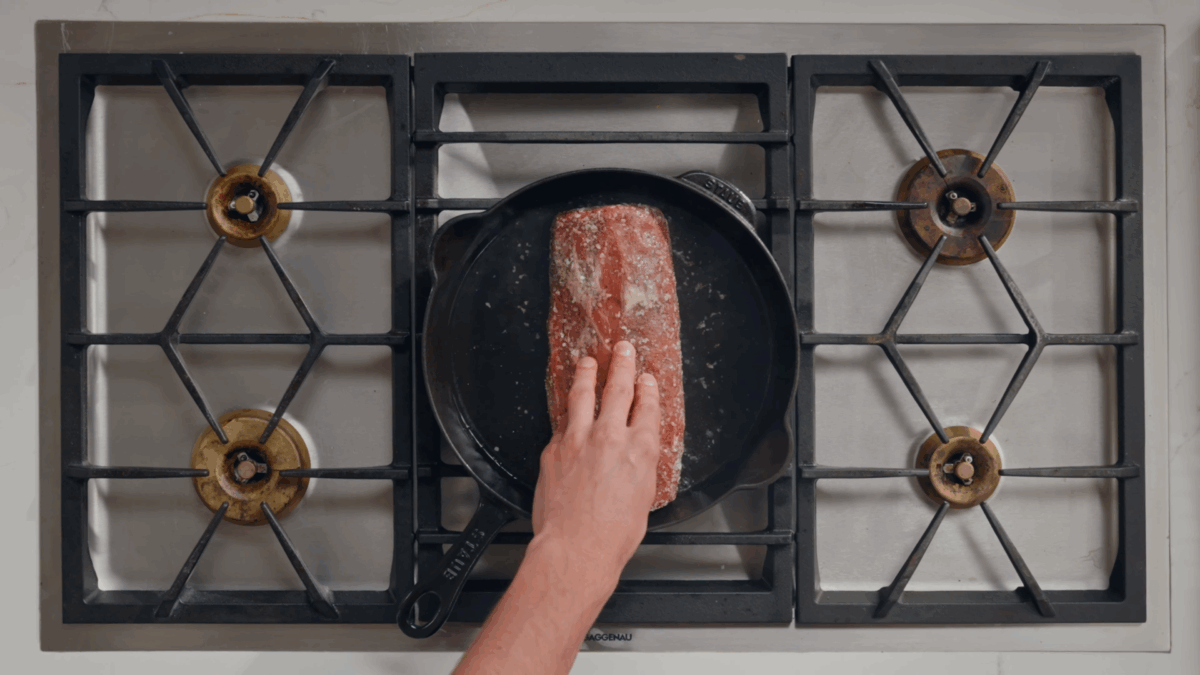
- Heat a cast-iron skillet until smoking hot. Add neutral oil.3 tablespoon neutral oil
- Sear the tenderloin on all sides until deeply browned, about ten minutes total.
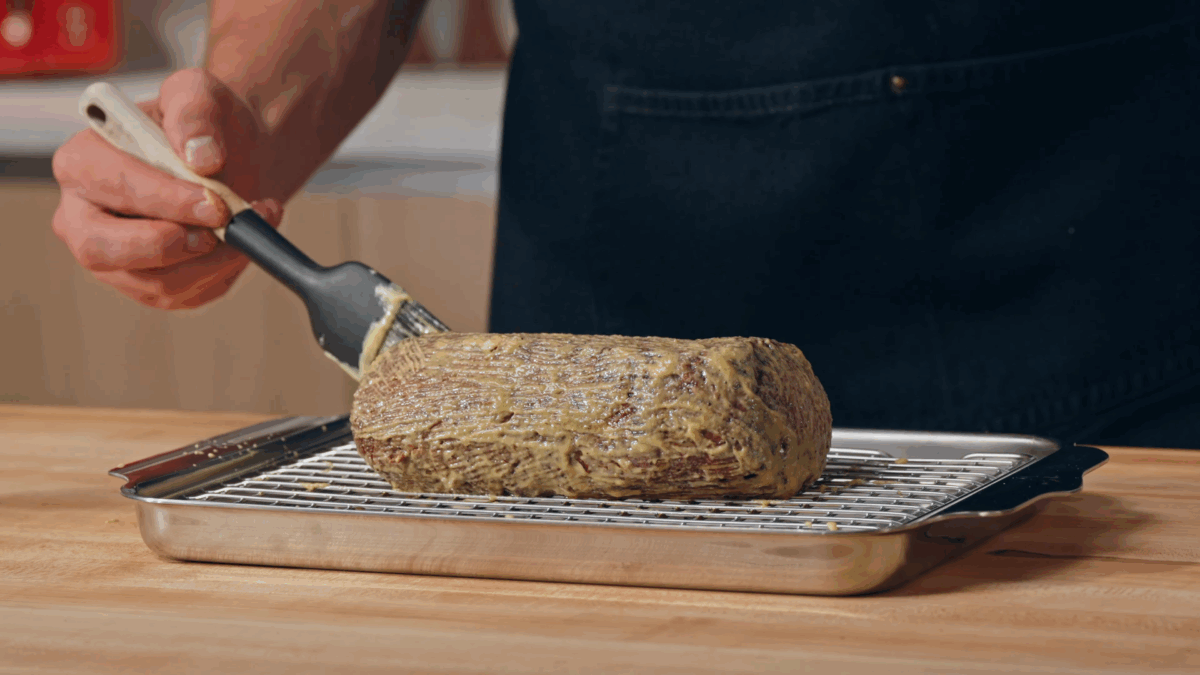
- Transfer the tenderloin to a tray, and brush all over with Dijon mustard while warm.¼ cup Dijon mustard
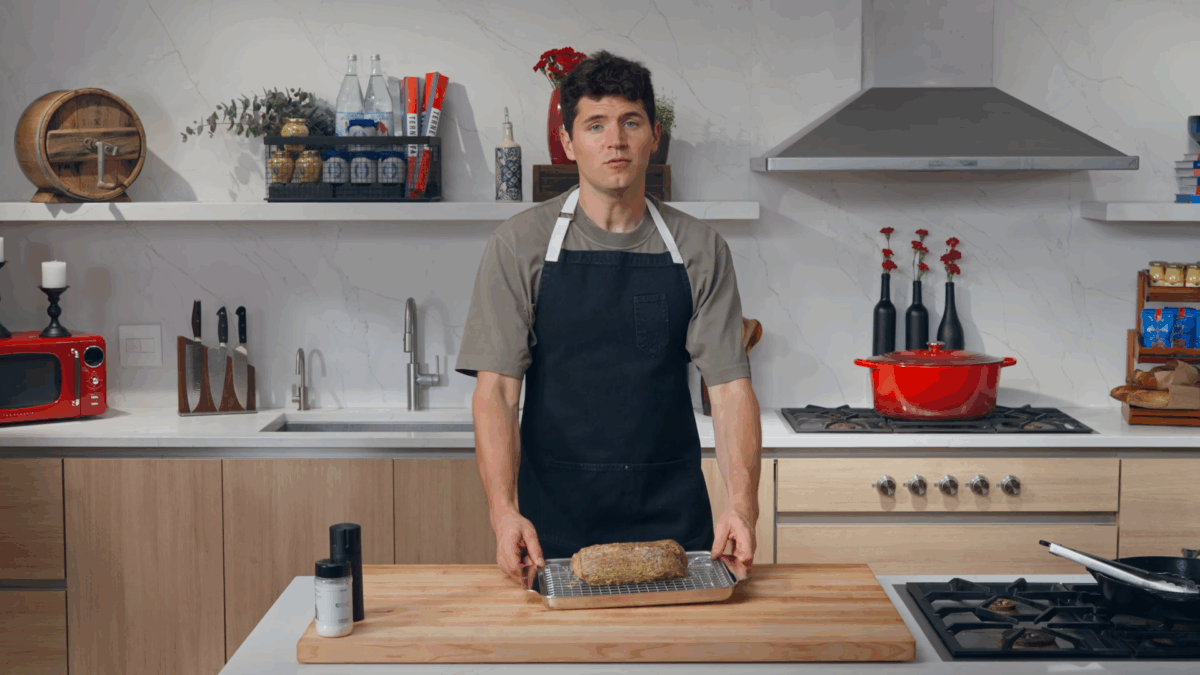
- Let cool completely. Then, chill the tenderloin in the fridge for at least 30 minutes.
Make the Duxelles
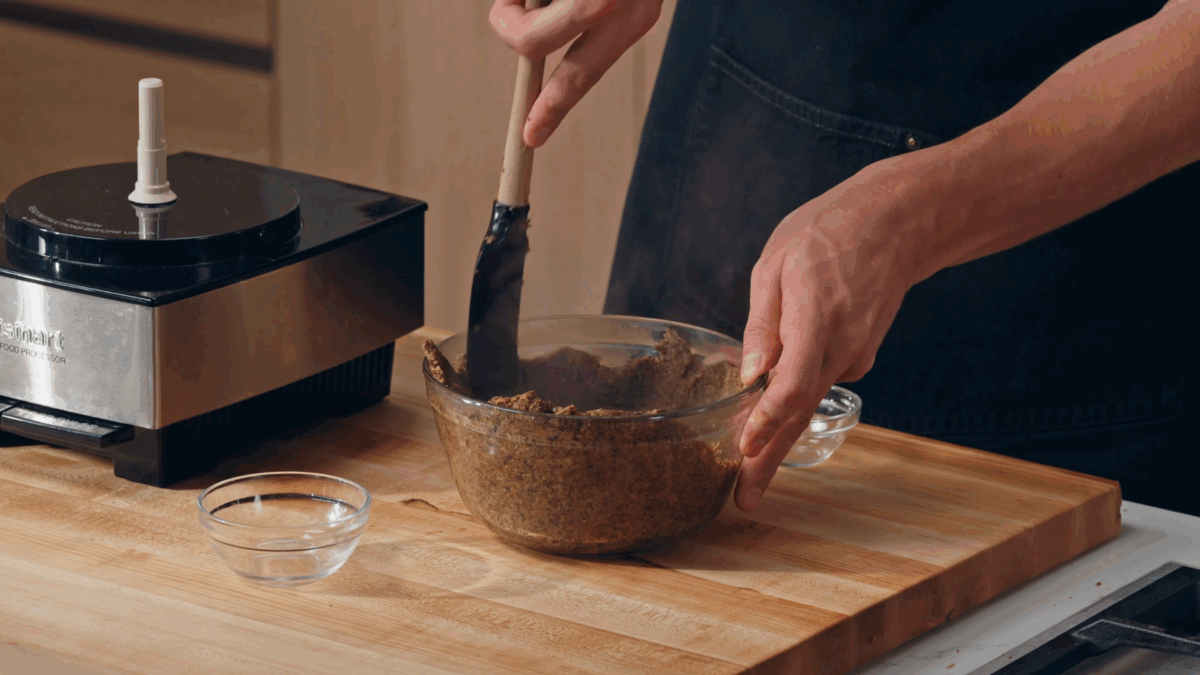
- Working in batches if necessary, pulse the fresh mushrooms and dried porcini mushrooms in a food processor until very finely chopped.1 ½ pound mixed mushrooms, ⅛ ounce dried porcini mushrooms
- In a large sauté pan, heat the olive oil and butter over medium heat.1 tablespoon extra virgin olive oil, 4 tablespoon unsalted butter
- Add the mushroom mixture to the pan, cover it with a lid, and sweat the moisture out of the mushrooms.
- While mushrooms sweat, pulse the chestnuts, shallots, garlic, and thyme until finely chopped.½ cup chestnuts, 2 shallot, 3 clove garlic, 4 –5 sprig fresh thyme
- Remove the lid from the mushrooms, and continue to cook until the mixture is mostly dry. Add the chopped aromatics and Madeira wine, and stir to combine. Season with salt and pepper to taste.¼ cup Madeira wine, Kosher salt & freshly ground black pepper
- Cook, stirring often, until the mixture is fragrant, dry, and darkened in color.
- Let cool completely.
Make the Crêpes
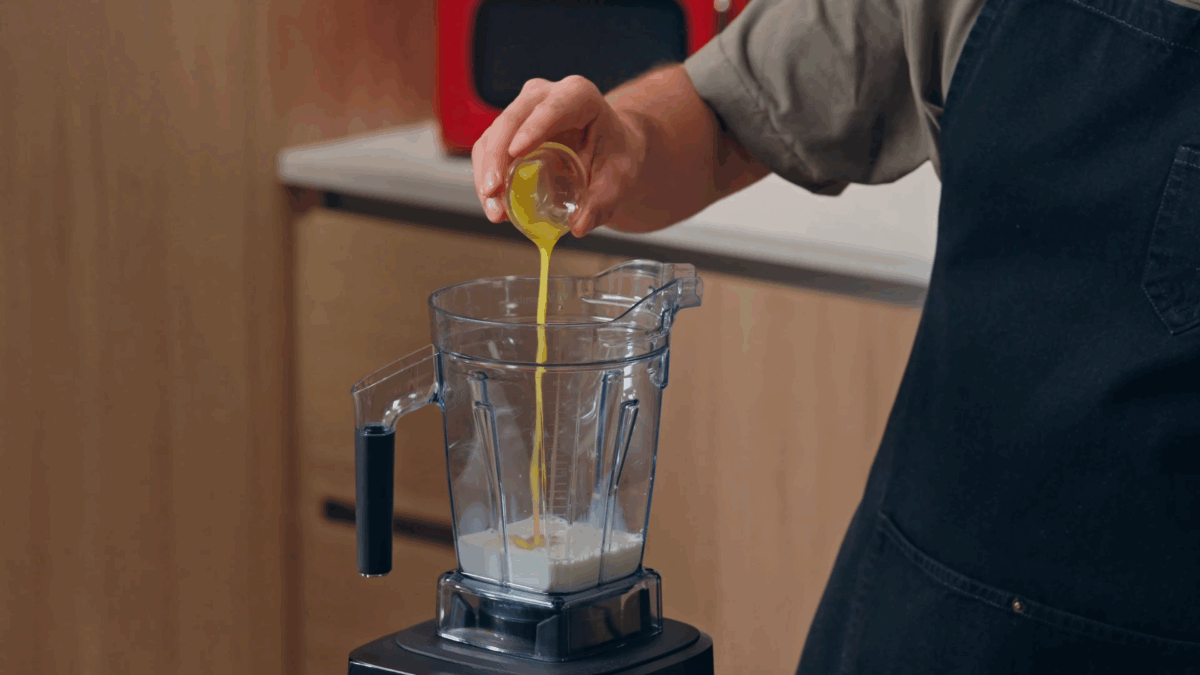
- In a blender, combine all crêpe ingredients and blend until smooth, 15-20 seconds.1/2 cup all-purpose flour, 1 large egg, 1/2 cup whole milk, 1 tablespoon unsalted butter, 1/4 teaspoon kosher salt
- Let the batter rest for 15-30 minutes at room temperature. This relaxes the gluten and helps the crêpes spread thinly and cleanly.
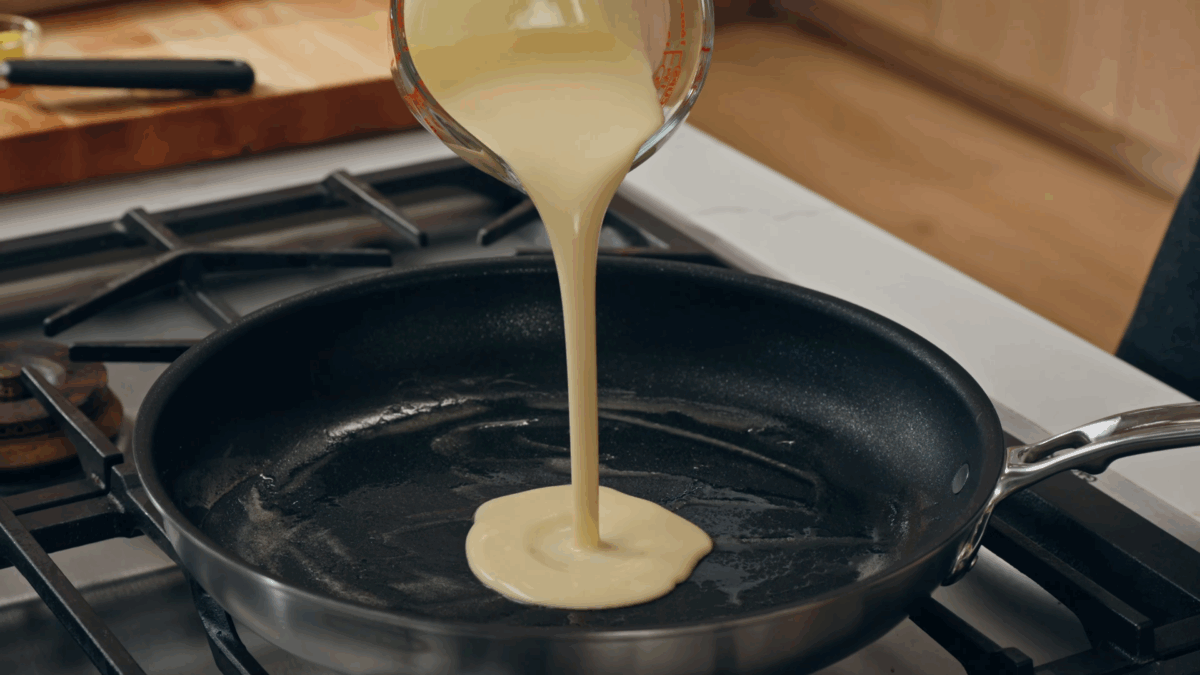
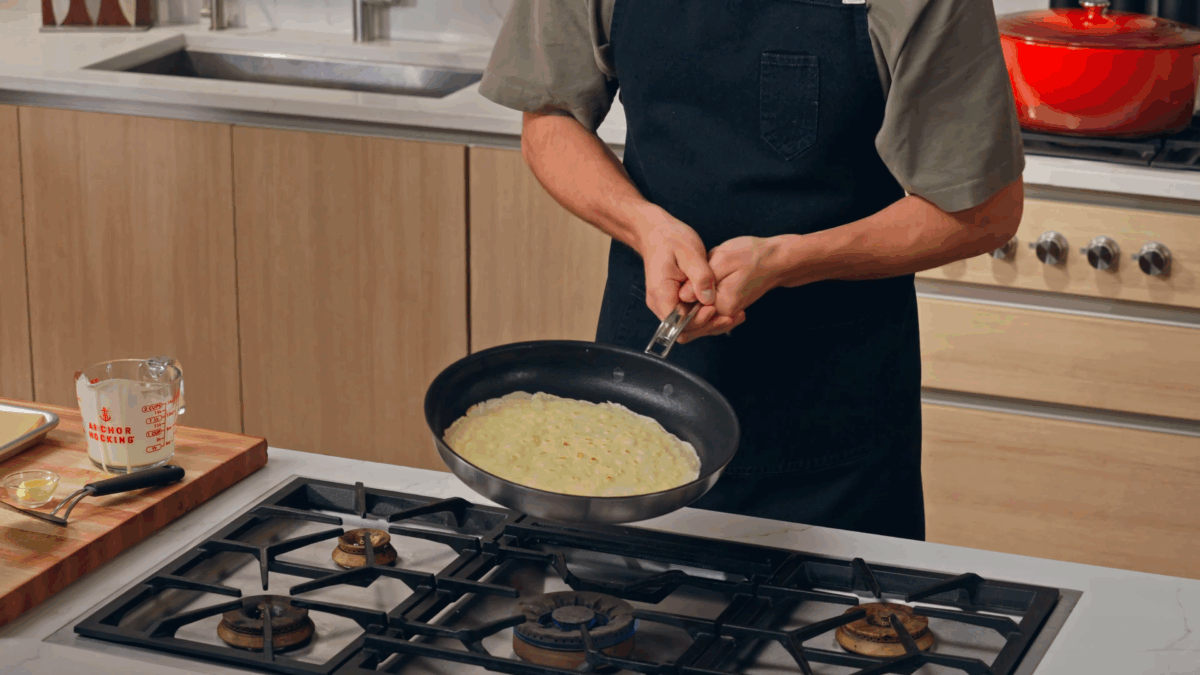
- Heat a large nonstick or seasoned skillet over medium heat. Add the tiniest swipe of butter to coat the bottom of the pan. Pour in half of the batter (½ cup or 120 milliliters). Then, immediately swirl to coat the pan in a thin layer of batter.
- Cook 45-90 seconds or until the edges start to lift and the underside is lightly golden.
- Flip and cook for another 20-30 seconds.
- Repeat with the remaining batter, adding more butter to the pan if needed.
- Let the cooked crêpes cool completely before wrapping (warm crêpes will create steam, which leads to sogginess). **You can make these a day ahead — store between parchment layers in the fridge.
Wrap the Wellington
- Lay out a large sheet of plastic wrap on your work surface.
- Arrange the prosciutto slices into a rectangle large enough to fully wrap the beef.8 -10 thin slices prosciutto
- Spread a thin, even layer of duxelles over the prosciutto.
- Place the crêpes on top, avoiding overlap.
- Place the chilled tenderloin on the crêpes, and use the plastic wrap to roll the crêpes over the meat in a tight cylinder. Twist the ends to secure.
- Chill 20-30 minutes, or ideally overnight, to help lock the shape of the Beef Wellington.
Prepare the Pastry
- Dust a clean surface with flour.
- Roll out one of the puff pastry sheets until it's ~⅛ inch (3 millimeter) thick, creating a neat rectangle.2 sheet Dufour all-butter puff pastry
- Remove the beef roll from the plastic wrap, and place it in the center of the pastry.
- Wrap the beef roll tightly with the puff pastry, sealing the seams well. Trim any excess pastry.
- Chill the beef while you prepare the lattice.
- Roll the second pastry into another ⅛ inch (3 millimeter) thick rectangle. With a lattice cutter, score the pastry all over.
- Remove the Beef Wellington from the refrigerator, brush it lightly with egg yolk, and add the lattice. Brush the top of the lattice dough with yolk again.6 egg yolk
- Chill the Beef Wellington for at least 10-15 minutes or up to 30 minutes. Do not exceed 30 minutes or the pastry may become soggy.
Bake
- Preheat the oven to 400°F (204°C), using a convection oven if possible.
- Place the chilled Beef Wellington on a chilled sheet pan, and bake for one hour, or until the internal temp reaches 100-115°F (37-46°C) in the thickest part.
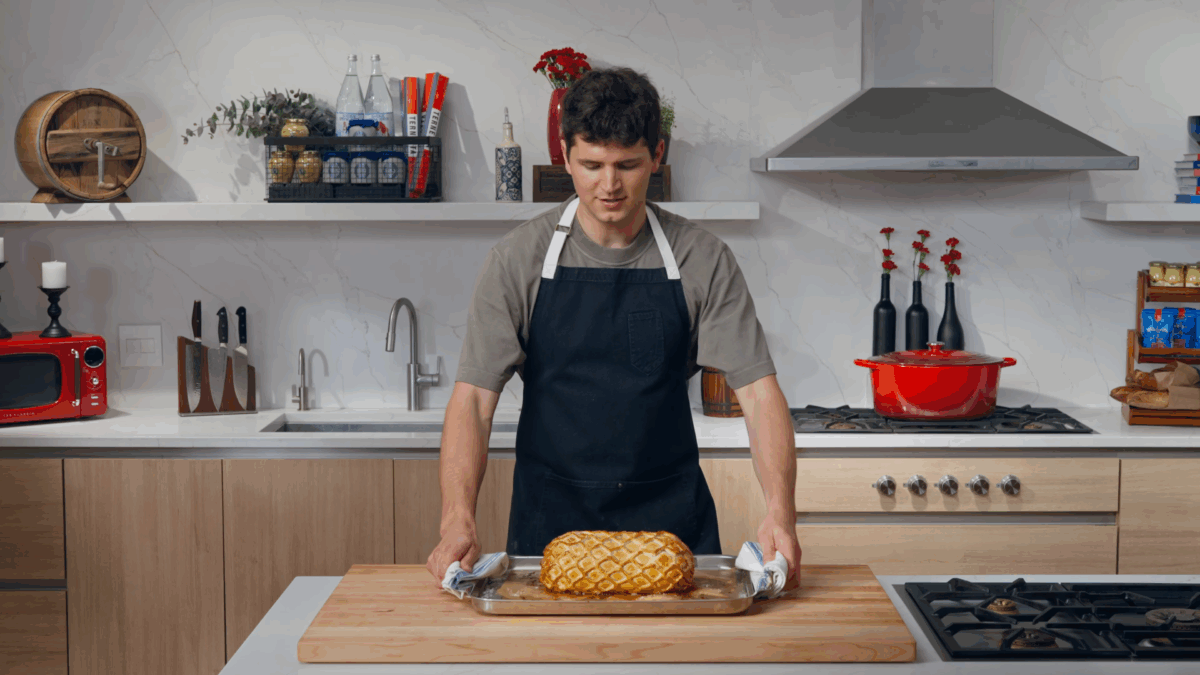
- Rest 15-30 minutes before slicing to lock in the flavor and juices.
Make the Sauce
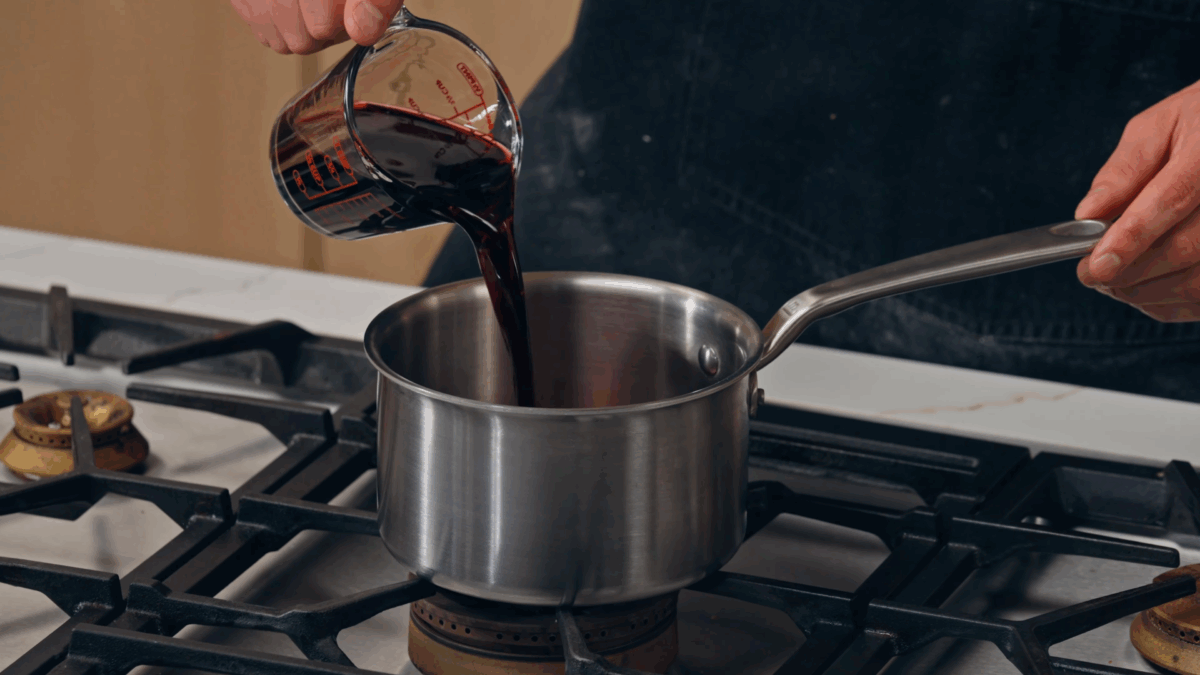
- While the pastry cooks, combine the wine, shallot, garlic, thyme, and peppercorns in a small pot.1 cup red wine, 2 shallot, 1 clove garlic, 2 sprig fresh thyme, 4 –5 black peppercorn
- Simmer the mixture over medium heat until it reduces by half.
- Add the stock, and continue to cook until the sauce reduces further and is glossy and coats the back of a spoon.1 ½ cup beef or veal stock
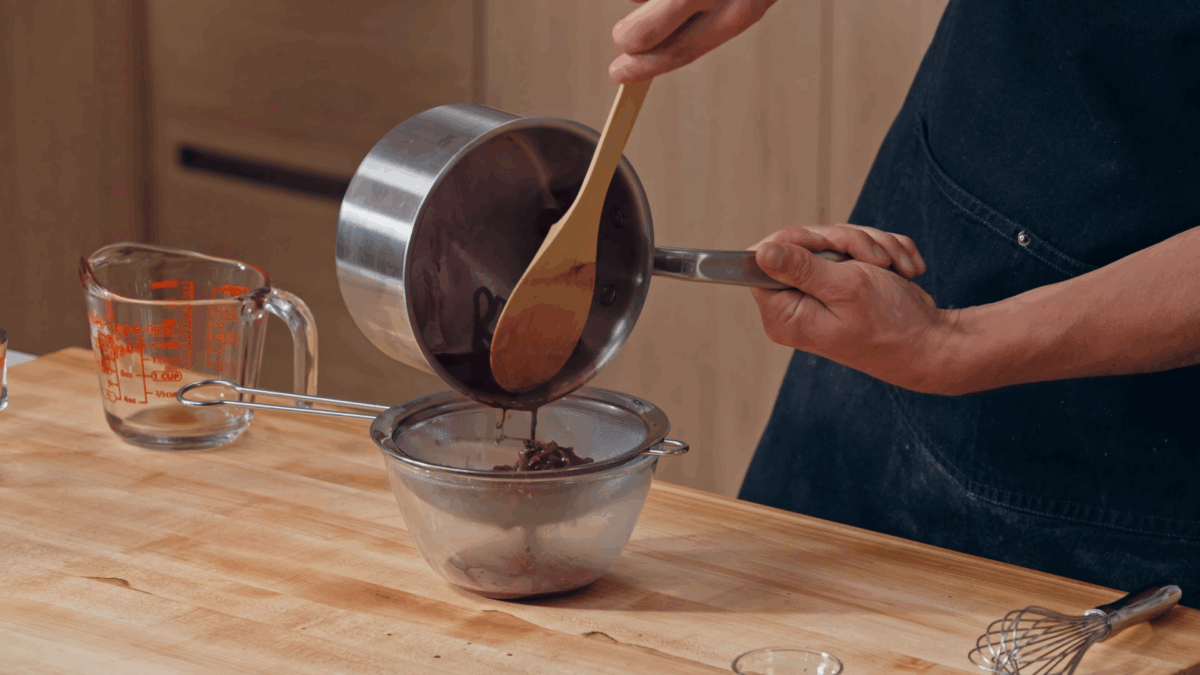
- Strain the sauce, whisk in cold butter, and finish with a splash of aged balsamic. Season to taste.1 tablespoon cold unsalted butter, 1 teaspoon aged balsamic vinegar, salt
Plate
- Slice the Beef Wellington cleanly with a sharp serrated knife.
- Spoon the sauce on a plate first, then nestle a slice of Beef Wellington on top. Enjoy warm!
Video

Notes
Nutrition
Nutrition information is automatically calculated, so should only be used as an approximation.
 Like this recipe? Rate & comment below!
FAQs
Everyone seems to debate as to how a traditional Beef Wellington recipe should be cooked. However, I think it’s best when cooked to medium-rare or medium. To achieve this, remove the Wellington from the oven when the internal temperature reaches 100-115°F (37-46°C) when measured with an instant-read thermometer. Then, let it rest for 15-30 minutes before slicing. The temperature will rise as it rests, resulting in a perfectly pink, juicy center without overcooking the beef.
Traditional Beef Wellington pairs well with simple, classic sides that don’t compete with the richness of the dish. Roasted potatoes, creamy mashed potatoes, buttered green beans, glazed carrots, or roasted asparagus are all excellent options. A crisp green salad or sautéed greens also helps balance the richness of the pastry and beef.




Made this for Christmas Eve dinner and it was fantastic! I was worried about messing it up at first since there were so many steps and processes, plus it’s a $150 cut of meat. But the instructions were extremely thorough and in the end it was fantastic. Really enjoyed it.
So yummy